
Cimahi City Government Clears 370 Tons of Accumulated Ramadan Waste from TPS
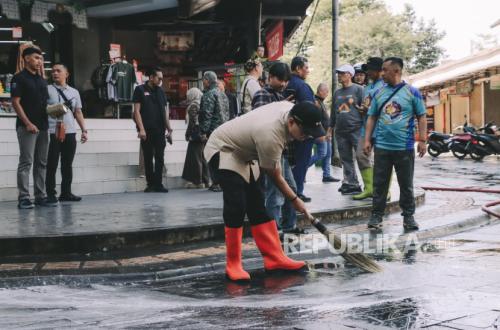
REPUBLIKA.CO.ID, CIMAHI - Waste collection services in Cimahi City, West Java, have returned to normal following the holiday on 23 and 24 March 2026. During those two days, the Cimahi City Government conducted a cleanup of the waste that had accumulated at every Temporary Waste Disposal Site (TPS) in Cimahi City.
Deputy Mayor of Cimahi Adhitia Yudisthira stated that during the cleanup process, the waste transported from 12 TPS to the Sarimukti landfill in West Bandung Regency (KBB) reached around 370 tons. This transportation used the bi-weekly quota allocated by the West Java Provincial Government for Cimahi City.
“For the Cimahi city cleanup process, we were forced to borrow the bi-weekly haulage quota of 370 tons. As a result, the remaining bi-weekly quota is 1,200 tons, or an average of only 85 tons per day,” said Adhitia when contacted on Wednesday (25/3/2026).
Adhitia said that waste collection services from the areas are now running normally according to schedule. According to the schedule, waste collection will be separated between organic and inorganic. The Cimahi City Government emphasises that residents must sort their waste at their respective homes.
The Cimahi City Government will also optimise TPS 3R and TPST to process organic and inorganic waste independently, in order to significantly reduce the volume of residue sent to the Sarimukti landfill. Moreover, the Cimahi City Government has a target of zero waste disposed to the landfill.
“We also mandate sub-districts to optimise the role of Waste Banks in absorbing economically valuable inorganic waste, as well as activating linmas in guarding and securing areas from illegal waste dumping, and coordinating with Satpol PP in enforcing regional regulations on illegal waste dumping,” said Adhitia.
Head of the Cimahi City Environmental Agency, Chanifah Listyarini, said that the accumulation was caused by an increase in waste production throughout the holy month of Ramadan. The waste production generated by the community in Cimahi City is around 250 tons per day. However, during this Ramadan, it has risen by up to 40 percent.
“It’s very high, the increase is very high. The waste increase is around almost 30-40 percent. Now it can be more than 300 tons every day during this fasting month,” said Chanifah.
According to the analysis, she said, the increase in waste production during this Ramadan is not only due to the rise in community consumption of food and drinks. The increase in waste production is also due to the Free Nutritious Meals (MBG) that are taken home during this fasting month.
“Everything is packaged, and this has an effect. Yesterday we conducted a small survey, chatting with one RT; initially the volume was less than 9 carts. But once the MBG is not eaten at school during Ramadan because it’s distributed and taken home, the waste increased again to 12-13 carts,” said Chanifah.
The surge in waste production is not matched by the disposal quota to the Sarimukti landfill, which is limited according to Circular Letter (SE) of the West Java Provincial Secretary Number: 6174/PBLS.04/DLH regarding Warnings and Restrictions on Waste Disposal to the Regional Sarimukti Waste Treatment and Final Disposal Site; waste shipments from Cimahi City are limited to a maximum of 1,668 tons per two weeks.
“Meanwhile, the disposal quota has not been increased at all by the province. The hauls are very limited, especially now with the weighing system. The quota that should be for 14 days is only enough for 10 days,” said Chanifah.