
Ciliwung River Normalisation: Kebon Pala Residents Demand Housing Guarantees if Evicted
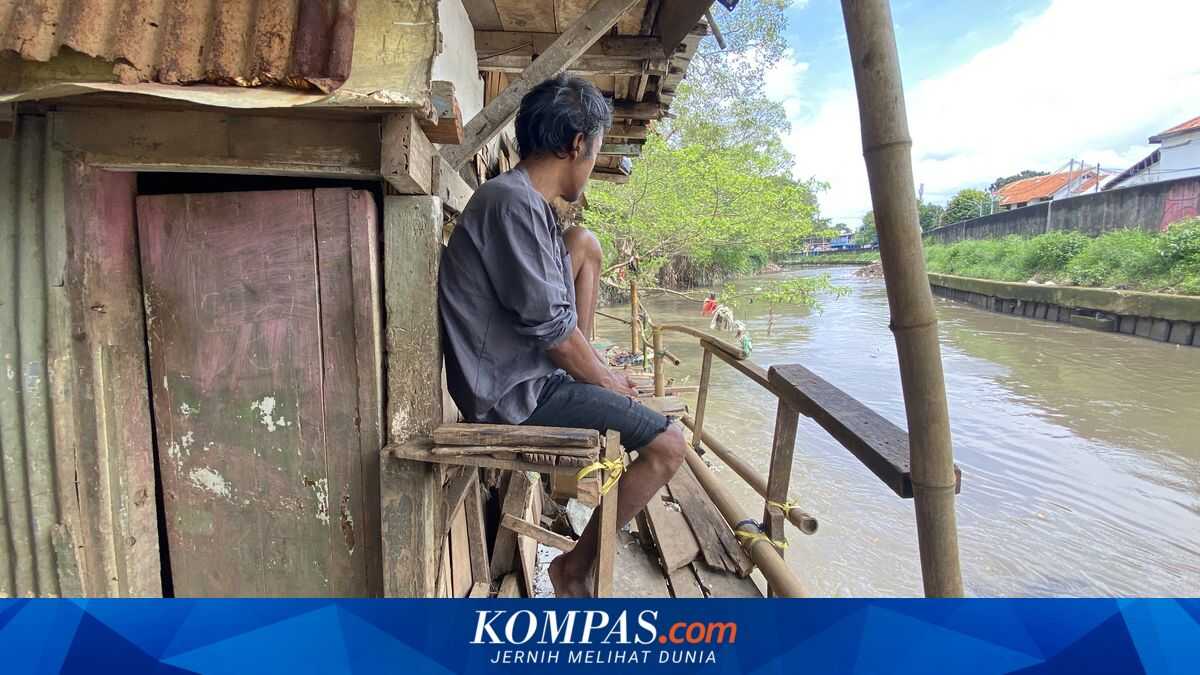
In RT 13 RW 04 Kebon Pala, Kampung Melayu Sub-district, Jatinegara District, East Jakarta, residents are still awaiting government clarity regarding the normalisation of the Ciliwung River.
Nur Aini (33), one resident whose house stands directly on the riverbank, said her home is in an area that would be affected by the river works.
According to Nur Aini, the news has been heard several times in her neighbourhood.
However, until now residents are still waiting for clarity on the form of the works and the fate of their homes.
Although resigned, she hopes the government will provide housing guarantees for residents if relocation is really undertaken.
Because most of the inhabitants in the area come from families with limited economic means.
‘Ideally, if they do demolish, there would be compensation. Here, the people are mostly not well-off,’ she said.
Some residents work odd jobs with uncertain incomes. Therefore, housing certainty is the thing they worry about most if the area is redesigned.
Nur admitted she did not mind too much the form of compensation offered by the government, whether in the form of subsidised flats or other assistance, as long as there is a guarantee of a place to live.
‘The government can decide; what matters is there is a guarantee of where we will live,’ she said.
Another hope she has during her residence along the riverbank is more serious flood management.
Over the years, she has often heard promises of flood management from the government, but she thinks conditions on the ground have not changed much.
‘It seems every year the same, promises that floods will be addressed,’ she said.
Amid the uncertainty, Nur continues with daily life as usual.
She has lived in the area since 2011 after marrying and occupying her in-laws’ house.
At first, Nur Aini recalls being shocked by the frequent floods. But over time she has become accustomed to living alongside water that overflows during the rainy season.
‘At first I was shocked, but now I am used to it,’ she said.
Flooding usually arrives when heavy rain drenches the area. The water often rises to the stairs leading to the second floor of her house.
During the major flood at the end of last year, the water level even nearly reached the upper floor.
‘That time it almost went up to the top. All the way to the stairs,’ Nur said.
When floods come, she and her family usually stay in the house while waiting for the water to recede.
But they still have to be vigilant because the water can rise at any time, especially at night.
‘When we’re sleeping, we sometimes get caught off guard too,’ Nur said.
In addition to disrupting daily life, floods have also damaged parts of her house several times. The wooden doors and stairs are the parts most frequently damaged because they are submerged.
‘Mostly the doors and stairs get damaged, because of the wood,’ she said.
Currently the house is home to seven family members, including three of her children.
Although the house is quite old and often flooded, Nur says she will continue to endure because she feels the area has become a part of her life.
‘It’s all nearby here, so I’m used to it,’ Nur said.
But she realises her house will not withstand being repeatedly flooded.