
Cikuray Train Service Expands, Connecting Garut's Agricultural Bounty with Jakarta as a Community Activity Hub
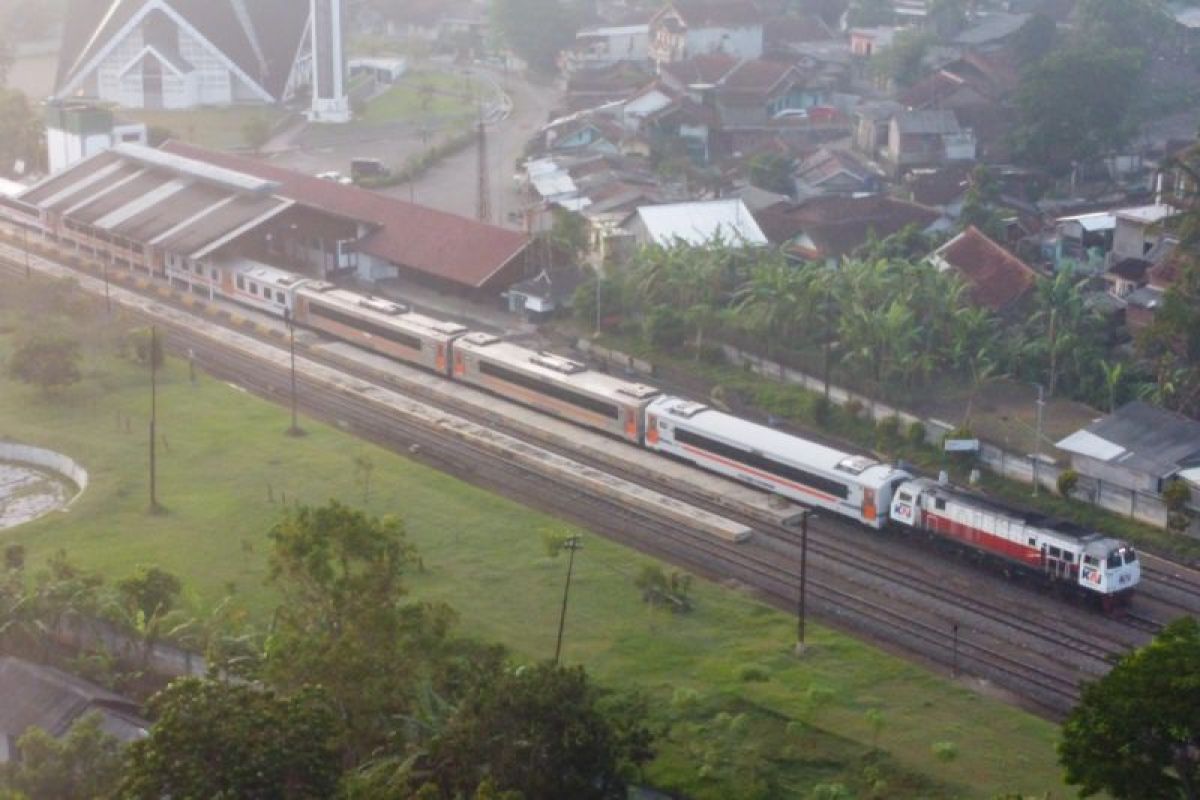
Since 2022 to April 2026, the Cikuray Train Service has served 2,226,342 passengers, becoming a popular travel choice connecting Garut, Bandung Region, and Jakarta. The morning air in Garut offers a distinct atmosphere. Expansive rice fields, vegetable gardens, and surrounding mountains are part of daily life. In this fertile region, activities begin early, from farmers harvesting crops to residents preparing for journeys to various cities. As a government-subsidised economy train (PSO) under the Directorate General of Railways (DJKA) of Indonesia’s Ministry of Transportation, the Cikuray service provides affordable travel access. With a fare of Rp45,000 for the longest route from Garut to Pasar Senen, it is widely used by students, workers, SMEs, traders, tourists, and residents travelling between cities for various purposes. Public interest in the Cikuray Train has shown consistent growth. On the Garut-Pasar Senen route (Train 299), passenger numbers rose from 157,735 in 2022 to 272,648 in 2023 – a 72.85% increase. This climbed further to 305,959 in 2024 (12.22% growth) and reached 313,926 in 2025 (2.60% increase). Conversely, on the Pasar Senen-Garut route (Train 300), passenger numbers increased from 135,530 in 2022 to 242,119 in 2023 – a 78.65% rise. This rose to 285,130 in 2024 (17.77% growth) and reached 301,797 in 2025 (5.85% increase). Cumulatively, the Cikuray service served 2,014,844 passengers from 2022 to 2025. Between January and April 2026, it handled 211,498 passengers – 107,459 on the Garut-Pasar Senen route and 104,039 on the reverse. Thus, from 2022 to April 2026, the service has served 2,226,342 passengers. Anne Purba, Vice President of Corporate Communication at KAI, said the growth indicates the Cikuray Train is increasingly becoming part of the mobility of residents and workers in the regions it serves. The Cikuray connects many stories in one journey. Students travelling to big cities like Jakarta for education, workers commuting to their jobs, tourists exploring Garut’s beauty affordably, and residents visiting family and relatives, Anne said. The service stops at 12 stations including Garut, Cibatu, Leles, Kiaracondong, Bandung, Cimahi, Purwakarta, Cikampek, Karawang, Cikarang, Bekasi, and Pasar Senen. Each station plays a distinct role in supporting community life. Garut, Cibatu, and Leles are known for agricultural and trading activities thriving in cool mountain air. Entering the Bandung region, the journey continues to Kiaracondong, Bandung, and Cimahi – hubs for education, services, trade, and creative economy. Next, the service serves Purwakarta, a growing tourism and trading destination, before reaching Cikampek, Karawang, and Cikarang, among Indonesia’s largest industrial centres. Near the journey’s end, the service stops at Bekasi, a Jakarta satellite city with high population mobility. The trip concludes at Pasar Senen, a long-established commercial and community activity hub in the capital. For residents, the Cikuray journey offers unique experiences. Passengers enjoy views of hills, farmland, and vegetable gardens characteristic of the region. The cool climate and fertile soil make Garut a key horticulture producer in West Java. Crops such as potatoes, carrots, cabbage, tomatoes, chillies, spring onions, oranges, avocados, and highland vegetables thrive here. Harvests are daily transported to various cities to meet community needs. Anne noted that the connection between agricultural regions and destination cities will grow more vital as community needs and economic activities rise. When agricultural produce reaches more regions, more people benefit. Farmers gain wider market access, traders have more choices, and communities receive fresh products from diverse producing areas, Anne explained. The Cikuray journey illustrates how a single rail line connects regions with distinct characteristics. From Garut’s cool farmlands, Bandung Region’s education and trade hubs, Karawang and Cikarang’s industrial zones, to Jakarta’s community activity centre – all linked in one journey. Trains always grow with community needs. As community activities and the economy develop across regions, opportunities to deliver greater benefits will continue to open, Anne concluded.