
Chronology of IRGC Attacks on US Tankers and the Closure of the Strait of Hormuz in March 2026
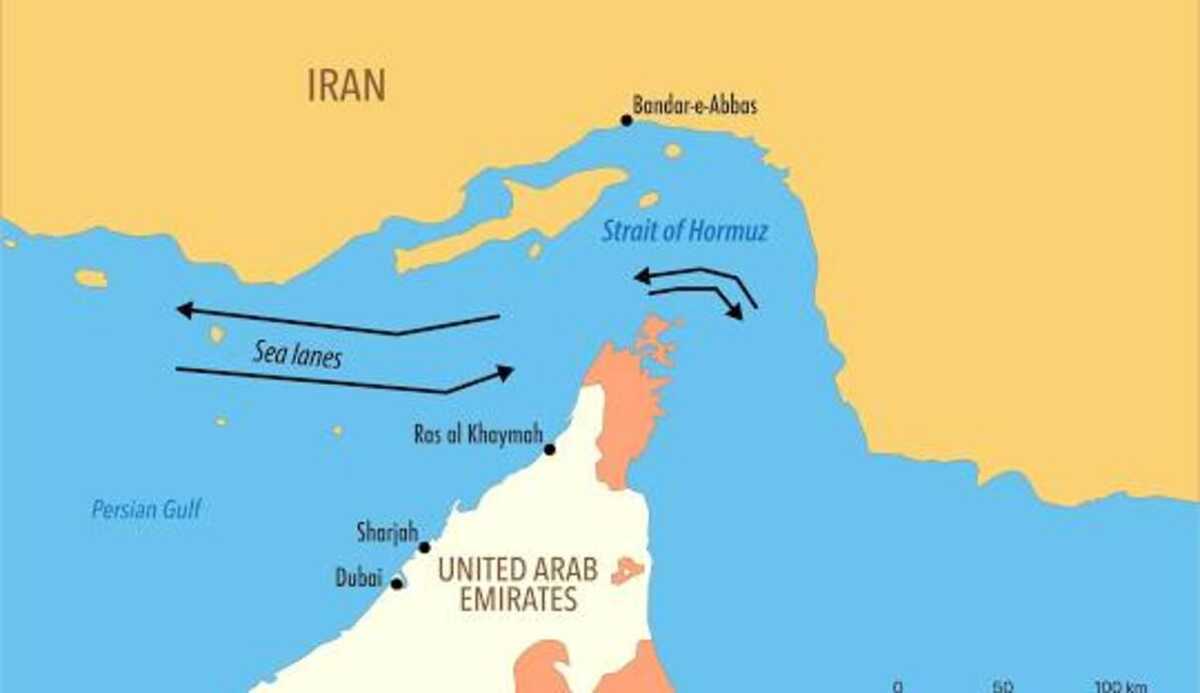
Global energy markets are facing their most uncertain conditions after the Strait of Hormuz, the planet’s most strategic shipping lane, was declared fully closed by Iran’s Islamic Revolutionary Guard Corps (IRGC). The Middle East conflict escalated into a US-Israel versus Iran war that began in late February 2026, turning the Persian Gulf into a hot-zone. The United States and Israel launched large-scale air strikes on Iran, targeting military facilities, nuclear sites, and leadership centres in Tehran. Official reports confirmed the death of Iran’s Supreme Leader, Ayatollah Ali Khamenei, in the attack.
The IRGC responded by firing ballistic missiles at Israel and US military bases in the Gulf region. At sea, the IRGC claimed to have attacked three tankers belonging to the US and the UK. Maritime traffic began to be disrupted with activity down by about 70%.
Tensions intensified when the Athens Nova tanker, accused of attempting illegal passage, was struck by two Iranian combat drones in the middle of the Strait of Hormuz. The vessel was reported to be ablaze. At the same time, the IRGC formally announced that the Strait of Hormuz was “closed to all wartime navigation”.
Brigadier General Ebrahim Jabari, a senior IRGC adviser, stated that Iran has full control of navigation in the strait. “We will burn every ship that tries to pass,” he asserted. Brent crude surged by 5% in a single day, approaching US$84 per barrel.
As of Friday, 6 March 2026, traffic through the Strait of Hormuz had fallen by 94%. More than 200 oil and LNG tankers are now stranded outside the strait, awaiting security assurances. The IRGC again reported a missile attack on a US tanker in the northern Persian Gulf this morning, leaving the vessel crippled and burning.
The closure of the Strait of Hormuz places heavy pressure on the Rupiah and the national energy subsidy budget. Given that Indonesia is a net oil importer, a rise in global oil prices, potentially up to US$200 per barrel, could compel the government to review domestic fuel prices in the near term.
The Indonesian Ministry of Foreign Affairs (Kementerian Luar Negeri, Kemlu) intensified talks with Iranian authorities to ensure the safety of two Pertamina tankers detained at the Strait of Hormuz.
Tensions in the Strait intensified after the IRGC attacked a US oil tanker. The global energy corridor risks paralysis as world oil prices are forecast to rise.
The Chief of the International Energy Agency (IEA), Fatih Birol, dampened fears of a world oil crisis amid the Middle East crisis and the closure of the Strait of Hormuz.
Economist Josua Pardede warned that closing the Strait of Hormuz could add pressure on the rupiah via higher oil prices.
Iran denied claims of closing the Strait of Hormuz and accused the United States of violating international law after the sinking of the frigate Dena in the Indian Ocean, which killed 100 sailors.
Prabowo Subianto summoned Zulkifli Hasan and Bahlil Lahadalia to the Istana to discuss food security and energy supply in light of the Middle East crisis and the closure of the Strait of Hormuz.
Daniil Medvedev, a world tennis star, found himself stranded in Dubai due to the closing of Middle East airspace. He risks missing the ATP Masters 1000 Indian Wells.
US special envoy expressed curiosity about Donald Trump’s stance amid the military siege. Meanwhile, waves of student protests erupted in Tehran.
The escalation in Iran intensified. The US, UK, and Germany issued travel warnings and evacuated military personnel.
Alongside concerns about the sustainability of the Gaza ceasefire, Indonesia has been mentioned in various future regional planning.