
Chromebook Trial Witness Admits Loss; Alleged Vendor Profits in Indictment Deemed Inappropriate
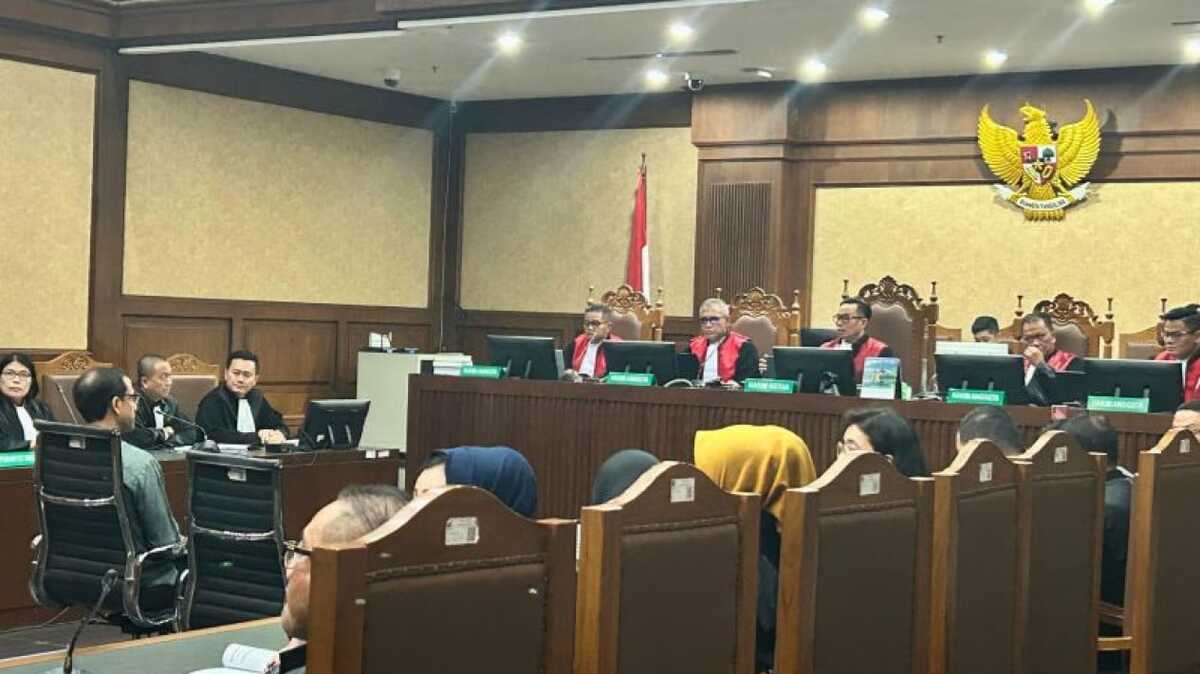
Several witnesses in the continued trial of the alleged Chromebook laptop procurement corruption case, held on Thursday, 5 March 2026, revealed details relating to pricing calculations and margins in the project.
One witness, Alexander Vidi, principal of PT Dell Indonesia, said that his company actually incurred a loss in the Chromebook procurement project. He explained that based on internal calculations and documents held by the company, Dell still had to make payments to the factory in full according to the orders, while receipts from distributors followed the Purchase Order (PO).
“Based on the mathematical calculations and the documents available, in reality we incurred a loss because payments to the factory must be made according to the orders, while receipts from distributors follow the PO,” he said.
He also questioned the basis of the Rp112 billion figure cited in the indictment as the value of alleged enrichment.
“If asked in real terms, we did incur a loss. I do not know where the Rp112 billion figure comes from; there should be data that can be provided,” Alexander added.
Similar testimony was given by Chandra Advan, a representative of PT Bangga/Chromebook Advan. He said that the gross profit earned by his company from the Chromebook procurement project in the 2021–2022 period was around Rp14.7 billion. He noted that this figure differs from the amount cited in the indictment, namely an alleged profit of Rp48 billion.
Chandra also stated that the Rp48 billion figure was never communicated to him during the investigation or during examinations by the Financial and Development Supervisory Agency (BPKP).
The proceedings also discussed the term “co-investment” appearing in the Berita Acara Pemeriksaan (BAP). A representative of PT Acer, Rico Gunawan, explained that the term refers to marketing funds or marketing financing commonly used in the technology industry. He said such funds typically come from principals such as Google, Intel, Microsoft, and AMD to support marketing activities.
“Typically, when we work with principals like Intel, Microsoft, or Google, there are marketing activities and they provide marketing funding. The funds are used for activities such as advertising, training for partners, resellers, or distributors,” he said.