
Chromebook Case Deemed More Appropriate for Administrative Realm, Not Corruption
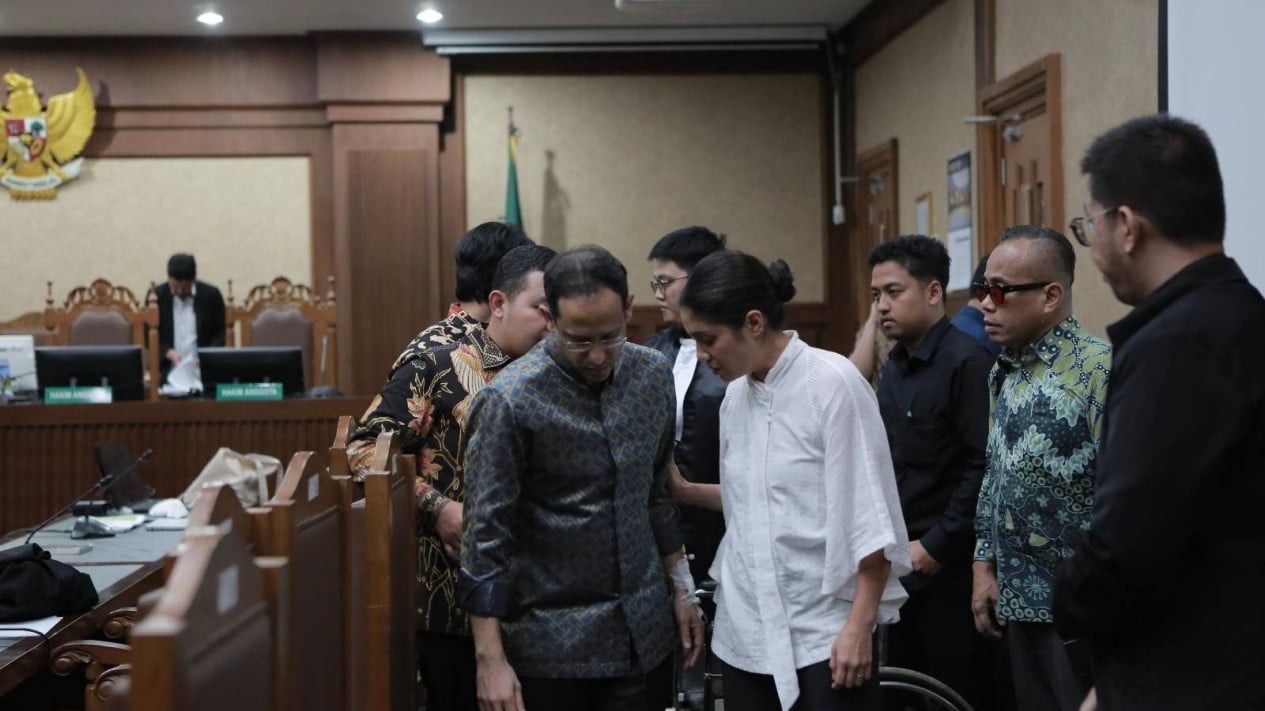
The continuation of the trial regarding the alleged corruption in the procurement of Chromebooks at the Central Jakarta District Court featured key expert witness Romli Atmasasmita, who emphasised that state losses do not automatically prove the existence of a criminal corruption offence.
During the hearing held on Monday, 4 May 2026, Romli stressed that state losses are a result (consequence), not the cause of a criminal act. Therefore, according to him, the existence of state losses must be preceded by proof of the elements of unlawful acts and malicious intent.
“If according to the prosecutor there is a loss, I opine that the loss is at the back, a result, not the cause. So if the loss cannot be proven, then there is no loss. Must be acquitted. There is a doubtful charge, in dubio pro reo, must be freed,” said Romli.
He also highlighted the importance of the ultimum remedium principle, namely criminal law as the last resort in law enforcement. In cases related to public policy, Romli assessed that an administrative approach should be prioritised.
“If a case is in the administrative realm, then it must be resolved administratively. Criminal law must not be made the primary means (primum remedium),” he stated.
According to Romli, this aligns with the provisions in Law Number 31 of 1999 on the Eradication of Criminal Acts of Corruption, particularly Article 32 paragraph (1), which stipulates that if sufficient criminal evidence is not found despite the presence of state losses, the case can be shifted to the civil realm for a damages claim.
Furthermore, he explained that in the context of bureaucratic procedural errors, criminal liability is not automatically imposed on the highest leadership. In the government structure, responsibility attaches to the technical officials who implement the policy.
“The Director General who must be responsible. If the Director General violates procedures, then the Director General is responsible, not the Minister,” he said.
Nadiem’s legal advisor, Dodi S. Abdulkadir, viewed this case as a form of criminalisation of administrative policy. He stated that the expert’s testimony actually confirms that the case is outside the realm of criminal corruption.
“It is clear from the expert’s testimony, this falls within the scope of government administration, not a criminal corruption offence,” said Dodi.
Meanwhile, the defendant Nadiem Makarim assessed that the expert’s testimony strengthens his position that there is no criminal element in the Chromebook procurement policy. He emphasised that the mens rea element or malicious intent has never been proven.