
Chinese Space Debris Threatens Indonesian Settlements and Ecosystems
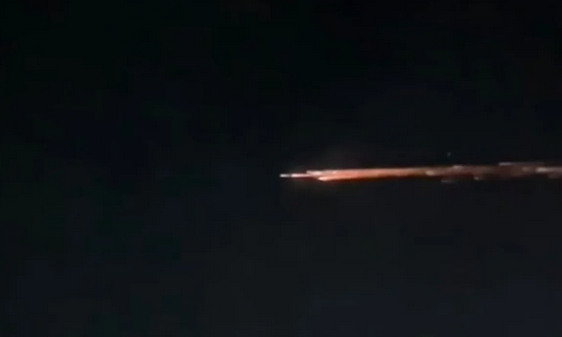
The government faces a policy dilemma with no truly comfortable options. Indonesia has been urged to heighten vigilance against falling space debris following the sighting of fragments from a Chinese rocket in the skies over Lampung and Banten. Academics from Gadjah Mada University (UGM) assess that the government needs to form a special monitoring system to anticipate future risks. Dwi Satya Palupi, a lecturer in Physics at the Faculty of Mathematics and Natural Sciences (FMIPA) at UGM, stated that the government must increase awareness of space debris entering Indonesian territory, as such incidents are not occurring for the first time. “Therefore, there needs to be a special team to monitor space debris that might fall in Indonesian areas in the future,” she explained on Wednesday (8/4). This statement came after the National Research and Innovation Agency (BRIN) identified the object seen in the skies over Lampung and Banten as space debris from a Chinese CZ-3B rocket. The Chinese CZ-3B R/B rocket is known to have been tracked orbiting Earth on 4 April 2026. Previously, residents in several areas of Lampung were startled by the appearance of a bright object in the sky on Saturday night. The object streaked across the space and appeared to break into several parts before disappearing. Dwi explained that such phenomena can actually be predicted using space object monitoring applications that track items entering Earth’s atmosphere, including space debris. “Through a special application, the falling of space debris can actually be predicted in advance. If such an application does not yet exist, Indonesia should start creating one,” she revealed. According to her, every piece of space debris entering Earth’s atmosphere at high speed will appear to glow due to air friction. This phenomenon superficially resembles a rocket, comet, or shooting star, so it is understandable that laypeople might mistake it for a meteor. “It looks similar at a glance, but these things can actually be distinguished,” she elaborated. She assessed that the public needs to adopt a critical attitude because space debris falling in densely populated residential areas could potentially endanger human safety. “If it falls on a resident’s house, it would certainly be very dangerous,” she added. In the latest case, Dwi noted that Indonesia was still fortunate because the rocket fragments fell into the sea. However, the impact still has the potential to threaten marine ecosystems. “It could pose a danger to living creatures in the sea, although there are other dangers as well,” she said. According to Dwi, the falling of space debris in Indonesian territory has not yet become a serious issue at present. However, without anticipatory measures, future risks could increase along with the growing amount of debris in Earth’s orbit. “The more that enters the atmosphere and is uncontrolled, this will become a more serious threat, including if it falls on settlements or hits important buildings,” she explained. She added that efforts to reduce the risks of space debris require global commitments. Countries and rocket-launching companies need to consider the impact of space waste from the initial planning of missions. “Companies that make rockets or use satellite launch services must start considering how to manage their debris so that it does not fall back to Earth,” she said.