
Chinese Scientists Warn of 'Doomsday' Sign as Himalayan Rivers Shift Course
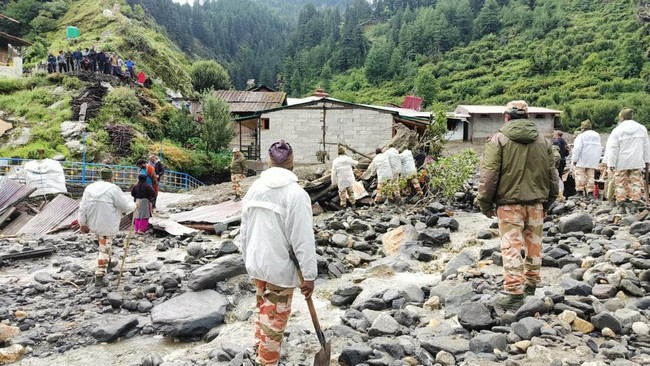
Jakarta, CNBC Indonesia – Global warming is increasingly affecting Himalayan river systems. A study has found that this massive frozen water storage system is becoming unstable due to rising temperatures caused by climate change, raising ‘apocalyptic’ concerns. Temperatures in the Himalayas have reportedly risen twice as fast as the global average since the 1980s. Researchers in the study published in the journal Science used satellite imagery and field observations from 1980-2020 to examine changes in Himalayan rivers. They investigated whether melting glaciers and frozen ground due to climate change could accelerate river movement and form new channels. ‘The upper Himalayan mountain regions stand out as areas where climate warming and channel migration interact strongly, offering an opportunity to study the effects of climate warming on river dynamics such as meanders and fluvial morphodynamics,’ said researcher Zhongpeng Han from China University of Geosciences in Beijing, cited from Scitechdaily on Tuesday, 26 May 2026. Researchers observed 1,079 river bends along 1,582 km of channels flowing over frozen ground. Their observations revealed that Himalayan rivers are shifting faster due to this phenomenon, making them much harder to predict. Furthermore, the impacts are significant, increasing flood and erosion risks, as well as potential damage to roads, bridges, agricultural land, and riverside communities. The changes are attributed to warmer conditions sending more water and sediment into rivers, which also weakens frozen riverbanks. These effects appear to make rivers less stable and more prone to shifting. Researchers also found differing responses to global warming between Himalayan and Arctic rivers. In the Arctic, vegetation helps stabilise riverbanks and slow channel movement. However, sparse vegetation in the Himalayas makes thawing riverbanks prone to erosion and collapse, leaving the region vulnerable to climate-driven river changes.