
Chinese Scientists Achieve Breakthrough in Direct Seawater Hydrogen Research
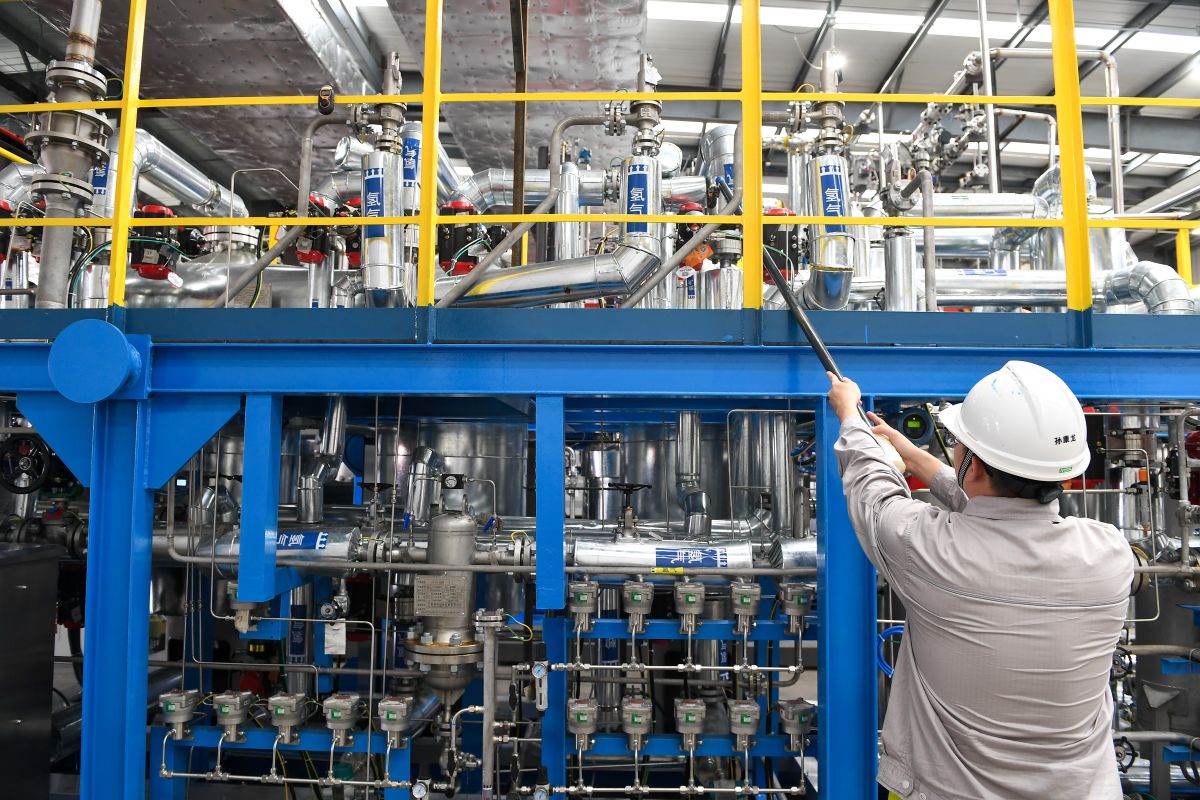
A group of Chinese scientists has innovatively proposed a systematic evaluation framework for large-scale industrial applications of direct seawater electrolysis for hydrogen production. This provides theoretical support for the development of an environmentally friendly hydrogen industry based on seawater. According to the latest research article published in the journal Nature Reviews Clean Technology, a number of researchers from Sichuan University and Shenzhen University have integrated the combined effects of various factors in the actual marine environment into seawater-based hydrogen production research systems, thereby expanding understanding from microscopic reaction mechanisms to improvements in macroscopic engineering scales. The direct seawater electrolysis process can utilise seawater and offshore renewable energy to produce hydrogen. However, the complexity of seawater composition and dynamics, such as fluctuations in composition, wind and wave disturbances, and corrosion from salt spray, hinders the transition from laboratory-scale breakthroughs to industrial scales. This research systematically reviews the main microscopic mechanisms of direct seawater electrolysis and critically analyses the applications and limitations of various approaches for engineering scale-up. For the first time, the study establishes correlative criteria between microscopic reaction mechanisms and macroscopic system operations, thereby bridging the research gap in the field where previous micro-level basic insights could not be applied to practical engineering applications. The research establishes a comprehensive and multidimensional systematic evaluation framework that encompasses material performance, interface processes, device configurations, marine environmental factors, and adaptability to renewable energy, thereby offering clear and measurable indicators for optimisation of the entire seawater hydrogen production chain, engineering design, and large-scale applications, according to the two universities.