
Chinese Researchers Develop AI Model to Process Stellar Data from Telescopes
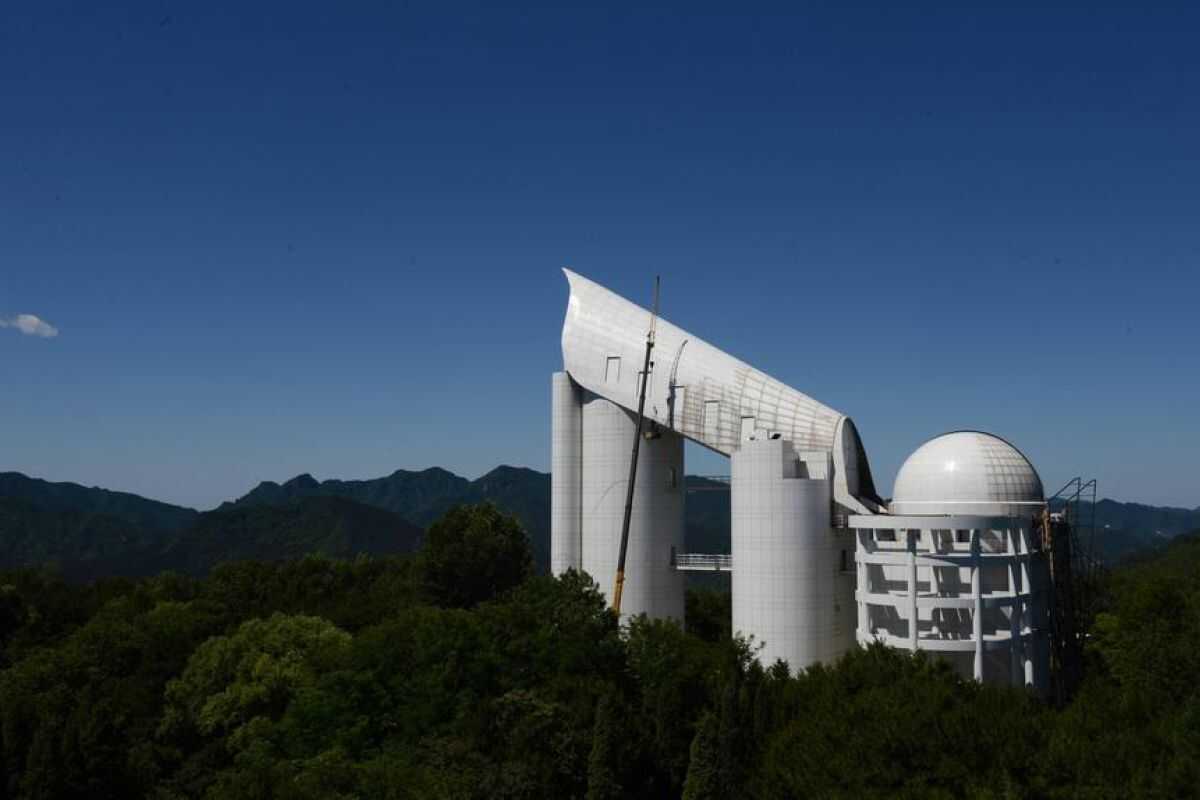
Beijing (ANTARA) - A team of Chinese researchers has successfully developed an artificial intelligence (AI) model called SpecCLIP, which is capable of interpreting stellar spectral data from various telescopes, demonstrating the great potential of AI in processing and integrating massive astronomical datasets, as reported by Science and Technology Daily on Wednesday (February 25).
Stellar spectra contain unique information about stars, including their temperature, chemical composition, and surface gravity. By analysing these spectra, astronomers can trace the evolutionary history of the Milky Way galaxy from its early formation to the present day.
However, current research faces significant challenges: different survey projects, such as China’s LAMOST and Europe’s Gaia satellite, acquire spectral data using different methods, resolutions, and wavelength ranges. These datasets are like stories told in different dialects, making it difficult to combine them directly for large-scale analysis.
To overcome this data barrier, a team of researchers from the National Astronomical Observatories under the Chinese Academy of Sciences (CAS), the University of Chinese Academy of Sciences (UCAS), and other institutions introduced a concept similar to large language models into the field of astronomy and applied contrastive learning methods, creating an AI that can independently learn and build intrinsic connections between spectral data from different sources.
According to Huang Yang of UCAS, SpecCLIP acts as a ‘translator’ that can convert low-resolution spectra from LAMOST and high-precision spectra from Gaia into a ‘universal language’. With SpecCLIP, scientists can easily perform combined analyses, as well as align and transform data across various instruments and survey projects.
According to the research, which has been published in the Astrophysical Journal, SpecCLIP is not a specialist AI model designed for a single task, but rather a framework similar to a foundational model. This model can predict stellar atmospheric parameters and elemental abundances simultaneously, perform spectral similarity searches, and even help identify unusual celestial objects.
These capabilities are crucial in the field of galactic archaeology, as they promise the ability to efficiently sort through massive datasets to find rare and metal-poor ancient stars, which will provide important evidence for research on the early formation and merger history of the Milky Way galaxy.
SpecCLIP has been applied in several cutting-edge exploration missions. For example, in one mission to search for Earth-like planets, the model was able to accurately characterise the features of planet-hosting stars, thereby improving the efficiency of sorting potentially habitable planets.