
Chinese Red Crescent Provides USD 200,000 in Humanitarian Aid to Iran War Victims
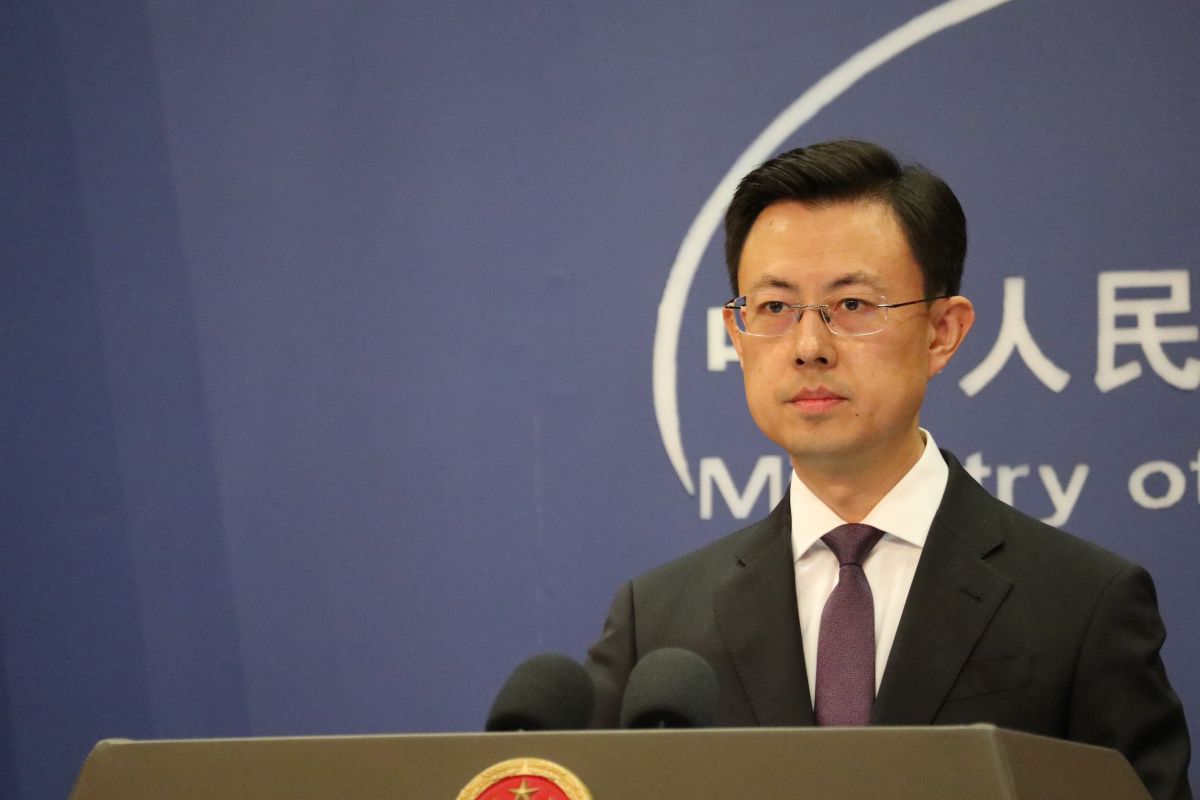
Beijing — China’s Red Crescent has announced emergency humanitarian assistance valued at USD 200,000 to Iran’s Red Crescent, specifically designated as special funds to support bereaved parents whose children were killed in the attack on the Shajarah Tayyebeh girls’ school in Minab, southern Iran.
“China’s Red Crescent has decided to provide emergency humanitarian assistance valued at USD 200,000 to Iran’s Red Crescent in the form of special funds to help grieving parents,” said Guo Jiakun, spokesperson for China’s Ministry of Foreign Affairs, at a press conference in Beijing on Friday.
Iran’s Deputy Minister of Cultural Heritage and Tourism, Ali Darabi, previously stated that his government would convert the Shajarah Tayyebeh girls’ school, which was bombed in Minab, Hormozgan Province in southern Iran, into a memorial monument for the victims of US-Israeli aggression.
The school was attacked on the first day of the joint US-Israeli Operation Epic Fury on 28 February 2026. Iran’s Foreign Minister Abbas Araghchi stated that at least 171 schoolgirls were killed. The New York Times subsequently reported that the school was struck by US Tomahawk missiles.
“China condemns all indiscriminate attacks on civilians and non-military targets. Attacks on schools, and particularly actions that endanger children, constitute serious violations of international humanitarian law and breach the fundamental principles of human conscience,” said Guo Jiakun.
China, according to Guo Jiakun, expresses its deepest condolences for the fate of students from Shajarah Tayyebeh Primary School in Hormozgan Province, Iran, and conveys sincere sympathies to their families.
“China remains ready to continue providing necessary assistance to Iran in a spirit of humanitarianism to help the Iranian people navigate this difficult period,” added Guo Jiakun.
Guo Jiakun stated that China is deeply concerned about the ongoing escalation of tensions in the Middle East. “China believes that the sovereignty, security, and territorial integrity of every nation must be respected and cannot be violated. China also condemns all indiscriminate attacks on civilians and non-military targets,” said Guo Jiakun.
All parties, according to Guo Jiakun, must immediately cease military operations, return to dialogue and negotiations as soon as possible, avoid escalating the current situation, and prevent the conflict from expanding to other regions.
The US and Israel have launched brutal attacks against targets in Iran, including Tehran, causing extensive damage and killing numerous civilians, including Iran’s Supreme Leader Ayatollah Ali Khamenei and 1,300 others, including several high-ranking Iranian officials.
Iran retaliated with drone and missile strikes targeting Israel, Iraq, and Gulf states hosting US military assets.
The US and Israel initially claimed the “preventive” attacks were necessary to counter threats from Iran’s nuclear programme, but subsequently clarified that they sought regime change in Iran.
Although US President Donald Trump stated that his forces had destroyed Iran’s military and claimed the Iranian Navy no longer exists, Iran’s Islamic Revolutionary Guard Corps (IRGC) claimed on Thursday (12 January) that their Navy had attacked the US Fifth Fleet base at Mina Salman Port, Bahrain, with missiles and drones.
They added that they had conducted precision strikes using kamikaze drones and cruise and ballistic missiles against several enemy targets, including an anti-drone system and a remote-controlled underwater vehicle warehouse.
Additionally, US Central Command reported that one US aerial refuelling aircraft, a KC-135, crashed in western Iraq.
Iraqi authorities also stated on Thursday that two oil tankers were attacked in Iraqi territorial waters, resulting in the suspension of operations at the country’s oil terminal.
Iran’s Armed Forces affirmed that they control the strategically vital Strait of Hormuz and will not permit the US or countries involved in recent attacks on Iran to transit this vital waterway.
Iran had previously announced that it was closing the Strait of Hormuz to vessels from countries associated with the US and Israeli strikes on Tehran. This waterway is one of the world’s most critical maritime routes for global energy shipments.
Due to the escalating global energy crisis, the US has also permitted the sale of Russian crude oil and petroleum products already loaded onto ships until Thursday (12 March).