
Chinese Garment Companies Flood West Java with New Factory Investments
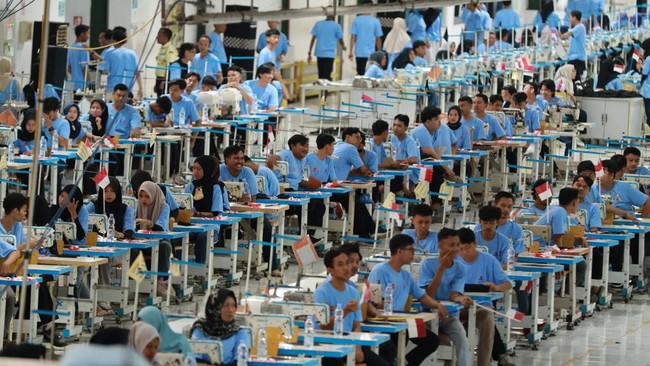
Indonesia’s textile and garment product (TPT) industry in West Java has faced significant pressure in recent years. Multiple factories have closed operations, whilst others have relocated production to Central Java to reduce operating costs.
However, amidst these challenging conditions, industrial zones in West Java are attracting a new wave of investors from China, particularly in the garment sector, signalling a new dynamic in the country’s textile industry landscape.
Suryacipta Binawati Dewi, General Manager of Sales and Tenant Relations, stated that Chinese garment manufacturers are beginning to establish factories within the industrial zones under her company’s management.
“From my presentation, several Chinese garment factories have approached us,” Dewi said.
The garment sector has become one of the most populated sectors in the industrial zone by company count. “Approximately 35% of Chinese tenants entering the zone operate in the garment sector,” she noted.
The arrival of this new investment has drawn considerable attention, occurring as Indonesia’s domestic textile industry faces mounting challenges. In recent years, numerous textile factories in West Java have reportedly ceased operations or relocated production elsewhere, particularly to Central Java.
These relocations are typically driven by production cost factors, including labour wages and operational efficiency concerns. Central Java is perceived to offer more competitive production costs for labour-intensive industries.
Nevertheless, Dewi assessed that West Java retains distinct appeal for foreign investors, especially those seeking to leverage the established industrial ecosystem.
“Garment factories typically require land area of around five to six hectares,” she explained.
The relatively modest factory size allows the sector to grow faster in terms of tenant numbers compared to large industries such as automotive.
“In terms of tenant numbers, the garment sector is indeed quite substantial. However, in terms of land area, the automotive sector remains the largest,” Dewi stated.
She added that a single automotive facility can require land exceeding 100 hectares, substantially different from garment factories operating at smaller scales.
Nevertheless, the emergence of several new Chinese garment factories is viewed as a signal that West Java remains an attractive destination for manufacturing industrial investment.
“Currently, several Chinese garment factories have entered and begun establishing their production facilities,” she said.
The trend of foreign garment investor inflow demonstrates that industrial zones in West Java maintain competitive advantage amid pressures facing Indonesia’s domestic textile industry.
“From the perspective of tenant numbers, the Chinese garment sector is indeed quite dominant among the new investors entering the zone,” Dewi concluded.