
Chinese Chamber of Commerce Protests RI's Nickel Royalty-Price Policy, Bahlil's Response
Jakarta, CNBC Indonesia - The Chinese Chamber of Commerce in Indonesia has sent an official letter to Indonesian President Prabowo Subianto. In the letter, Chinese business actors highlighted various Indonesian government policies and concerns arising from those policies.
The letter contains a series of complaints regarding increases in taxes and royalties, tightening of export proceeds (DHE) regulations, reduction in nickel ore quotas, changes to the Nickel Mineral Reference Price (HPM) up to allegations of excessive law enforcement practices that are deemed to open opportunities for corruption or extortion.
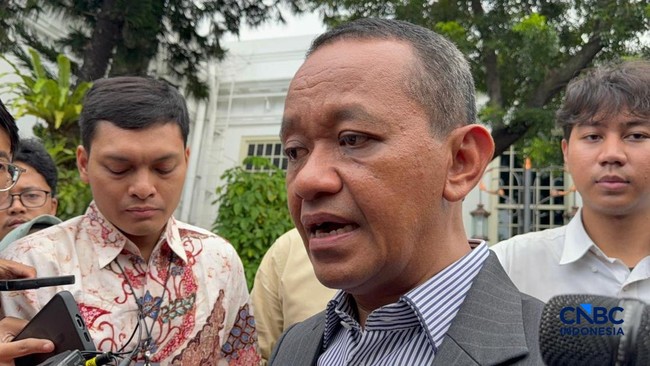
In response, Minister of Energy and Mineral Resources (ESDM) Bahlil Lahadalia explained that his side has communicated with several Chinese mining companies.
Not only that, Bahlil also stated that the Chinese Embassy has provided explanations regarding the complaints submitted by the business actors.
“Some have already communicated with me. The ambassador has also talked to me and I have given a good explanation,” Bahlil said when met at the Attorney General’s Office building, Jakarta, on Wednesday (13/5/2026).
It should be noted that the Indonesian government has decided to postpone the plan to increase royalty and export duty (BK) tariffs for the mining sector. This was known after Minister of ESDM Bahlil Lahadalia held a meeting with Finance Minister Purbaya Yudhi Sadewa at the Ministry of ESDM, Jakarta, on Wednesday (13/5/2026) afternoon.
ESDM Ministry Spokesperson Dwi Anggia said that ESDM Minister Bahlil Lahadalia and Finance Minister Purbaya Yudhi Sadewa agreed to postpone the implementation of the policy to listen to the aspirations of business actors.
“Agreed to postpone the previous royalty to listen to aspirations, still being exercised first. So this will ultimately be positive for everyone. The royalty and also the mineral export duty that has been agreed to be postponed,” Anggia said when met at the Ministry of ESDM, Wednesday (13/5/2026).
Previously, the Ministry of ESDM had held a public consultation (public hearing) on Friday, 8 May 2026. The meeting discussed the revision of Government Regulation (PP) Number 19 of 2025 concerning Types and Rates of PNBP Applicable to the Ministry of ESDM.
In the material discussed, the revision of the regulation will set adjustments to royalty rates for various minerba commodities such as copper, gold, silver, nickel ore, and tin.
Contents of the Chinese Investors’ Protest Letter
In the letter addressed to Indonesian President Prabowo Subianto, the Chinese investors emphasised that they have fully supported Indonesian government policies and conducted business in accordance with applicable laws.
They also claimed to have made significant contributions to Indonesia’s economic growth, job creation, downstream industry development, and social responsibility.
However, they assessed that the situation has changed drastically recently.
“In recent times, companies operating in Indonesia in general have faced serious problems, including overly strict regulations, excessive law enforcement, even corruption and extortion by relevant authorities,” the letter stated, quoted on Wednesday (13/5/2026).
According to them, this condition has seriously disrupted normal business operations, damaged long-term investment confidence, and raised widespread concerns among Chinese investment companies about the business environment and their future in Indonesia.
One of the main highlights is the repeated increases in taxes and levies. Chinese investors also complained about increasingly intensive tax examinations accompanied by threats of very large fines.
“Taxes and fees, including mineral resource royalties, have been raised repeatedly, accompanied by increasingly intensive tax examinations and even large fines up to tens of millions of US dollars, creating panic among companies,” the letter stated.
According to them, this condition has seriously disrupted normal business operations, damaged long-term investment confidence, and raised widespread concerns among Chinese investment companies about the business environment and their future in Indonesia.
One of the main highlights is the repeated increases in taxes and levies. Chinese investors also complained about increasingly intensive tax examinations accompanied by threats of very large fines.
“Taxes and fees, including mineral resource royalties, have been raised repeatedly, accompanied by increasingly intensive tax examinations and even large fines up to tens of millions of US dollars, creating panic among companies,” the letter stated.
The biggest concern appears to be focused on the nickel sector. In the letter, the Ministry of Energy and Mineral Resources (ESDM) is said to have recently raised the Mineral Reference Price (HPM) for nickel ore and changed its calculation formula by including cobalt, iron, and other associated minerals.
Chinese investors assessed that this policy has caused the comprehensive cost of nickel ore to surge by up to 200%.
“As the largest investors and operators in Indonesia’s nickel industry, Chinese investment companies are now facing sharp increases in production costs, widening operational losses, and imbalances in the industrial chain,” it stated.
They warned that the impact is not only on ongoing projects but also on future investments, exports, and jobs for more than 400,000 people in the nickel industrial chain.
This condition is assessed to be able to “seriously damage global investor confidence in Indonesia’s nickel sector.”
Although conveying a number of concerns, the Chinese investors still emphasised their commitment to Indonesia-China economic cooperation.
“Chinese investment companies in Indonesia are key participants and drivers of China-Indonesia economic and trade cooperation,” they wrote.