
Chinese Carmakers Plan to Open Hundreds of Dealerships in Indonesia, Honda Reveals Behind-the-Scenes Secrets
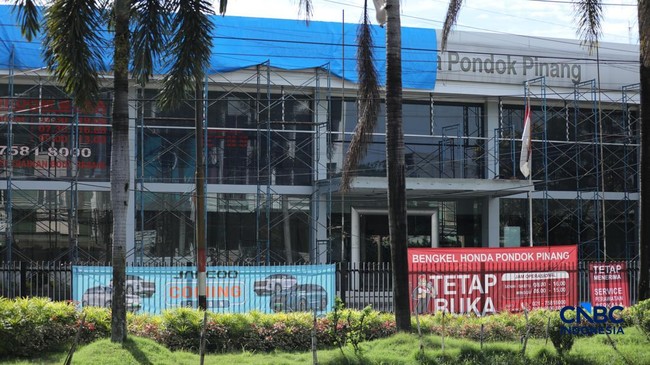
The landscape of Indonesia’s national automotive industry is beginning to change. While several Japanese brand dealerships are closing, players from China are accelerating their expansion of networks. The latest development is that one of Honda’s dealership networks in the Pondok Pinang area, Kebayoran Lama, South Jakarta, has officially ceased operations.
Based on observations by CNBC Indonesia some time ago, the location is undergoing renovation and will transition to a Jaecoo dealership, marked by a banner reading “Jaecoo, Coming Soon, Stay Tuned!”.
This phenomenon reflects new dynamics in Indonesia’s automotive industry. On one side, Japanese principals are adjusting strategies by emphasising network quality over aggressive expansion. On the other side, Chinese brands see significant opportunities to expand market penetration through massive dealership additions.
Amid these conditions, Chery is one of the more aggressive players. Chery’s Vice Country Director for the Business Unit, Budi Darmawan Jantania, revealed ambitious plans for dealership network expansion in the near future.
“Going forward, Chery will continue to expand its dealer network gradually across various regions in Indonesia. Nationally, Chery targets a total of around 120 dealers by the end of 2026, as part of efforts to strengthen service access and reach more consumers,” said Budi.
This strategy shows that Chinese manufacturers are not just chasing sales but also building a broader service foundation. With an increasing number of networks, consumer access to products and after-sales services is expected to become easier. This also serves as an important weapon to compete with established brands that have long been rooted in the market.
“This expansion is not only focused on major cities like Greater Jakarta but also extends to cities with strong market growth in various regions, including western, central, and eastern Indonesia,” said Budi.
This step indicates a more equitable market approach. Previously, expansions were concentrated in big cities, but now producers are turning to second- and third-tier cities with promising growth. This also reflects rising purchasing power and interest among regional communities in new vehicles.
“With this approach, Chery wants to ensure that consumers in various regions have easier access, both for vehicle purchases and integrated after-sales services,” Budi stated.
The aggressive expansion by Chinese brands contrasts with the strategies of some Japanese manufacturers, who are now more selective in managing their networks. Amid competition in pricing, technology, and services, dealership networks remain a key factor in winning over Indonesian consumers.
Honda Calls the Change Normal
From the Japanese side, PT Honda Prospect Motor’s (HPM) Sales & Marketing and After Sales Director, Yusak Billy, claimed that changes in the dealer network are normal in the ever-dynamic automotive industry.
“We understand that adjusting the dealer network is part of the changing dynamics of the automotive industry. For Honda, the most important thing is to ensure that every consumer still receives easily accessible, fast, and reliable services,” Billy told CNBC Indonesia, quoted on Friday (17/4/2026).
Amid news of several dealers ceasing operations, Honda is instead changing its approach. Rather than pursuing network numbers alone, the company now emphasises service quality and reach effectiveness in each region.
“As we have stated before, our focus is not only on the number of dealers but on the quality of the network and coverage effectiveness in every area. We want to ensure that every existing dealer network remains strong, relevant, and able to provide optimal services to consumers,” he said.
This step is part of Honda’s long-term strategy to remain competitive amid pressure from new players, especially aggressive Chinese brands offering prices and technology.
In line with that, expansion continues selectively in regions deemed to have market growth potential.
“In line with this, Honda also continues to develop networks in areas with potential, including by opening several dealers in new regions and completing facilities in existing dealers, according to the developing population and needs of Honda consumers,” Billy explained.