
Chinese and Iranian Foreign Ministers Discuss Efforts to End the War Over Phone
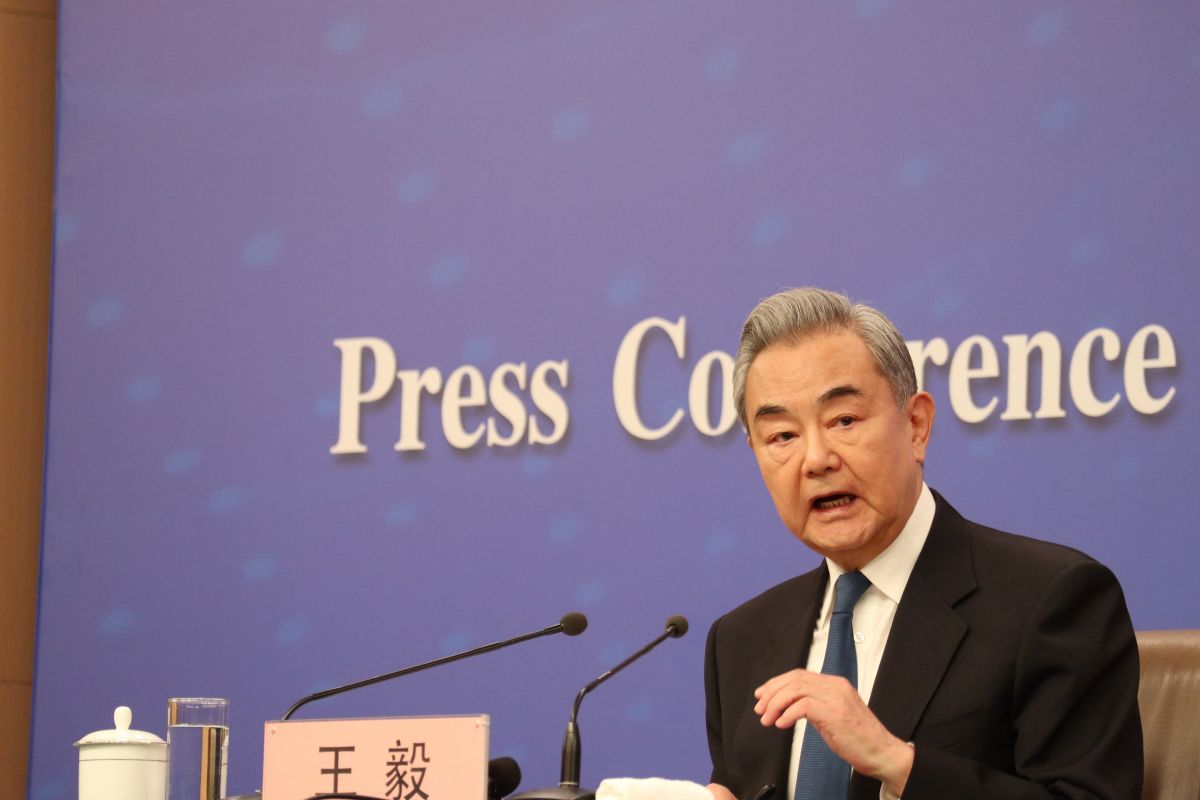
Beijing (ANTARA) - Chinese Foreign Minister Wang Yi spoke with Iranian Foreign Minister Abbas Araghchi over the phone on Tuesday (24/3) to achieve a comprehensive end to the war.
“Foreign Minister Araghchi conveyed that Iran is committed to achieving a comprehensive end to the war, not merely a temporary ceasefire,” stated a written release on the Chinese Ministry of Foreign Affairs website, accessed by ANTARA on Tuesday.
In the statement, Araghchi explained the latest developments in the regional situation and expressed thanks to China for the emergency humanitarian assistance provided.
“He stated that the Iranian people are increasingly united in facing external aggression and safeguarding the country’s sovereignty and independence,” it added.
Foreign Minister Araghchi also emphasised that the Strait of Hormuz is open to all parties, and ships can pass safely, but this does not apply to countries involved in the conflict.
“I hope that the steps taken by all parties can help de-escalate the situation rather than worsen the conflict. I also hope that China can continue to play an active role in promoting peace and stopping the war,” Araghchi said in the statement.
Meanwhile, Wang Yi reaffirmed China’s principled position, emphasising that all tensions must be resolved through dialogue and negotiation, not the use of military force.
“Negotiating is always better than continuing to fight. This aligns with the interests of the Iranian state and people and reflects the general aspirations of the international community,” Wang Yi stated.
Wang Yi hoped that all parties could seize every opportunity and momentum for peace and promptly begin the negotiation process.
“China will continue to adhere to an objective and impartial position, oppose violations of other countries’ sovereignty, actively promote peace and cessation of conflict, and commit to maintaining regional peace and stability,” Wang Yi added.
Previously, on Monday (23/3), US President Donald Trump said he had ordered a five-day delay for all attacks on Iran’s power plants and energy infrastructure.
Trump did this on the grounds that his side had held “very good and productive” talks with Tehran over the past two days regarding a complete and total resolution of our hostilities in the Middle East, as stated by Trump on his social media platform, Truth Social.
The delay depends on the success of the ongoing meetings and discussions, he added.
Tehran firmly rejected Trump’s claims about those talks. Iranian Foreign Ministry spokesman Esmaeil Baghaei said that several friendly countries had recently sent messages to Iran indicating the US desire to start talks to end the war. However, Iran has not yet responded.
Baghaei emphasised that Tehran’s position on the Strait of Hormuz, as well as their conditions for ending the war, remains unchanged.
Iran’s National Defence Council also stated that any attempt by the “enemy” to target Iran’s coasts or islands would lead to the laying of mines in access routes and communication lines throughout the Persian Gulf.
Regional tensions have risen since the US and Israel launched joint strikes against Iran on 28 February, with reported casualties exceeding 1,300 people.
Iran retaliated with drone and missile strikes targeting Israel, along with Jordan, Iraq, and Gulf countries hosting US military assets.
Iran’s counteraction has impacted global markets and aviation. The Strait of Hormuz has been effectively disrupted since early March.
Around 20 million barrels of oil typically pass through that route every day, and the disruption has increased shipping costs and driven up global oil prices.
Iran has also taken steps to ensure that non-US or Israel-affiliated transit ships can cross the strait. All ships, except “enemy” vessels, can pass through the Strait of Hormuz provided they coordinate with Iran.