
China's Two Sessions to debate environmental and ethnic affairs bill
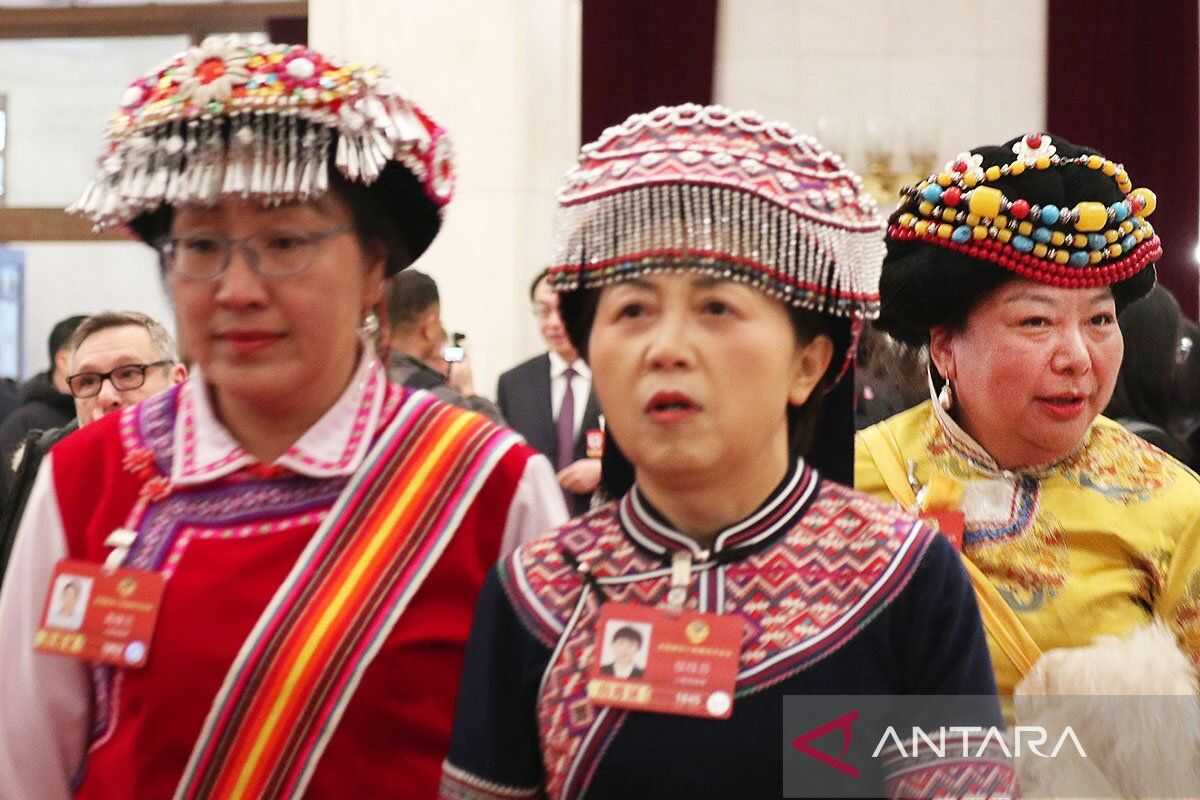
Beijing — China’s Two Sessions parliamentary meetings are scheduled to debate the draft law on environmental and ethnic affairs. Lou Qinjian, spokesperson for the National People’s Congress (NPC), described codification of environmental and ecological law as the second law in China to use the term ‘codification of law’, arguing that it is not merely a compilation of existing laws or the creation of new rules, but a systematic integration of mechanisms, legal systems, and normative environmental-ecological rules already in place. The press conference was held a day before the annual Chinese parliamentary session, commonly known as the ‘Two Sessions’ (Liang Hui), in Beijing. The Two Sessions refer to the convergence of the Chinese People’s Political Consultative Conference (CPPCC) and the National People’s Congress (NPC). Lou said that China’s economic and social development has entered a stage of high-quality growth that is increasingly green and low-carbon, thus requiring environmental protection through a tight system and a strong rule of law, while continuing to promote green development. The codification will include issues such as climate change, carbon emissions, carbon neutrality targets and other rules as the basis of the future legal system. “The focus is to strengthen communal awareness and advance the construction of a Chinese national community, while also organizing ethnic relations across the country,” Lou added. There are two major legislative bodies in China: CPPCC (zheng xie wei yuan) and NPC (quan guo ren da dai biao). CPPCC comprises non-politician members representing society such as businesspeople, religious groups, minority ethnic representatives, and even celebrities, totaling 2,078 people. The CPPCC itself does not have the authority to enact laws, but can only provide advice and serve as a source of ideas and social cohesion. The CPPCC provides recommendations to China’s parliament, namely the NPC. There are 2,773 NPC members who sign in to attend NPC sessions. NPC deputies work part-time and act as channels for the public to convey aspirations to the government. The NPC also has a Central Committee consisting of 152 members based in Beijing, functioning as the “engine” that runs the daily governance and legislative processes and operating year-round to ensure the country continues to run. The standing committee’s duties include drafting and supervising laws, supervising the operation of government, appointing and dismissing state officials, making decisions on important issues, handling internal NPC deputy affairs, conducting parliamentary diplomacy, and leading special committees. Under the Chinese constitution since 15 September 1954, the NPC has been the most important and highest organ of domestic Chinese politics.