
China's Railway Safety Protocols: From CTCS System to Big Data-AI
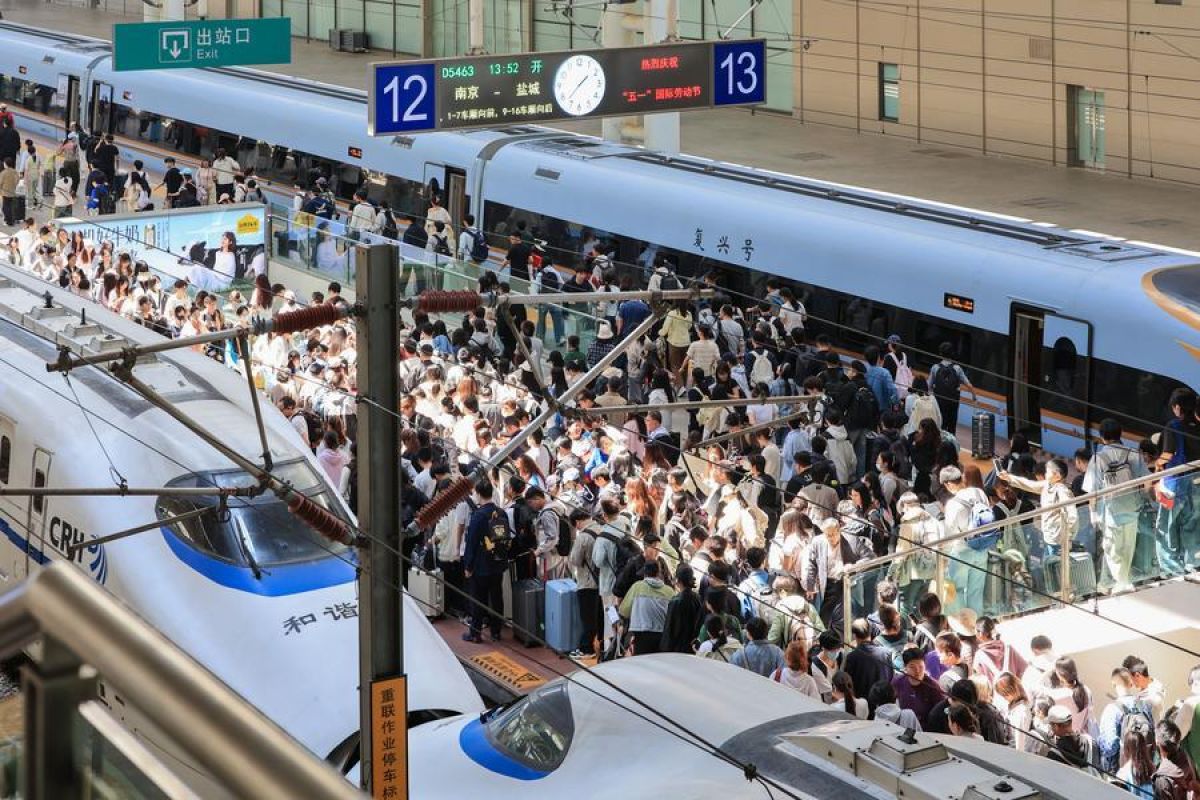
Jakarta (ANTARA) - China is renowned as a country with the largest and fastest railway network in the world, with its operational high-speed rail network already exceeding 50,400 kilometres. In the last two decades, the nation has successfully built a modern rail transportation system connecting thousands of kilometres of territory with exceptionally high operational safety levels. This success is supported not only by high-speed train technology but also by the implementation of strict, integrated, and digitally-based safety protocols. China itself experienced a train accident tragedy in 2011 in Wenzhou, which claimed dozens of lives. That incident became a turning point for national railway safety reforms. Following the accident, the Chinese government conducted a comprehensive audit of the signalling system, evaluation of train control technology, enhancement of inspection standards, tightening of operator certification, and modernisation of communication systems. The results of these reforms have significantly improved the safety levels of China’s high-speed rail in the subsequent decade. One of the core pillars of China’s railway safety is the implementation of the Chinese Train Control System (CTCS), an automatic train control system specifically developed for the national rail network in China. This system primarily functions to automatically control train speeds, prevent collisions between trains, regulate safe travel distances, provide automatic braking protection, and monitor train positions in real-time. CTCS itself consists of several technology levels, from CTCS-0 to CTCS-4. On modern high-speed rail lines, China generally uses CTCS-3, which supports two-way digital communication based on GSM-R between trains and control centres. In the CTCS-3 system, train positions are continuously monitored, control centres can issue real-time travel permissions, the automatic system will activate braking if the driver exceeds speed limits, and the tracks are monitored using balises, track circuits, and radio block centres. This technology has functions similar to the ETCS Level 2 system in Europe and is considered one of the most advanced train control systems in the world. China implements a national control centre-based operation system capable of simultaneously monitoring rail traffic. All high-speed train journeys are monitored through the Traffic Control Centre (TCC), Radio Block Centre (RBC), GSM-R communication system, as well as AI and big data-based digital monitoring. Rail safety in China heavily relies on strict periodic inspection systems. High-speed rail lines are inspected using high-speed inspection trains, rail vibration sensors, rail temperature monitoring, track surveillance drones, and AI cameras for detecting cracks. Inspections are conducted almost daily on major high-speed lines. Sensor technology allows small damages to be detected before they develop into system failures. Additionally, China applies the principle of preventive maintenance, which is maintenance before damage occurs. This approach drastically reduces operational disruption rates. Inspections are repeated multiple times during busy periods such as New Year holidays, Chinese New Year, and Labour Day. During this year’s Labour Day holiday alone, the number of passenger trips operated by China’s railway network from 29 April to 6 May reached 159 million. Regarding safety protocols, train drivers in China undergo very strict and standardised training. Safety protocols include national operator certification, emergency situation simulations, regular health checks, work hour supervision, and prohibitions on using personal devices during operations. Driver cabins are also equipped with digital surveillance systems that monitor driver concentration, responses to signals, reaction speeds, and train operational conditions. If the driver does not respond to the system within a certain time, the ATP (Automatic Train Protection) system can take over braking automatically. In emergency protocols, trains will automatically stop in safe zones, control centres send real-time instructions, passengers are evacuated according to emergency routes, rapid response teams are deployed to the location, and the line is immediately isolated from other traffic. Modern trains in China are also equipped with automatic fire suppression systems, emergency brakes, smoke sensors, two-way emergency communication, and automatic evacuation doors. China’s high-speed rail lines are built to high engineering standards to minimise accident risks. Safety infrastructure includes dedicated rail lines without level crossings, security fences along the lines, earthquake-resistant tunnels and bridges, anti-flood drainage systems, and digital structural monitoring.