
China's New Development Direction 2026-2030
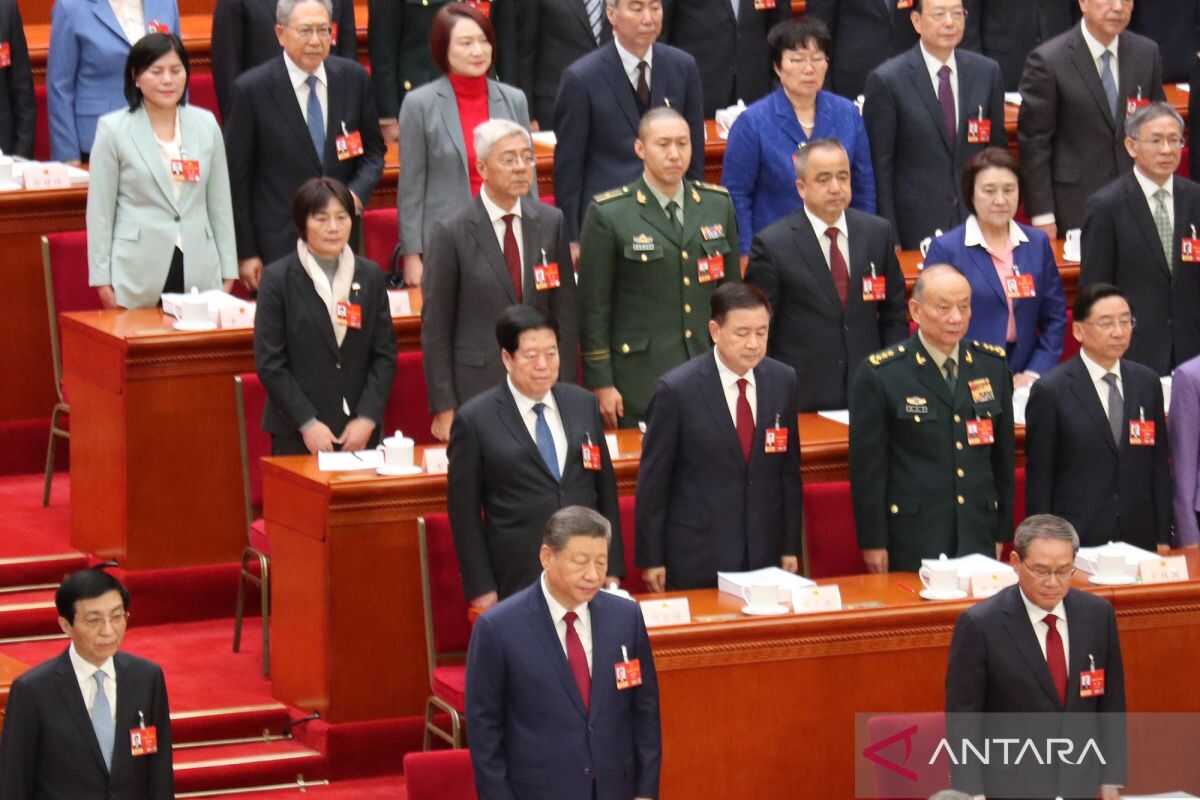
Jakarta (ANTARA) – China’s National People’s Congress (NPC) decision in March 2026 set a target for economic growth in the range of 4.5 to 5 per cent, not a routine statistical figure for the region. The figure reflects a massive shift from quantity growth ambitions towards quality based on high-tech innovation, or ‘new quality productive forces’. The paradigm shift has serious implications for Indonesia as a major trading partner and recipient of significant investment from Beijing. Global uncertainty triggered by the dynamics of Washington-Beijing relations, the Iran–US–Israel conflict further complicates the bargaining position of developing countries in Southeast Asia. Indonesia now stands at a crossroads between maintaining the old commodity-based partnership pattern or making a bold leap to follow Beijing’s new direction. As reported by the South China Morning Post (SCMP), Beijing has formally approved the 15th Five-Year Plan emphasising human investment and technological autonomy. If Indonesia fails to respond to the shift with agile legal instruments and policies, we risk becoming mere observers in the future digital supply chain. The old pattern based on exporting raw materials with low added value has reached saturation and is no longer relevant to the needs of the increasingly green and innovation-hungry Chinese market. The fundamental problem lies in the readiness of domestic regulation to seize opportunities for technology transfer and deeper supply-chain integration. Indonesia must soon move away from the role of a consumer market for Chinese products to a strategic partner in developing the industries of the future. China’s focus on the cyber economy, artificial intelligence, and renewable energy demands data sovereignty and robust technology. Therefore, the situation in China is to map how legal instruments and national economic policies must be recalibrated to ensure the prosperity of the people while constitutional mandates remain intact amid the storms of global transformation. Accelerating technology transfer. The first pillar that must be addressed is strengthening the legal framework for capital inflows that no longer focuses on investment figures but on the obligation to transfer knowledge in tangible form. Quoting the Chinese government’s work report, at the opening of the National People’s Congress in Beijing, they will be more selective in outward capital flows, prioritising sectors that bolster national technological autonomy. Indonesia must craft smart subsidiary regulations requiring every high-tech investment, such as semiconductors or electric battery development, to include clauses developing local human resource capacity legally binding.