
China’s Modular Buildings Go Global with Faster, Eco-Friendly Solutions
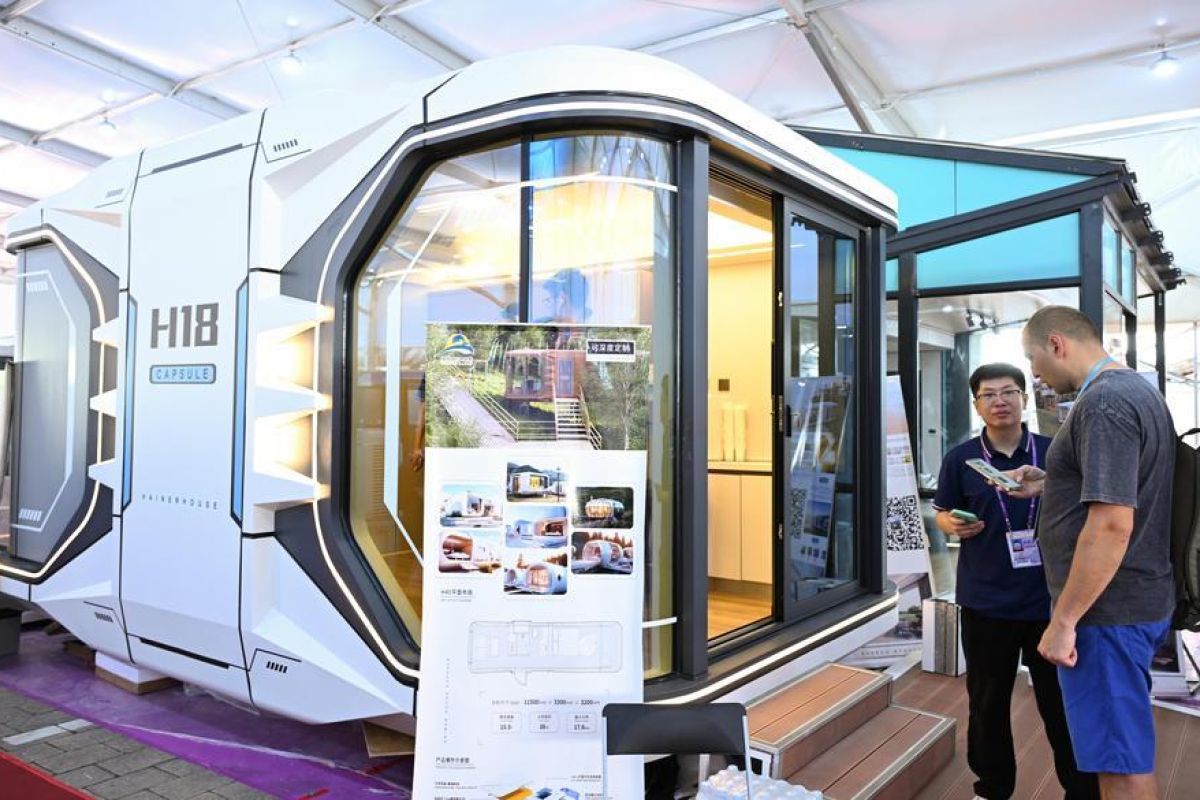
When Anna, a Chinese national, decided to build a small backyard granny flat in Perth, Australia, a video showcasing Chinese-made prefabricated homes caught her attention. The video showed a white folding house on a grassy yard. Four workers unlocked it, unfolded the walls, and laid the floor. Within hours, a 70-square-metre home was ready with bedrooms, living room, kitchen, bathroom, windows, and lights. The home was priced at just A$12,500 (A$1 = Rp12,791), significantly cheaper than local contractors’ typical quotes above A$100,000. ‘China’s homes are quick and cost-effective. Hard not to be interested,’ Anna said. Local contractors told her she’d face a six-month wait before work could begin, she added. Not surprisingly, Anna isn’t the only one interested. At a housing exhibition in May in Guangzhou, southern China, Russian trade agent Mark was seeking prefabricated units for clients. As a 16-year veteran in sourcing furniture from China, this industry insider sees a new business opportunity as Chinese modular units, such as space capsule homes and apple cabins, grow popular in Russia. ‘These units are highly sought after at Russian tourist sites. Visitors come just to take photos,’ Mark said. In recent years, China’s prefabricated building exports have surged, rising from $1.47 billion (US$1 = Rp17,802) in 2015 to around $4.34 billion in 2025. In Q1 2026, exports grew 45% year-on-year, according to China General Administration of Customs. Major export destinations include the US, Indonesia, Malaysia, Russia, and Australia, the administration said. Analysts say demand in developed markets is driven by soaring labour and material costs, housing shortages, and lengthy conventional construction cycles. In developing countries, growth stems from unstable supply chains, lack of skilled labour, and inefficient construction management. In October 2024, a 12-storey apartment building with 24 two-bedroom units, equipped with built-in air conditioning and air purifiers, was erected in Mindanao, Philippines. While conventional methods would take 12-18 months, this project was completed in just nine days thanks to prefabricated construction. Chinese firm Broad Group built the structure as part of its Holon project, using modular prefabrication akin to Lego blocks. Li Shun, deputy general manager of Broad Group’s Holon subsidiary, said 95% of work is completed in a Chinese factory through standardised processes, leaving only 5% for on-site assembly. ‘We aim to minimise on-site work to keep projects on schedule and ensure quality,’ Li said. This capability didn’t come overnight. Broad spent over $1 billion (US$1 = Rp17,789) over a decade developing its core technology, enduring hundreds of failed trials before succeeding. Their key innovation, B-core panels, are ultra-light yet ultra-strong structural materials made of two stainless steel plates and a thin core tube arrangement. These significantly boost earthquake and typhoon resistance, offer 20 times longer lifespan than reinforced concrete, and cut carbon emissions by 80-90% compared to conventional buildings. China’s rapid prefabricated building industry growth has also benefited from strong government support. In October 2025, when Broad shipped modular building components to the UAE for another Holon project, local customs authorities in Yueyang, Hunan province, implemented a streamlined customs plan that cut processing time by over 10 days and reduced logistics costs by around ¥3,000 (¥1 = Rp2,621) per container. Last year, Shanghai authorities released an action plan to promote smart prefabricated construction, offering financial support for qualifying projects. Other regions with similar supportive policies include Beijing, Guangdong, and Shanxi. According to a 2025 notice from Chinese authorities, city and district governments must promote new industrialised construction methods like prefabrication and smart technology, and establish long-term mechanisms to support green and low-carbon transformation in the construction sector. National efforts will also facilitate large-scale adoption of ultra-energy-efficient prefabricated buildings as China implements targets outlined in the 15th Five-Year Plan (2026-2030). ‘China’s prefabricated market is booming,’ said Qin Zhanxue, president of the China Building Materials Circulation Association. ‘In 2026, the compound annual growth rate is projected to exceed 15%, driven by policies and demand.’