
China's healthcare system races to catch up with rapid ageing
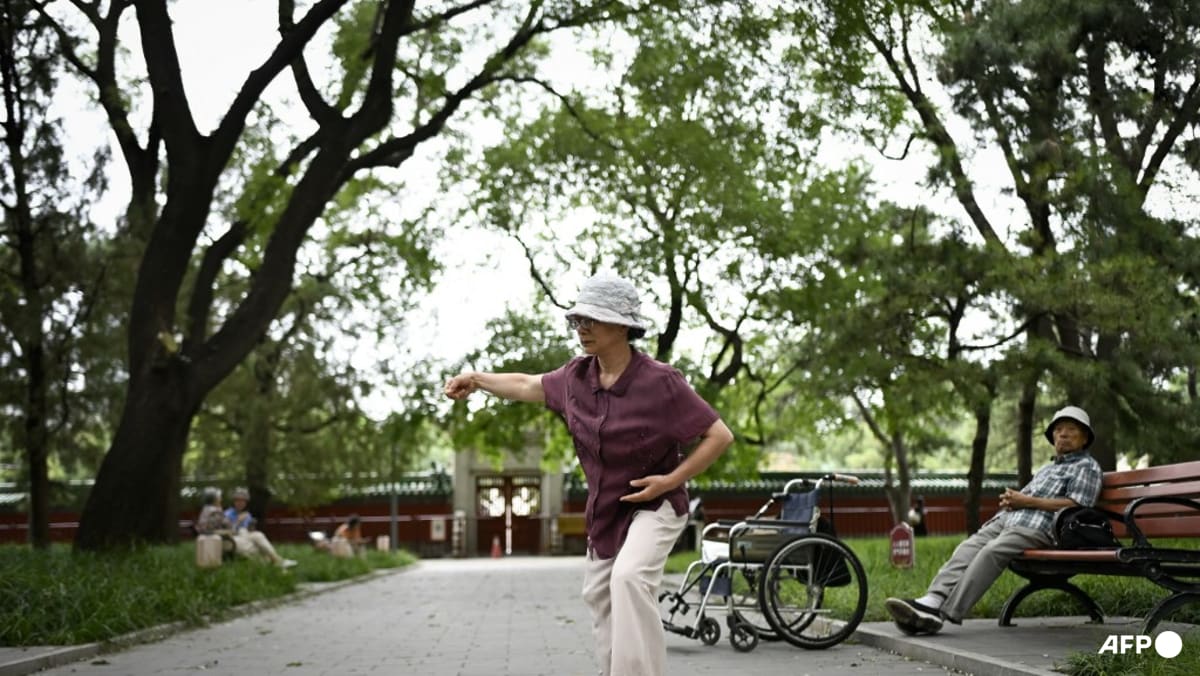
China’s healthcare system races to catch up with rapid ageing
By 2035, about 30 per cent – more than 400 million people – of China’s population is expected to be 60 and above.
BEIJING: Before Zhou Jiayi’s retired father fell gravely ill, she had been his primary caregiver.
But when the 67-year-old was diagnosed with adrenocortical carcinoma, a rare and aggressive cancer that develops in the adrenal glands above the kidneys, she quickly realised the demands of his illness were far beyond what she could manage alone.
As her ailing father’s condition deteriorated, she turned to palliative care services, seeking specialised support focused not just on the sickness, but on easing his pain and preserving his dignity.
She eventually admitted him to a facility in Beijing, where he received round-the-clock medical supervision and psychological support – professional care that Zhou says she could never have provided on her own.
“Through early conversations with two social workers, they understood my father’s story, background and our family’s needs,” she said.
“They helped with processes like ways to communicate. Without the social workers’ support, I don’t think I could have done it.”
Zhou’s father is among China’s rapidly expanding silver generation, a demographic shift that is reshaping the healthcare system of the world’s second most populous country.
A GREYING POPULATION
China is ageing at an unprecedented pace. Official data shows that people aged 60 and above now account for about 23 per cent of the population.
By 2035, that proportion is projected to rise to 30 per cent – more than 400 million people.
As life expectancy increases and birth rates decline, healthcare needs are becoming more complex. Chronic illnesses, cancer and age-related conditions are rising, boosting demand for specialist services such as geriatric and palliative care.
Yet, access remains limited. Reports suggest that fewer than 3 per cent of patients in China who need palliative care are able to receive it.
Industry players cite a shortage of trained professionals as one of the key reasons.
“Over time, we have deeply felt the need to become more professional and more capable of truly helping patients,” said Qin Yuan, director of Beijing Haidian Hospital’s palliative care department.
However, she noted that advancing the discipline is challenging because palliative care is not yet a fully established medical specialty in mainland China.
“There are no systematic domestic training pathways,” she added.
INTERNATIONAL COLLABORATION
To address the gap, the hospital has partnered with Singapore’s Tan Tock Seng Hospital (TTSH) and the philanthropic Lien Foundation in a three-year collaboration programme.
Under the initiative, which was announced earlier this month, more than 1,000 Chinese healthcare professionals from at least 18 medical institutions will receive training through a combination of on-site exchanges and online workshops. The curriculum covers areas such as symptom management and therapeutics.
“They are looking at our sharing as a platform whereby they can learn what regional standards are, and how we (practise palliative care) in Singapore,” said Neo Han Yee, head of palliative medicine at TTSH.
“They will then adopt what they can, aligning with their cultural context, laws, ethics and financing structure.”
TOP POLICY PRIORITY
As demographic pressures mount, China is increasingly looking outward for expertise and investment to upgrade its healthcare system.
Chinese officials have signalled that the country is prepared to further open up its healthcare sector to foreign investors, particularly in areas such as eldercare, rehabilitation and specialised medical services.
“Both policymakers and investors are taken aback by such an explosive growth of the Chinese demographics,” said Liu Baocheng, director of the Center for International Business Ethics at Beijing’s University of International Business and Economics.
“China now has a far (older) population than before. Therefore, it needs strategic adjustment to understand such a reality. From senior homes to the tomb. There is a large potential that needs to be further tapped.”
The issue is expected to be in focus as thousands of delegates gather in Beijing for the annual Two Sessions – known as “lianghui” in Chinese – that is set to take place next week, where top leaders outline policy priorities and economic targets for the year ahead.
Healthcare is among the key sectors foreign investors are watching closely, alongside telecommunications and education.
Despite its vast population, China’s per capita healthcare spending remains relatively modest. Last year, it reached about 2,500 yuan (US$365) per person.
By comparison, per capita health expenditure across OECD countries averaged nearly US$6,000 in 2024.
The gap highlights substantial headroom for growth and investment in China’s healthcare market.
As China confronts the realities of rapid aging, building a more robust palliative care system may prove to be one of the country’s most urgent healthcare priorities.