
China's Gold Deposits Become More Abundant Up to 3 Kilometres Underground
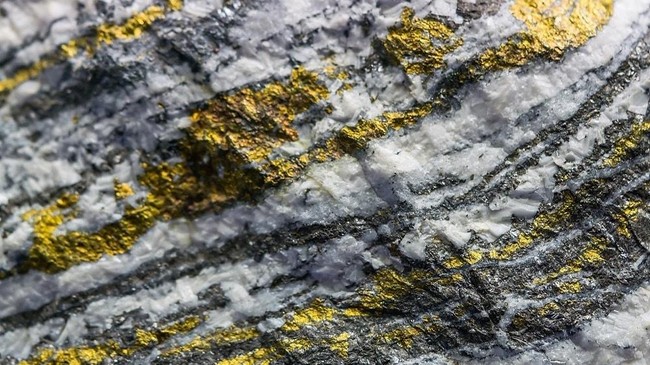
China has discovered a gigantic gold field in Hunan province. The Hunan Geological Bureau revealed that 40 gold veins have been found deep beneath the hills of Pingjiang County. “Many rock core samples from drilling show visible gold,” said Chen Rulin from the Hunan Geological Bureau, quoted from Daily Galaxy on Friday (27/3/2026). The gold is not in microscopic form or chemically bound in other minerals. It appears in the samples as flakes and clearly visible concentrations, a physical sign considered unusual by experienced prospectors. To date, drilling has penetrated more than 65 kilometres at 55 locations. Initial results indicate reserves of 300 tonnes of gold from the first two kilometres of depth. However, the true potential is much greater. The latest estimates suggest the total deposit could exceed 1,000 tonnes of gold at a depth of three kilometres, with a value of 600 billion yuan (Rp1,400 trillion). Not only is it large, but the quality of the gold is also exceptional. In one sample from a depth of 2,000 metres, the gold content reached 138 grams per tonne. In contrast, most commercial mines operate at grades below 10 grams per tonne. Advanced technologies such as 3D geological modelling are being used to map this deposit. The discovery of gold in areas around the main site also indicates that reserves could be more extensive than estimated. On the other hand, scientists suspect this phenomenon is triggered by extreme geological activity. A study in the journal Nature Geoscience states that earthquake pressure can generate electrical charges in rocks, which then trigger rapid gold deposition. Nevertheless, the Wangu project is still in the exploration phase. The Chinese government emphasises that further verification is needed before confirming the full scale of the deposit. China’s gold reserves The reserves found at depth in Hunan province are among the largest gold deposits ever documented and could rival the long-operating South Deep mine in South Africa, according to ECO News, quoted from Newsweek. Separately, China has recently recorded another breakthrough, with the discovery of Asia’s largest underwater gold deposit, according to claims by officials. The find was made off the coast of Laizhou in Yantai, Jiaodong Peninsula, eastern China’s Shandong province. Although the size of the deposit has not been disclosed, authorities believe this latest discovery has increased Laizhou’s gold reserves to more than 3,900 tonnes, which is approximately 26% of China’s known gold resources, according to the South China Morning Post. In November last year, officials announced the discovery of more than 1,400 tonnes of gold in Liaoning province, northeast China. With confirmed reserves of 1,444.49 tonnes, this find was reported as the largest single discovery in China since the founding of the country in 1949, according to the Ministry of Natural Resources. In the same month, authorities also discovered a gold deposit with estimated reserves of more than 1,000 tonnes in the Kunlun Mountains near the western border of the Xinjiang Uygur Autonomous Region. In November 2023, officials in Shandong province stated that they had identified about a quarter of China’s gold reserves, including more than 3,500 tonnes in the Jiaodong Peninsula, reported as the world’s third-largest gold mining belt. According to the World Gold Council, approximately 216,265 tonnes of gold have been mined throughout history, and about two-thirds of this gold has been extracted since 1950. In the United States, in 2024, domestic gold mine production is estimated to reach 160 tonnes, with a value of approximately US$12 billion, marking a 9% increase from the 2023 value, according to a January report from the US Geological Survey.