
China's Falcon 9 Rival Rocket Fails to Launch, Cause Kept Secret
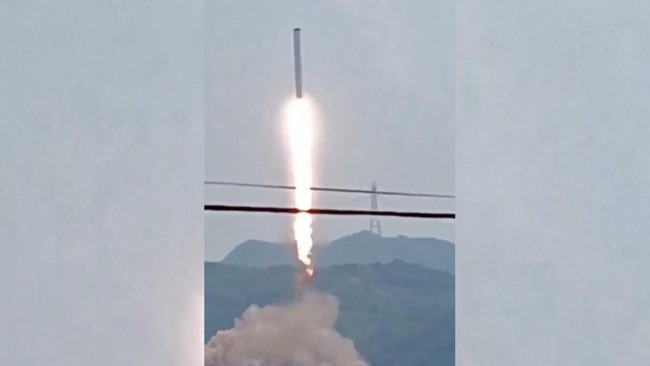
The maiden flight of the Tianlong-3 rocket owned by Space Pioneer was reported to have failed completely. This represents a blow to Beijing’s ambitions to rival Elon Musk’s SpaceX.
The Beijing-based company confirmed the failure through a brief statement on its official WeChat account, as reported by Reuters on Tuesday (7/4/2026). However, they did not disclose technical details of the cause of the failure of this reusable rocket, which was touted as China’s new flagship.
This failure has drawn attention because the Tianlong-3 is designed similarly to SpaceX’s Falcon 9, a reusable rocket that has been proven through hundreds of launches.
Reusable rocket technology, which can be launched, recovered, and reused, is considered crucial for drastically reducing satellite launch costs. Space Pioneer previously claimed that the Tianlong-3 is capable of carrying up to 36 satellites in a single launch.
That capacity is aimed at supporting China’s ambitions to build a constellation of thousands of satellites and reduce SpaceX’s dominance in low Earth orbit.
Those ambitions are also backed by substantial funding. Six months ago, the company successfully raised nearly 2.5 billion yuan, or about US$363 million. Those funds are focused on accelerating the development of a new generation of reusable rockets.
However, this failed mission is not the first. In 2024, the first stage of the Tianlong-3 rocket detached from the launch pad during a test due to a structural failure. The rocket fell in a hilly area in Gongyi City, central China.
These repeated incidents underscore the technological chasm between China and the United States in developing reusable rockets. To date, no Chinese company has succeeded in operationally recovering and reusing a rocket’s main stage.
Several other players, such as LandSpace, have shown progress. That company even targets the second launch of its reusable Zhuque-3 rocket in the first half of this year.