
China's Demand Reaches Rp120 Trillion, Indonesian Durian Set for Major Share
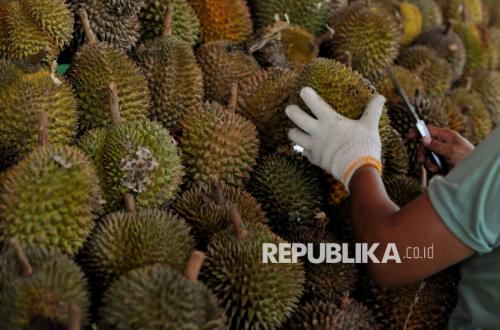
The global demand for durian continues to surge, with China emerging as one of the largest consumers. The value of the Bamboo Curtain country’s needs for this commodity is estimated to reach Rp120 trillion per year, opening up major opportunities for Indonesia to expand its exports and strengthen its position in the international market.
This opportunity is becoming evident in the transmigration area of Parigi Moutong Regency, Central Sulawesi. Coordinating Minister for Infrastructure and Regional Development, Agus Harimurti Yudhoyono, stated that the export potential of durian from this region could exceed Rp1 trillion in a year.
“In just three months, it could reach Rp400 billion. That means in one year, more than Rp1 trillion could be exported to China,” said AHY in his statement in Jakarta on Wednesday.
This optimism is bolstered by the government’s ongoing efforts to promote connectivity and infrastructure in production areas. With adequate logistics support, commodities from regions like Parigi Moutong are no longer isolated but can directly connect to the global market.
On the same occasion, Transmigration Minister Muhammad Iftitah Sulaiman Suryanagara stated that his office would soon directly review the large-scale durian export process to China. The initial export phase is estimated to reach tens of thousands of tonnes with a value of around Rp42 billion.
He emphasised that the Parigi Moutong area has one of the largest durian orchards, not only in Indonesia but also globally. This potential demonstrates that transmigration areas can develop into new economic centres based on flagship commodities.
Concrete steps have also been taken through bilateral communication. On 13 April, the Transmigration Minister met with the Chinese Ambassador to Indonesia, Wang Lutong, to discuss opportunities for durian export cooperation. China is said to have the potential to become the main offtaker for Indonesian durian products.
The export scheme will start with frozen durian, before being developed to fresh durian, which has a higher economic value and greater demand in the Chinese market. This strategy is considered realistic to maintain product quality while meeting international market standards.
Data from the Parigi Moutong Regency Government records durian production in the Bahari Tomini Raya Transmigration Area at 903.9 tonnes per year. This figure is believed to be able to continue increasing along with the strengthening of the agricultural ecosystem and investment in the horticulture sector.
However, behind these great opportunities, challenges remain. Quality standards, supply consistency, and product certification are the main prerequisites for penetrating the highly competitive Chinese market. Without such readiness, the great opportunities could turn into unrealised potential.