
China's Catastrophe Leaves Humanity Powerless
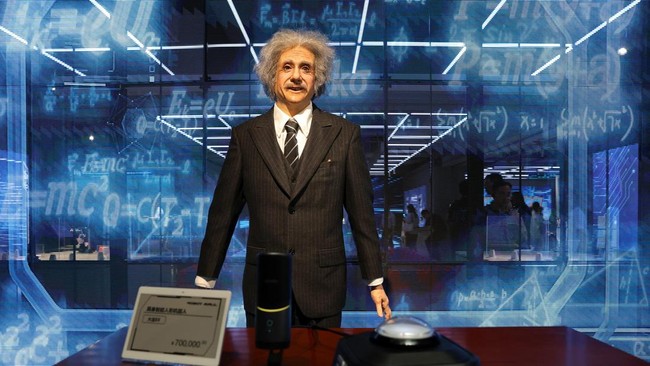
Jakarta, CNBC Indonesia - Workers are increasingly pressured by the widespread adoption of artificial intelligence (AI) across sectors, with many companies announcing mass layoffs linked to AI implementation. Ongoing layoffs coupled with weak new hiring has left workers more vulnerable. Unfortunately, employee protections in the AI era remain a low priority for governments worldwide. China and Singapore have urged companies to develop AI for creating meaningful jobs rather than eliminating them, but these guidelines are not yet binding laws. As a result, many companies appear to ignore workers’ fates in pursuit of efficiency gains crucial for profit and business growth. In China, technology consultant Kenneth Ren of RealMan Intelligent Technology is training ‘future workers’—but these are robots, not humans. “We are essentially teaching robots to think independently,” Ren told CNBC International at the Beijing Humanoid Robot Data Training Centre on Monday (25 May 2026). Ren helps run a ‘humanoid robot school’ in China. The facility aims to accelerate robot development, not just as entertainment tools but as productive workforce support. Humanoid robot development is part of the broader industrial strategy championed by China’s Communist Party. Beyond humanoid robots, Beijing targets electric vehicles (EVs) and artificial intelligence (AI) as key future technologies. Chinese policymakers have prioritised humanoid robots for development by 2030 to secure China’s dominance in global supply chains and markets. “China’s next-generation industrial policy represents a shift from sector-specific intervention to ‘comprehensive industrial policy’”, wrote the US Chamber of Commerce and Rhodium Group research firm in a report dated 11 May. The Beijing humanoid robot centre is government-backed and part of a network of similar facilities across China. These centres train robots to operate in various real-world scenarios. Fudi Luo is one of hundreds of robot trainers. A former art teacher, he instructs humanoid robots to sort items on factory production lines. Using cameras, controllers, and motion capture, he and fellow instructors guide AI robot students through tasks, repeating actions multiple times. “Initially, robots had no awareness, so I had to control them manually. But once my movements generated data, the robots learned and could perform the tasks themselves,” he said. The robots are trained in skills such as house cleaning, massage, shelf stocking, and metal repair. Luo said his workday typically involves eight hours of repetitive motions. “Robots don’t know fatigue, but I do!” he joked. At the same campus where China promotes robotics, Beijing-based Inspire-Robots Technology trains robotic hands using motion tracking and sensors. Winston Zou, the company’s board secretary, told CNBC International that a robotic hand typically practises 10,000 times to learn a new skill. “Our robotic hands can now pick up eggs or smaller objects,” Zou said. US Should Be Alert Tesla CEO Elon Musk, in his Q4 2025 performance report released in January 2026, stated that Optimus humanoid robots are currently more advanced than Chinese-made counterparts in hand design. Musk said robotic hands remain the most challenging aspect to master. However, Musk did not deny China’s aggressive progress in the field. “So far, China is the strongest competitor in humanoid robots. China excels at scaling up manufacturing,” he said. Currently, robots in China are not only trained at specialised centres but also deployed directly into real-world workplaces. Many AI-powered robots are being tested for roles such as restaurant chefs, bartenders, waiters, and traffic officers. Many robots still rely on human supervision and direction, but it is only a matter of time before they fully take over human tasks. “Our aim is to take over tasks dangerous for humans or repetitive jobs people are unwilling or afraid to do,” Ren said at the centre. “We do not intend to replace humans in any field,” he added.