
China's Booming NEV Sector Draws Multinational Interest
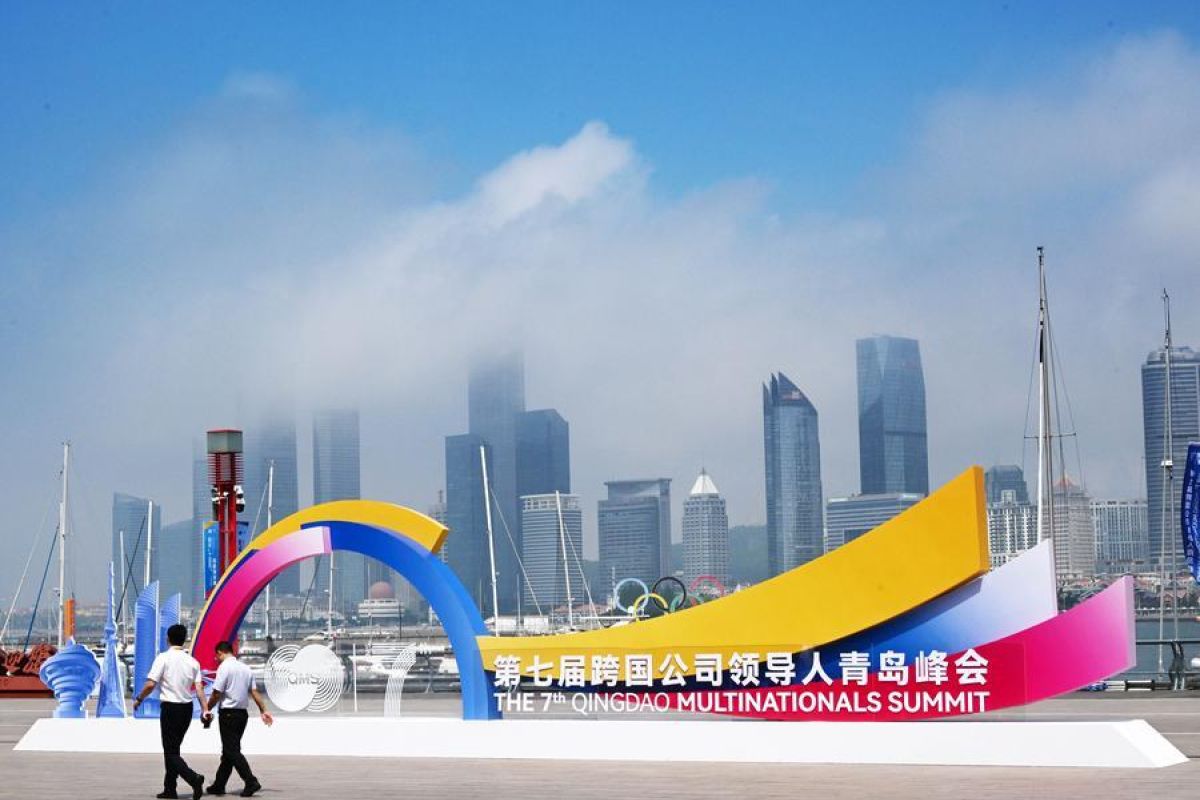
Multinational companies involved in the new energy vehicle (NEV) sector have highlighted the vast opportunities created by China’s rapidly growing NEV industry at the seventh Qingdao Multinational Summit. The three-day summit, held in the coastal city of Qingdao in eastern China’s Shandong Province, concluded on Wednesday and attracted more than 700 representatives from government departments, international organisations, multinational corporations, and business associations.
‘For Avanci, China is one of the most important markets. The country is the world’s largest automotive producer and is at the forefront of the electric and connected vehicle sector. Without China, our mission to simplify global licensing would be incomplete,’ said Uta Schneider, vice president of global government affairs at Avanci, in an interview with Xinhua on the sidelines of the summit.
Schneider added that China is a key driver in standard essential patent innovation, with many Chinese companies becoming significant patent holders. ‘For us, China is not just a market. It is an important partner in shaping how we license connectivity globally,’ she stated. Headquartered in the United States, Avanci is a patent licensing company providing licensing services to smart vehicle manufacturers worldwide. In 2018, just two years after its founding, Avanci began offering licensing services to Chinese technology companies and automotive manufacturers.
Schneider expressed being deeply impressed by the speed and scale of innovation in China’s automotive sector. ‘From my base in Brussels, I can see this transformation firsthand. Chinese-made vehicles are increasingly visible on European roads, competing confidently with their global rivals in terms of quality, innovation, and value,’ she said. Regarding the company’s latest developments in China, Schneider noted that Avanci has established offices in Beijing and Shenzhen, with its local team continuing to grow. Several Chinese NEV manufacturers have already joined the company’s vehicle licensing platform.
After years of sustained growth, China’s NEV industry has developed a fully integrated supply chain and achieved a combination of cost competitiveness and rapid innovation. In 2025, domestic NEV production and sales both exceeded 16 million units, with NEVs accounting for more than 50 per cent of total new car sales in China’s domestic market. The booming NEV industry has created new opportunities for multinational companies, resulting in a growing number of global firms increasing their investments in China’s NEV and automotive components sector.
For instance, the electric vehicle project of Smart, a brand jointly developed by Mercedes-Benz and China’s Geely Holding Group, was officially established this year in Jinan, the capital of Shandong. The brand has successfully gained a foothold in both the Chinese and European markets by leveraging the complete local supply chain and supportive policies, said Tong Xiangbei, global CEO of Smart, at the summit.
A broader shift is occurring among multinational companies operating in China. Rather than focusing solely on product sales, many firms are now increasingly integrated into the country’s NEV innovation ecosystem, adopting highly localised strategies that span the entire value chain from research and development to manufacturing, application, and after-sales service. This trend is clearly visible in a series of investments. For example, US carmaker Tesla has established the Shanghai Megafactory, a facility dedicated to producing energy storage batteries, in the Lin-gang Special Area of the China (Shanghai) Pilot Free Trade Zone in eastern China. Meanwhile, Volkswagen and Chinese manufacturer FAW have set up an NEV research and development centre in Hefei, Anhui Province, and continue to expand their electric vehicle line-up in China.
In addition to deepening their presence in China, some multinational companies are also partnering with Chinese firms to expand their global footprint in the NEV industry. Last year, multinational carmaker Stellantis and China’s CATL jointly commenced construction of a large-scale lithium iron phosphate battery factory in Spain.