
China's "Artificial Intelligence Arsenal": What the West Should Fear
For years, the Western world has viewed China’s technology industry with disdain. China has frequently been branded a “copycat factory” that merely excels at replicating artificial intelligence innovations created by the United States, such as ChatGPT by OpenAI or Gemini from Google.
However, such dismissive attitudes now appear misguided. A recent Foreign Affairs report reveals far more concerning findings: China has built its own artificial intelligence arsenal.
The capability of such AI weapons is no longer merely imitative but is beginning to dictate the direction of future warfare. For Beijing, AI is not simply a writing assistance tool or image generator. Rather, AI is an instrument of geopolitical and military supremacy.
The Foreign Affairs report is based on research by a team of researchers from Georgetown University’s Center for Security and Emerging Technology (CSET), which examined thousands of Chinese military procurement documents published openly over the past three years.
Unlike the technology landscape in Silicon Valley, often characterised by tensions between major technology companies and the Pentagon, China employs a starkly different strategy.
Under Xi Jinping’s leadership, the boundary between civilian technology companies and the military (People’s Liberation Army/PLA) has been deliberately erased. This strategy, known as “civil-military integration,” compels major technology companies such as Baidu, Tencent, and Alibaba to mandatorily share their latest AI innovations with China’s military.
As a result, technologies including facial recognition, natural language processing, and computer vision algorithms originally developed for commercial markets have been rapidly repurposed into lethal target-tracking systems and military intelligence analysis.
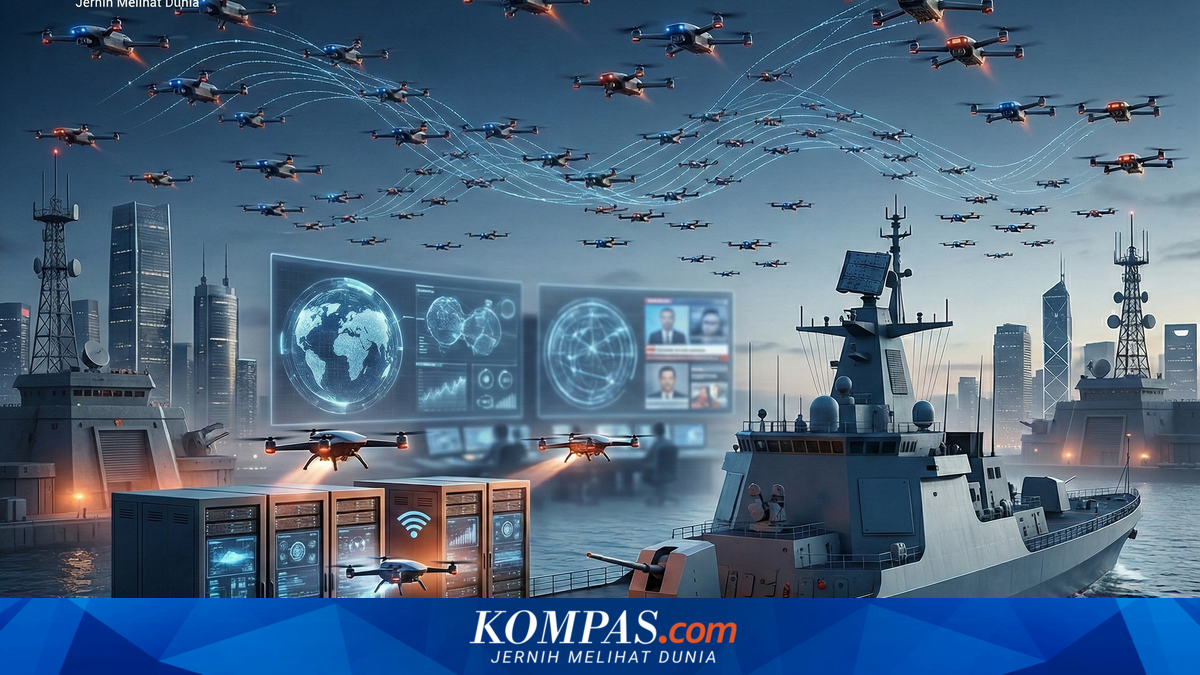
The PLA is not merely experimenting with individual drones but has created swarms comprising hundreds to thousands of small AI-powered drones capable of communicating with one another. They can adapt to changing battlefield conditions in real-time and make attack decisions without requiring human operator control.
This drone swarm concept has been specifically designed to overwhelm conventional enemy air defence systems.