
China welcomes positive developments in US-Iran peace agreement
Beijing (ANTARA) - The Chinese government has welcomed the potential for the United States and Iran to reach an agreement to end the Middle East conflict and reopen the Strait of Hormuz.
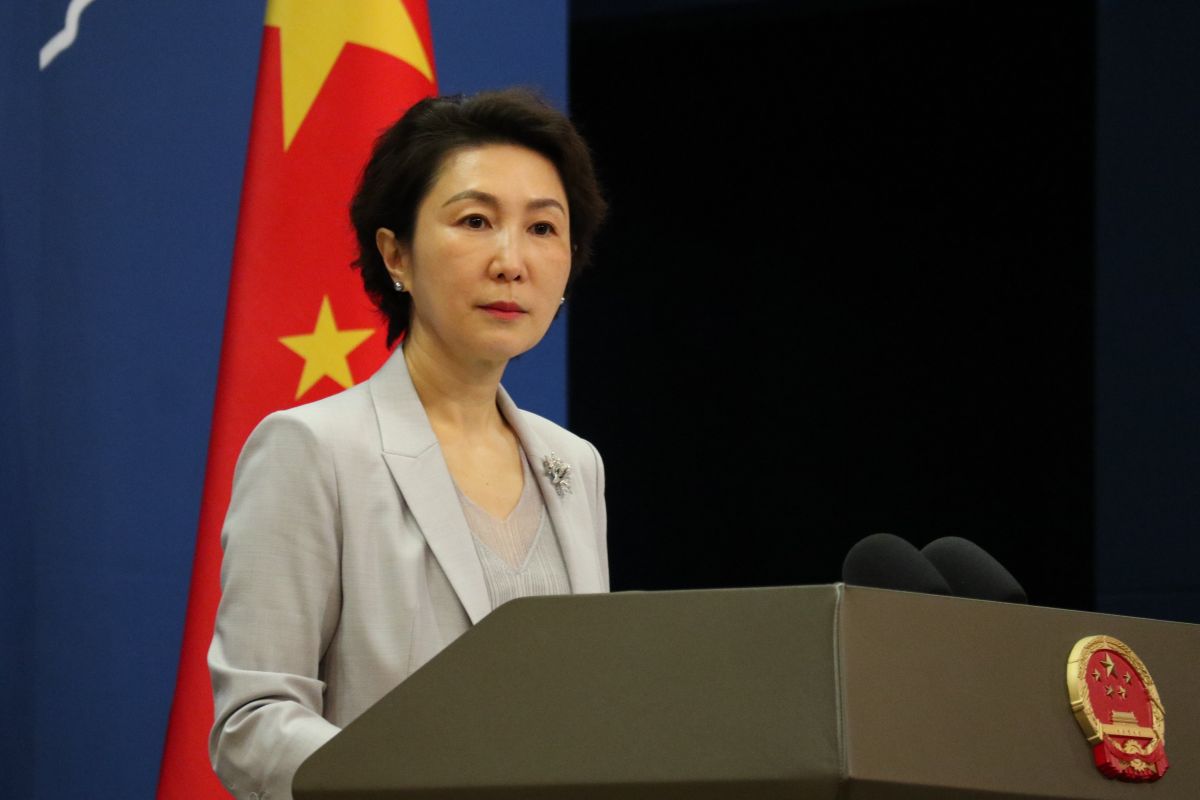
“A recent ceasefire between the US and Iran, along with efforts to resolve the issue through negotiations, has been welcomed by regional countries and the international community. China firmly believes dialogue and negotiation are the correct path, while military force is a dead end,” said Chinese Foreign Ministry spokesperson Mao Ning during a press conference in Beijing on Monday.
US and Iran are reported to have agreed, as part of the initial deal, to fully reopen the Strait of Hormuz within 30 days, according to a Washington Post report citing a diplomat.
The initial peace agreement between the US and Iran also includes a postponement of nuclear talks until a later date, although the framework of the preliminary deal has not yet been approved by Iran.
US Secretary of State Marco Rubio said on Sunday (24 May) in New Delhi that progress had been made in drafting a framework to reopen the Strait of Hormuz without tolls. He stated that the US, along with Gulf partners, had made diplomatic progress on the framework in the past 48 hours.
“It is crucial to maintain the momentum of de-escalation, adhere to political resolution, continue dialogue and consultation, and achieve a solution that accommodates the interests and concerns of all parties,” Mao added.
Mao also stressed the importance of reopening shipping lanes as soon as possible to address international calls and jointly safeguard global supply chain stability and smooth operations. “Furthermore, it is equally important to achieve a comprehensive and lasting ceasefire as soon as possible to restore peace and stability in the Middle East and Gulf region in the shortest time possible,” Mao said.
Since the conflict began, Mao said China has consistently worked towards peace and an end to the conflict. “President Xi Jinping has proposed four initiatives to maintain and promote peace and stability in the Middle East. China will continue to act in line with these proposals and cooperate with the international community to provide stronger support for peace talks and play a constructive role in achieving lasting peace in the Middle East,” Mao explained.
The positive trend in US-Iran talks followed US President Donald Trump’s visit to China from 13-15 May 2026. Currently, Pakistan’s Prime Minister Shehbaz Sharif is in China for an official visit.
Pakistan has played a key role in US-Iran negotiations, hosting peace talks in Islamabad on 11-12 April 2026, though no agreement was reached. Pakistan’s Chief of Army Staff Asim Munir also visited Iran on 22-23 May 2026 to discuss a peace deal.
Iranian President Masoud Pezeshkian stated Iran is ready to reassure the international community that it is not developing nuclear weapons or causing regional instability. He accused Israel of driving regional instability through its “Greater Israel” vision. Pezeshkian also affirmed Iranian negotiators would never compromise on the country’s “honour and dignity.” His remarks came a day after US President Donald Trump said the peace deal with Iran was mostly negotiated and awaiting finalisation.
Both the US and Iran have not publicly released details of the negotiations.
Middle East tensions began on 28 February 2026 when the US and Israel launched attacks on targets in Iran, causing civilian casualties and damage. On 7 April, Washington and Tehran announced a two-week ceasefire, but subsequent talks in Islamabad ended without agreement. Trump then extended the cessation of hostilities to allow Iran time to prepare a “comprehensive proposal.” The tensions nearly halted traffic through the Strait of Hormuz — a vital route for oil and liquefied natural gas shipments from the Persian Gulf to global markets — causing sharp energy price spikes and adding pressure to the world economy.