
China vows to safeguard jobs and boost hiring as AI reshapes labour market
China vows to safeguard jobs and boost hiring as AI reshapes labour market
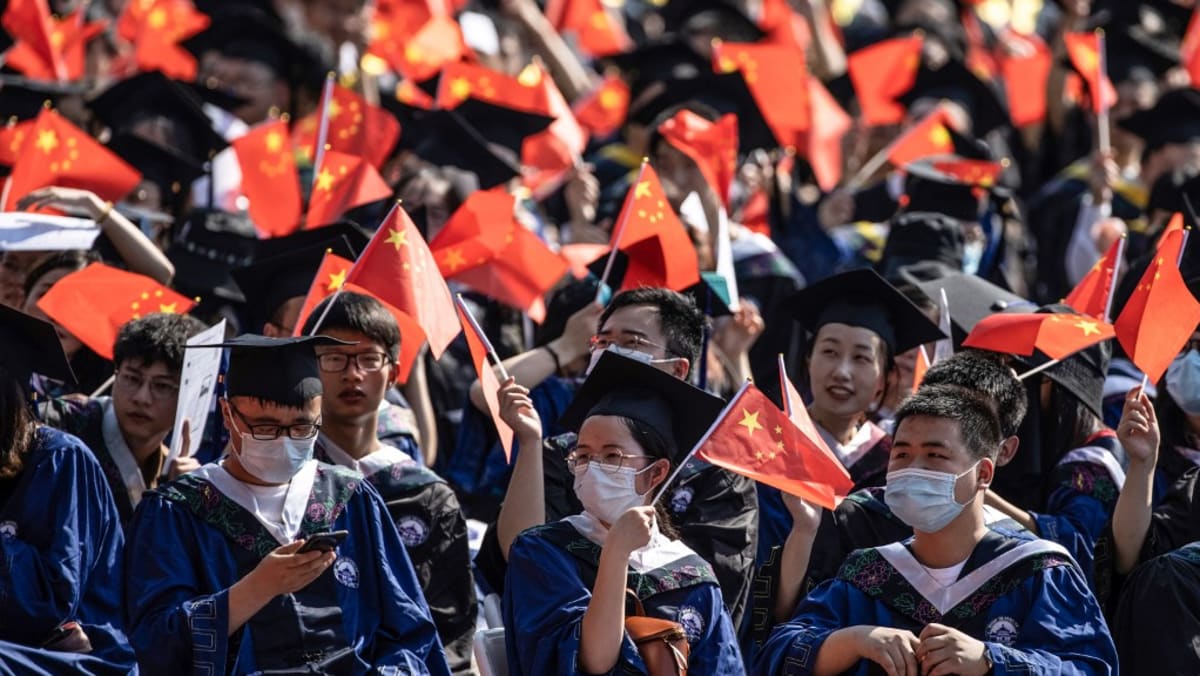
With a record 12.7 million graduates entering the workforce this year amid slowing growth and AI disruption, youth employment took centre stage at a Two Sessions press conference.
BEIJING: China will expand job opportunities for young people, college graduates and migrant workers, officials said on Saturday (Mar 7), as mounting economic, demographic and AI-driven pressures weigh on the labour market.
“Employment is a must-answer question in the livelihood agenda at the Two Sessions, it concerns every household and the nation,” Wang Xiaoping, Minister of Human Resources and Social Security, told reporters at a livelihood press conference during the annual parliamentary meetings.
With a record 12.7 million new college graduates this year, youth employment took centre stage as Wang outlined targeted campus services, large-scale internships and skills training.
Wang said employment services would be introduced on campuses earlier in the academic year, with internship programmes and practical skills training expanded ahead of graduation.
Authorities will also expand local-level job opportunities, encourage hiring in labour-intensive sectors such as construction and hospitality, and step up recruitment in emerging industries.
China’s urban youth unemployment rate for 16- to 24-year-olds, excluding students, stood at 16.3 per cent in January, down slightly from 16.5 per cent in the previous month, though the rate remains elevated.
Wang acknowledged market uncertainties but expressed confidence in maintaining stable employment.
China can sustain positive momentum over the next five years, she added.
AI AND THE FUTURE OF WORK
Artificial intelligence has emerged as both a source of opportunity and uncertainty.
With automation and digital tools increasingly reshaping production and services, questions have grown over whether AI will displace certain roles faster than new ones are created.
“The rapid development of artificial intelligence is having a profound impact on employment,” Wang acknowledged.
“We are studying relevant policies to actively leverage AI in creating new jobs and empowering traditional roles,” she said.
Rather than viewing AI purely as a disruptive force, officials framed it as a tool that can enhance productivity and upgrade existing industries, provided workers are equipped with new skills.
More than 20 provinces have developed over 230 industry-linked “skills ecosystems” - training models that connect recruitment, training, evaluation and job placement, often led by enterprises. Authorities said such ecosystems will be expanded to better align workforce training with industrial demand.
The broader goal, Wang said, is to build a lifelong vocational training system that supports workers at different stages of their careers, allowing them to reskill as industries evolve.
Provincial governments are also aligning hiring with strategic growth sectors.
Guangdong, China’s largest provincial economy, created 1.49 million new urban jobs last year and has rolled out targeted recruitment drives for AI and robotics clusters under its “Million Talents” campaign.
PROTECTING NEW FORMS OF WORK
As more young people enter gig and flexible employment arrangements, the ministry also pledged to strengthen social protections for platform workers.
The occupational injury protection pilot programme - currently operating in 17 provinces and covering more than 25 million participants - will be expanded nationwide this year.
Authorities will also encourage greater participation in pension schemes among workers in new forms of employment and improve dispute resolution mechanisms to better safeguard labour rights.
Amid intense job competition and wage pressures, more young people are turning to gig and platform work - such as delivery riders, couriers, ride-hail drivers, livestreamers and other freelance roles.
China has more than 200 million flexible workers, according to official data, accounting for roughly 27 per cent of total employment and nearly 43 per cent of the urban workforce. The scale underscores the growing importance of platform-based and non-traditional employment in China’s labour market.
Last year, China moved to close loopholes in its social insurance system, banning informal arrangements that allowed workers and employers to sidestep mandatory pension and medical contributions.
Officials said improving protections for gig workers is key to maintaining social stability and ensuring that technological innovation does not erode income security.
EXTENDING WORKING LIFE
While much of the focus remains on helping young people secure jobs, policymakers also signalled that older workers will remain economically active for longer.
China’s life expectancy is expected to reach 80 years by 2030, up from 79.25 years today. The demographic shift is driving efforts to expand elderly care while encouraging seniors who are able to continue working.
“For older workers, we will roll out suitable skills training programmes, deepen labour cooperation, expand employment pathways for migrant workers and strengthen regular employment assistance,” Wang said, adding that efforts would also focus on preventing people from falling back into poverty.
China already has more than 300 million people aged 60 and above - over one-fifth of the population - and that figure is projected to approach 400 million by 2035.
Against this backdrop, authorities have begun gradually raising statutory retirement ages, with men set to retire at 63 instead of 60, white-collar women at 58 rather than 55, and blue-collar women at 55 instead of 50.
Alongside labour reforms, elderly care services are being strengthened.
Civil Affairs Minister Lu Zhiyuan said China is building a nationwide elderly care network, with expanded community care centres in towns and more comprehensive home-based services in cities.
“We are weaving a dense elderly care service network and h