
China states Iran's selection of supreme leader is constitutional
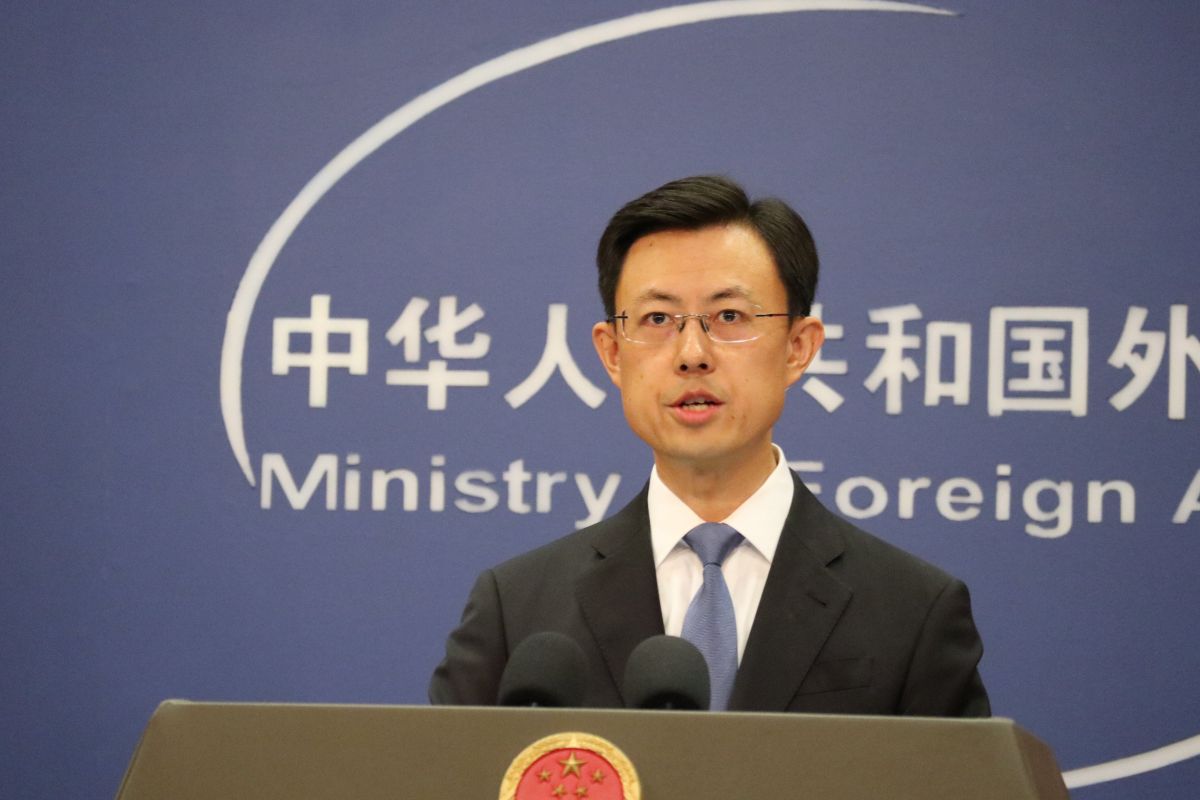
Beijing — The Chinese Government has stated that the selection of Iran’s new Supreme Leader, Mojtaba Khamenei, is in accordance with the country’s constitution.
“The selection of the new leader is a decision made by Iran in accordance with its Constitution,” said Chinese Foreign Ministry spokesperson Guo Jiakun at a press conference in Beijing on Monday, 9 March.
Mojtaba Khamenei (56 years old) was officially appointed as Iran’s new Supreme Leader on Monday, 9 March, succeeding his father, Ayatollah Ali Khamenei, who was killed in an attack by the United States and Israel.
Iran’s third Supreme Leader since the 1979 Islamic Revolution is expected to follow his father’s approach of taking a hardline stance towards the United States. He assumes leadership at a time when regional conflict is intensifying and domestic uncertainty is increasing.
Mojtaba Khamenei’s wife and father died in US and Israeli airstrikes on 28 February.
US President Donald Trump had previously stated that any new Supreme Leader of Iran who does not receive US “approval” will not survive long.
“China opposes interference in the internal affairs of other countries under any pretext. Iran’s sovereignty, security, and territorial integrity must be respected,” Guo Jiakun said.
China, according to Guo Jiakun, has called for an immediate halt to military operations, a swift return to dialogue and negotiations, and the prevention of further escalation of tensions.
The Iranian Supreme Leader is the highest authority in the judicial, legislative, and administrative branches in Iran. He also makes decisions on important matters in Iran, including the nuclear programme.
Mojtaba was selected by the Assembly of Experts in Iran, a body comprising 88 members who, according to the Constitution, are responsible for appointing the country’s highest political and religious authorities.
His selection followed established constitutional procedures rather than hereditary succession, although his family background and long-standing proximity to the late Ayatollah Ali Khamenei have long placed him at the centre of speculation regarding leadership succession.
Like many figures within Iran’s clerical establishment, Mojtaba pursued religious education in Qom, the principal centre for Shia theological learning in the country and home to various seminaries that train Iranian clergy.
He studied Islamic jurisprudence and theology under the guidance of several prominent conservative clergy members, including Ayatollah Mahmoud Hashemi Shahroudi, Ayatollah Lotfollah Safi Golpaygani, and Mohammad-Taqi Mesbah-Yazdi, an influential ideologue who has guided many conservative political figures in Iran.
Although he has long been part of the clerical establishment, Mojtaba has never held an official government position, executive post, or position elected through general elections.
His minimal public profile reinforces this image, as there are virtually no lengthy public speeches, interviews, or political manifestos that detail his views in depth.
Mojtaba himself rarely engages directly in political debate in the public sphere. His appearances are largely limited to official ceremonies, national commemorations, and religious meetings covered by Iranian state media.