
China, Russia, and France Block Gulf States from Attacking Iran to Open Strait of Hormuz
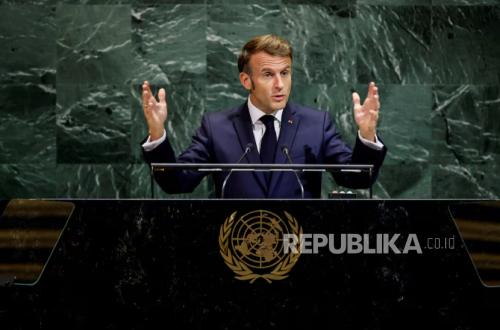
REPUBLIKA.CO.ID, NEW YORK – The UN Security Council has postponed the vote scheduled for Friday to allow the use of military force to protect shipping in the Strait of Hormuz from Iranian attacks. China, Russia, and France, all veto-holding powers, have threatened to scuttle the resolution.
According to Saudi Gazette, the 15-member body was scheduled to vote on Friday morning on a draft resolution submitted by Bahrain on behalf of Gulf states. However, on Thursday evening, the schedule changed. The reason given was that the UN has designated Good Friday as a public holiday, according to diplomatic sources.
That reason is considered contrived because the date of Good Friday was known when the vote was first announced. No new date has been given for the vote on the draft.
Bahrain, which proposed the resolution, has also reportedly significantly reduced the draft proposal for reopening the Strait of Hormuz with military force. This comes amid opposition from several UN Security Council members to allowing states to use force to secure the vital waterway.
Russia, China, and France, all veto-holding states on the Security Council, have expressed their rejection of authorising the use of military force.
Iran has choked the main shipping route – threatening fuel supplies and shaking the global economy – in retaliation for US-Israeli attacks that triggered a war that has lasted a month in West Asia.
“We cannot accept economic terrorism that impacts our region and the world; the whole world is affected by these developments,” said Bahrain’s UN Ambassador Jamal Alrowaiei this week. He said the draft resolution, which has undergone several amendments and is supported by the United States, “comes at a critical time.”
US President Donald Trump on Wednesday called on countries struggling with fuel shortages to “take their own oil” in the Strait of Hormuz, adding that US forces would not help them.
The sixth and final draft, seen by AFP, gives the green light to member states – either unilaterally or as a “voluntary multinational naval partnership” – to use “all necessary and proportionate defensive measures.”
This provision applies in the strait and surrounding waters to “secure transit routes and prevent attempts to close, block, or disrupt international navigation through the Strait of Hormuz.” The measures would last at least for a six-month period.
The latest draft resolution has been modified to garner support from some seemingly sceptical countries, including Russia, China, and France. The revised wording no longer explicitly refers to Chapter 7 of the UN Charter, which allows the Security Council to authorise armed forces to restore peace.