
China Responds to Trump Regarding Assistance in Restoring Traffic Through Strait of Hormuz
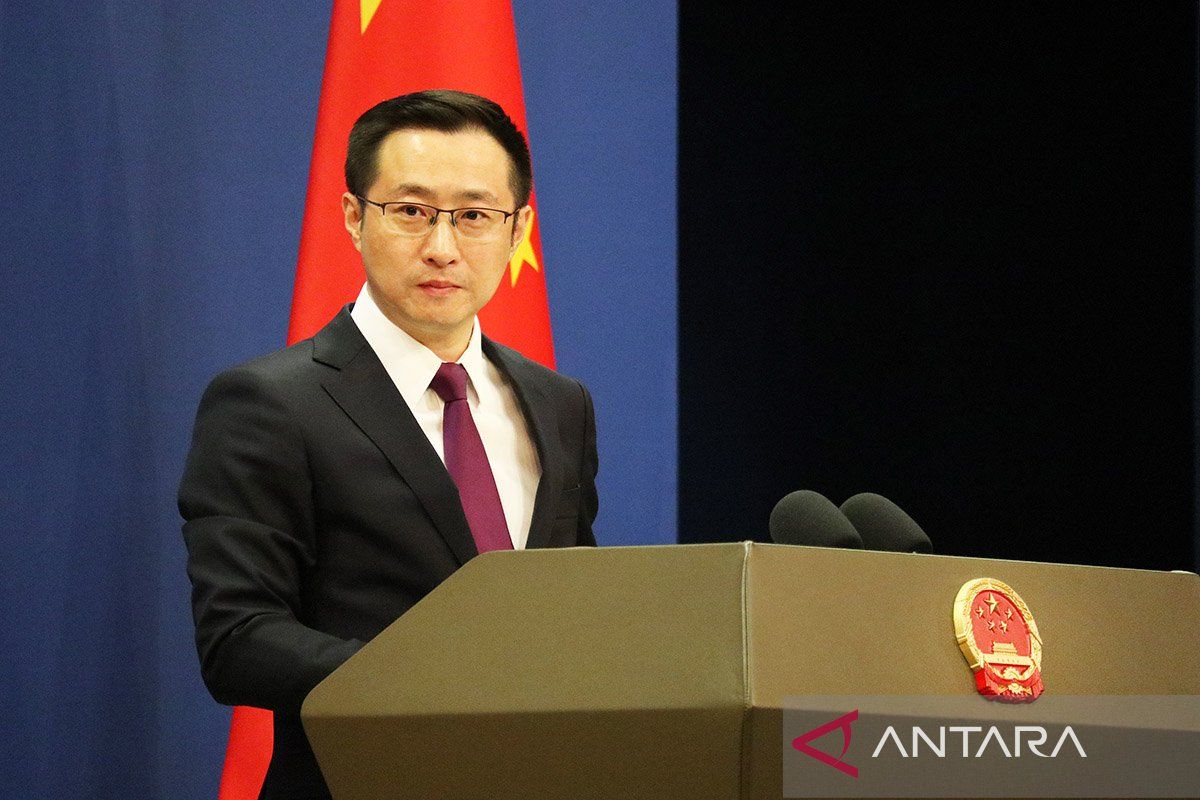
Beijing - China’s Foreign Ministry spokesman Lin Jian stated that the country continues to maintain communication with all parties to ease tensions in the Strait of Hormuz.
This was conveyed in response to questions from journalists regarding US President Donald Trump’s request in an interview with American media for China to play a role and provide assistance in restoring shipping activities through the Strait of Hormuz.
“We continue to maintain communication with all parties regarding the current situation and remain committed to easing existing tensions,” Lin Jian said at a press conference in Beijing on Monday.
Previously on Sunday, Trump stated he had requested approximately seven countries to join a coalition that would escort ships passing through the Strait of Hormuz. Although Trump did not specify which countries, he indicated they are heavily dependent on Middle Eastern oil.
Trump also believes China should play a role and provide assistance in restoring shipping activities through the Strait of Hormuz.
“I think China should help too, because China gets 90 per cent of its oil through this strait,” the US President said in an interview with the Financial Times.
Lin Jian stated that recent tensions in the Strait of Hormuz and surrounding waters have affected international goods and energy trade routes and damaged regional and global peace and stability.
“Once again, China calls on all parties to immediately cease military operations, avoid further escalation of tensions, and prevent regional upheaval from having greater impact on global economic growth,” Lin Jian said.
Lin Jian also stated that Trump’s planned visit to Beijing from 31 March to 2 April 2026 continues to be pursued.
“High-level diplomatic relations play an irreplaceable role in providing strategic direction for China-US relations. Both parties are communicating regarding President Trump’s visit to China,” Lin Jian added.
Previously, Trump also requested NATO member countries to send warships to either open the Strait of Hormuz or face a “very bleak” future.
According to a Wall Street Journal report, the White House plans to announce the formation of a multinational coalition as early as this week, citing statements from several US officials. In addition to China, Trump has also requested France, Japan, South Korea, the United Kingdom and other countries.
Openly, many governments are reluctant to commit to such a mission before the US-Israel war with Iran ends, given the various risks involved, the WSJ reported.
Nevertheless, Trump claimed via his Truth Social account on Saturday that many countries, particularly those affected by Iran’s efforts to close the Strait of Hormuz, would send warships to secure oil trading routes.
The US and Israel launched massive strikes against Iran on 28 February 2026, resulting in the death of Iranian Supreme Leader Ayatollah Ali Khamenei and approximately 1,300 others.
Iran retaliated with drone and missile attacks targeting Israel, Iraq and Gulf states where US military assets are located, including closing the Strait of Hormuz, a narrow waterway through which 20 per cent of global oil and gas trade passes, causing oil prices to surge and raising concerns about global energy supply and food prices.
The Strait of Hormuz is the main exit point for oil from energy-producing countries in the Gulf region such as Saudi Arabia, Iraq, Kuwait, Qatar, Iran, and the United Arab Emirates.
Approximately 17 million to 20 million barrels of oil per day pass through this strait, equivalent to approximately one-fifth of global oil trade. Approximately 84 per cent of oil passing through the Strait of Hormuz is shipped to Asian countries, including China, India, Japan, and South Korea.