
China promotes open-source AI initiative within BRICS
Beijing (ANTARA) - The Chinese government has proposed an inclusive open-source artificial intelligence (AI) initiative to the member nations of the BRICS group.
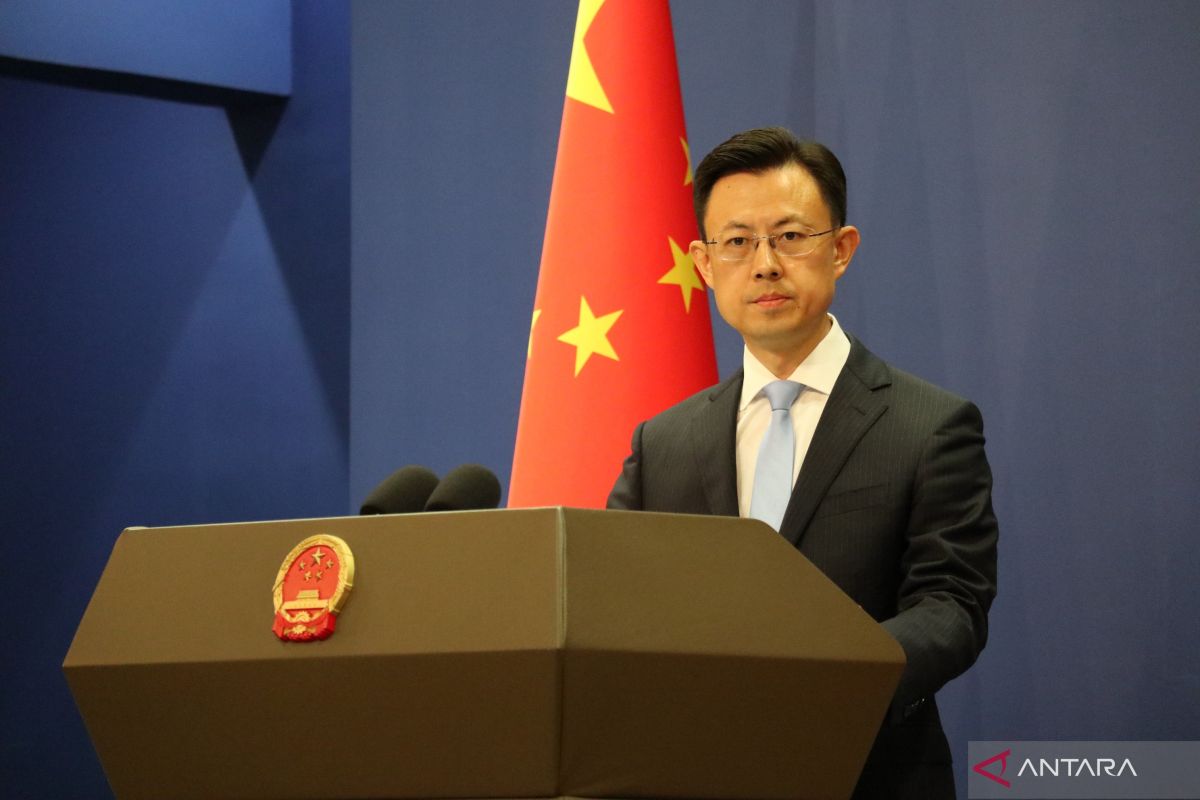
“At the 18th BRICS Summit, President Xi Jinping proposed an inclusive open-scale AI initiative, a digital industry cooperation initiative, and a smart manufacturing cooperation initiative,” stated Chinese Ministry of Foreign Affairs Spokesperson Guo Jiakun during a press conference in Beijing on Monday.
Guo Jiakun noted that these proposals were delivered by President Xi Jinping during the second session of the plenary meeting at the 18th BRICS Summit in New Delhi on Sunday (13/9).
“President Xi announced several concrete cooperation steps. China will pioneer the formation of an open-source AI community within BRICS, build a BRICS cloud computing digital ecosystem, and launch a BRICS youth exchange programme for science and technology innovation,” added Guo Jiakun.
According to Guo Jiakun, China is committed to supporting other Global South nations in enhancing capacity and gaining equitable benefits from new technologies to ensure shared growth.
In his speech, Guo Jiakun stated that President Xi Jinping summarised the BRICS development journey through three expressions: self-reliance and self-strengthening, togetherness in facing prosperity and adversity, and beneficial outcomes.
“President Xi emphasised that over the past two decades, BRICS has grown with strong spirit and vitality, becoming the most influential cooperation platform in the world today for developing nations,” said Guo Jiakun.
President Xi Jinping also asserted that BRICS must stand firmly on the right side of history, striving to be pioneers in advancing innovation-based development, prioritising peace and stability, facilitating inter-civilisation learning, and driving global governance reform and improvement.
“Global South nations must collectively uphold the rule of law in international affairs, uphold the spirit of multilateralism, remain committed to a people-centred development philosophy, jointly advance security governance, steer the international order towards a more just and equal direction, and work together to build a community with a shared future for mankind,” explained Guo Jiament.
Guo Jiakun also revealed that President Xi Jinping emphasised that to achieve great things and significant progress, the foundation of broader BRICS cooperation must be strengthened.
“China will assume the BRICS presidency next year and host the 19th BRICS Summit. We will build consensus and work with all parties to plan for the future so that we can collectively usher in the third golden decade of BRICS and open a bright future for shared prosperity and progress,” asserted Guo Jiakun.
The BRICS presidency rotates annually according to the acronym’s letters. Each term begins on 1 January and ends on 31 December of that year. The presiding nation sets the agenda priorities for the year, hosts the annual summit, and directs ministerial meetings and key working groups.
The 18th BRICS Summit in New Delhi, India, focused on four main pillars: resilience, innovation, cooperation, and sustainability in responding to various global challenges, including rising geopolitical tensions.
Attendees at the BRICS Summit included President Xi Jinping of China, President Vladimir Putin of Russia, President Prabowo Subianto of Indonesia, President Masoud Pezeshkian of Iran, President Cyril Ramaphosa of South Africa, President Abdel Fattah el-Sisi of Egypt, Prime Minister Abiy Ahmed Ali of Ethiopia, Crown Prince of Abu Dhabi Sheikh Khaled bin Mohamed bin Zayed Al Nahyan, and Prime Minister Narendra Modi of India.
Brazil was represented by Foreign Minister Mauro Vieira, while Saudi Arabia was represented by Foreign Minister Prince Faisal bin Farhan Al Saud.
BRICS has also admitted partner countries into its cooperation framework, including Belarus, Bolivia, Kazakhstan, Cuba, Malaysia, Nigeria, Thailand, Uganda, Uzbekistan, and Vietnam.
Currently, BRICS consists of 11 nations: Brazil, China, Egypt, Ethiopia, India, Iran, Russia, Saudi Arabia, South Africa, and the United Arab Emirates, representing approximately 49.5 per cent of the world’s population, 40 per cent of global GDP, and 26 per cent of global trade, according to BRICS data.