
China-Iran Relations Strengthen Amid Sanctions and Conflict: Bound by Energy and Strategy
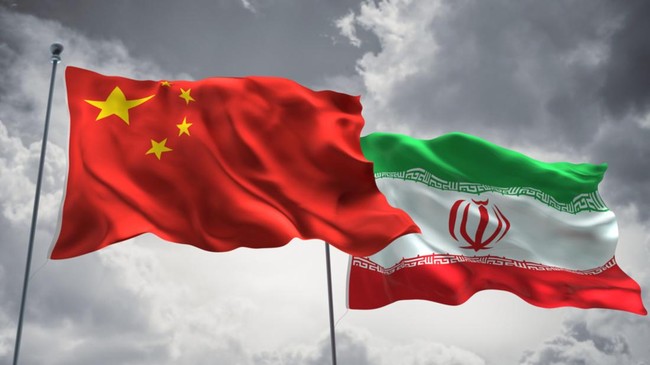
The bilateral relationship between the People’s Republic of China and the Islamic Republic of Iran has undergone significant evolution, transforming from ancient Silk Road exchanges into a strategic partnership centred on economics, energy, and geopolitics.
Historically, interactions between the two civilisations have been documented since the 2nd century BC through envoys from the Han Dynasty, Gan Ying. Modern diplomatic relations were formally established on 16 August 1971.
However, the most substantial shift in dynamics occurred following the Islamic Revolution in Iran in 1979. As Iran began facing isolation and sanctions from Western nations, China gradually positioned itself as a crucial alternative partner for Tehran.
Asymmetric Dependence in Economic and Energy Sectors
Data shows that in 2024, bilateral trade volume between the two countries reached US$13.37 billion, with Chinese exports comprising US$8.93 billion and imports totalling US$4.44 billion. China has been Iran’s largest trading partner since 2012.
The primary focus of this economic relationship is the energy sector. China currently absorbs approximately 90 per cent of Iran’s total crude oil exports. However, this relationship is asymmetrical.
For China, Iranian oil accounts for roughly 15 per cent of their total energy imports. This position gives Beijing a negotiating advantage, allowing it to obtain crude oil supplies at discounted prices amid international sanctions that limit Tehran’s buyer options.
Strategic 25-Year Agreement and Investment Reality
President Xi Jinping’s state visit to Iran in January 2016 laid the foundation for establishing a comprehensive strategic partnership. This was subsequently followed by the signing of a 25-year comprehensive cooperation plan in March 2021, which was officially launched in January 2022.
Although this agreement was designed to encompass large-scale infrastructure investment within the framework of the Belt and Road Initiative, implementation on the ground has been observed to progress slowly.
Geopolitical analyses note that this agreement often functions as a negotiating instrument for China in managing the dynamics of its relationship with the United States, rather than as a commitment for immediate capital disbursement to Iran.
China tends to exercise caution in realising investments in Iran compared with its investment portfolio in other Gulf states.
Transition in Security Cooperation and Multilateralism
During the 1980s (the era of the Iran-Iraq War), China was one of the principal suppliers of military equipment to Iran. Currently, security cooperation is focused more on technological and strategic aspects.
Recent reports indicate that Iran is in the final stages of purchasing supersonic anti-ship cruise missiles manufactured by China, according to Jonathan Fulton, Assistant Professor at Zayed University, UAE.
At the diplomatic level, China has provided significant support for integrating Iran into non-Western multilateral organisations. Beijing’s backing has facilitated Iran’s full membership in the Shanghai Cooperation Organisation (SCO) and the BRICS economic group. This move provides Tehran with additional institutional legitimacy on the global stage.
Nevertheless, there are fundamental differences in interests. China’s approach in the Middle East is driven by economic motives requiring regional stability.
Conversely, Iran’s foreign policy, which frequently involves proxy groups, is often assessed as frequently creating instability, which indirectly can disrupt China’s commercial interests in the region.
Cultural Diplomacy and People-to-People Exchanges
Beyond economic and military instruments, both countries actively promote soft power strengthening through cultural exchanges. This has been realised through the opening of Confucius Institutes at Tehran University (2007) and Mazandaran University (2016), as well as the provision of Mandarin and Persian language study programmes at universities in each country.
Furthermore, these exchanges have been driven through large-scale cultural exhibitions such as the historical art exhibition “Treasures From Iran” in several major Chinese cities in 2024.
From a mobility perspective, Iran has implemented unilateral visa-free policy for Chinese citizens since July 2019, complementing Iran’s status as a group tourism destination for Chinese nationals, which has been in place since 2011.
Overall, the China-Iran strategic partnership is driven by economic pragmatism and geopolitical adjustment. Both countries leverage this relationship to achieve their respective objectives amid pressure from the international system, although it remains characterised by strict risk calculations, particularly from Beijing’s perspective.