
China Insulated from Crisis: Impact across Various Investment Instruments
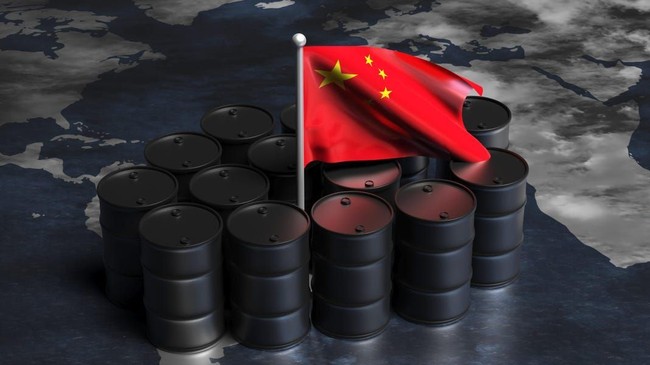
The Strait of Hormuz, positioned between Oman and Iran, has become the arbiter of global capital market fortunes, often described as a “death corridor” for the global economy. Whenever tensions between the US-Israel alliance and Iran escalate in this region, global stock exchanges experience immediate turbulence. Yet a striking paradox emerges: whilst Western vessels face security threats and suffocating insurance costs, millions of barrels of oil destined for China traverse the strait seemingly unimpeded, as though protected by an invisible corridor. This raises the fundamental question: why is China insulated from the energy crisis at the Strait of Hormuz?
Anatomy of the Strait: The World’s Energy Lifeline
Understanding the risks to investment portfolios requires examining the scale of the Strait’s significance. This passage is far more than a shipping route; it represents the world’s energy distribution hub.
The volume of oil flowing through this strait reaches 21 million barrels per day, equivalent to 21 per cent of global consumption. Beyond petroleum, over 20 per cent of global liquefied natural gas supplies (primarily from Qatar) transit through it. Any disruption would cause heating and electricity prices across Europe and Asia to spike dramatically. Historically, disruptions at Hormuz have added an oil price premium of $10-$30 per barrel to global prices.
Recent data from March 2026 shows Iran dispatched approximately 11.7 million barrels of oil in a short timeframe, with nearly all supplies destined for China. The question emerges: why does Iran permit Chinese vessels to pass whilst threatening others?
China-Tehran: A 25-Year Transactional Relationship
China and Iran maintain a strategic partnership spanning 25 years, valued at $400 billion. China functions as Iran’s buyer of last resort, particularly when US sanctions isolate other markets. Crucially, payments are conducted in Yuan through independent systems, circumventing dollar-based oversight via SWIFT.
The Dark Fleet Strategy
China leverages the “dark fleet”—hundreds of ageing tankers with disabled automatic identification systems—to import Iranian oil. Whilst this carries security risks (vessels “disappearing” near Hormuz and reappearing in Qingdao), China secures Iranian oil at a discount of $5-$10 below Brent prices.
Infrastructure Diversification: The Jask Terminal
Iran has invested billions in the Jask Oil Terminal located outside the Strait of Hormuz. The Goreh-Jask pipeline, spanning 1,000 kilometres, enables exports of up to 1 million barrels daily without transiting the strait. China provides technical support for this project, granting Beijing priority access.
Implications for the United States: Political Prestige versus Economic Reality
For America, China’s “privileged corridor” represents a double blow to both economic performance and political standing.
The prospect of stagflation looms if global oil prices remain elevated above $100-$120 per barrel, threatening economic stagnation coupled with high inflation. Elevated energy costs would compel the US Federal Reserve to maintain elevated interest rates longer, historically suppressing S&P 500 and Nasdaq performance. The US Strategic Petroleum Reserve has depleted substantially following previous large-scale releases, leaving the American economy vulnerable to sharp petrol price surges without adequate reserves as a buffer. China’s success in securing energy amid regional conflict demonstrates that American dollar hegemony over global commodities faces mounting challenges. As China purchases oil in Yuan, demand for US dollars decreases marginally—a shift that could trigger dollar devaluation over the longer term.
Impact on Capital Markets
As an investor, distinguishing between assets that will suffer losses and those that will benefit during energy crises proves essential.
Investment Strategy Recommendations
Building a resilient portfolio requires understanding historical patterns. Gold serves as an anchor asset, exhibiting positive correlation with geopolitical risk across every Middle Eastern crisis (1990, 2003, 2020, 2026). Should oil prices breach $120 per barrel, gold tends to reach record highs. A proven strategy involves dollar-cost averaging into gold during price corrections. Investors can also consider silver as a hedge asset; iShares Silver Trust (SLV), managed by BlackRock since 2006, offers exposure to this commodity. BlackRock manages approximately $14 trillion in assets as of January 2026, positioning it amongst the world’s largest fund managers.
American energy stocks deserve consideration beyond crude oil as a simple commodity. Major American oil companies maintain robust balance sheets in 2026, with elevated oil prices boosting free cash flows and supporting substantial dividends or share buybacks. The S&P 500 index provides automatic exposure to these energy giants, whilst direct ownership via Exxon Mobil (XOM), Chevron (CVX)—major energy producers with significant global natural gas exposure—or Occidental Petroleum (OXY), Warren Buffett’s favoured holding sensitive to domestic and global energy price movements, offers targeted exposure.
China’s energy resilience merits investor consideration. With 1.2 billion barrels of strategic reserves sufficient for 3-4 months without imports, Chinese firms possess an inflation buffer unavailable to European or Japanese counterparts. Chinese manufacturing and technology stocks (BABA, NIO, JD, BIDU, IQ, FUTU, XPENG, LI) merit consideration, benefiting from controlled domestic energy costs despite potentially suppressed market sentiment.
Technology-heavy investors must prepare for volatility; this sector proves sensitive to rising interest rates and inflation concerns stemming from elevated oil prices, making careful portfolio rebalancing essential.