
China expresses concern over Japan's plan to lift restrictions on arms exports
Beijing (ANTARA) - The Chinese government has expressed concern and apprehension over the ruling party in Japan’s plan to abolish regulations on arms exports, potentially allowing the shipment of lethal weapons.
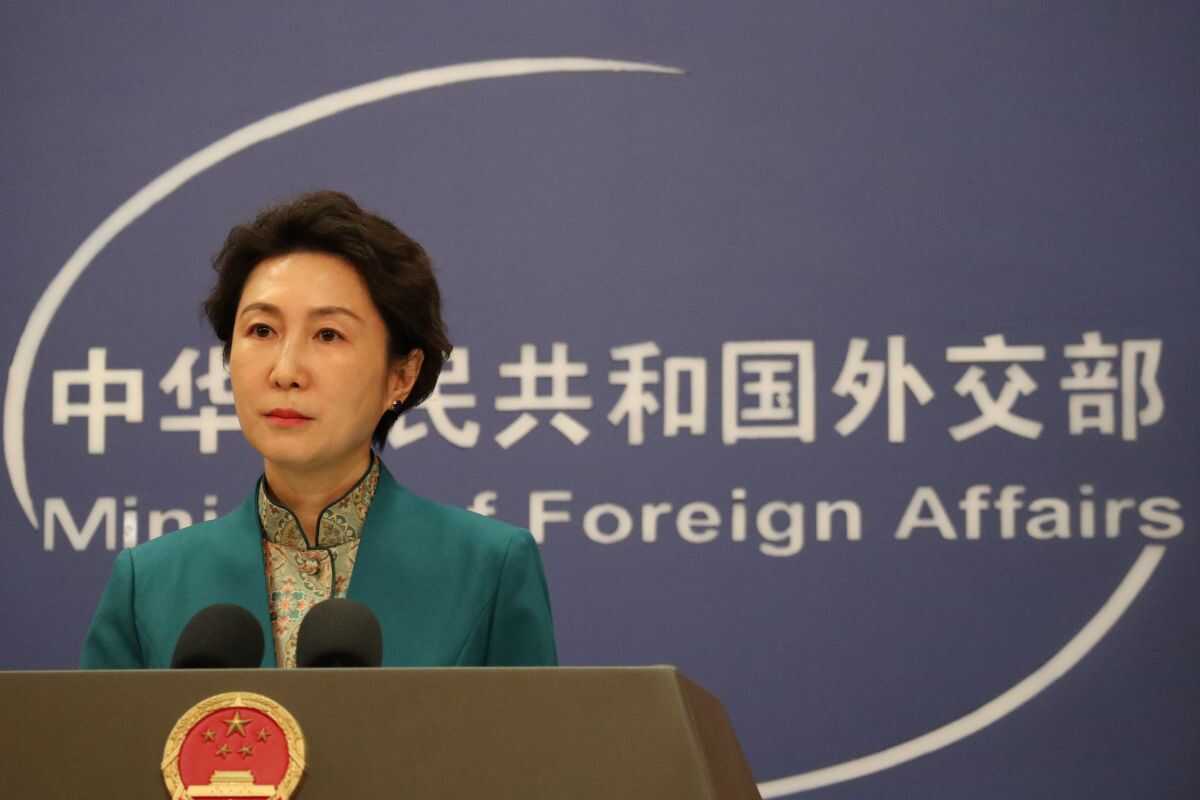
“We are deeply concerned about this move, as Japan’s history of aggression, its actions in the military and security fields have been closely monitored by neighboring countries in Asia and the international community,” said Chinese Foreign Ministry spokesperson Mao Ning at a press conference in Beijing on Wednesday.
The ruling Liberal Democratic Party (LDP) in Japan has approved a draft proposal for the government to abolish regulations that restrict the scope of defense equipment exports, potentially allowing the shipment of lethal weapons that were previously prohibited.
Under the proposal, the government plans to revise its operational guidelines for the three principles of defense equipment transfer as early as spring or early March.
“In recent years, Japan has revised its security and defense policies, its officials have expressed a desire for nuclear weapons, and the country is seeking to revise the three ‘Non-Nuclear Principles’ and lift restrictions on arms exports,” Mao Ning added.
The latest move, Mao Ning said, once again reveals the ambitions of Japan’s right-wing forces to violate the post-war international order, break away from domestic law, and remilitarize Japan.
“The international community needs to remain vigilant, jointly safeguard the victory of World War II and the post-war international order, and firmly oppose the reckless actions of Japanese neo-militarism,” Mao Ning said.
The current regulations restrict the scope of defense equipment exports to five categories: rescue, transportation, vigilance, surveillance, and mine-sweeping.
The draft proposal calls for the abolition of the existing regulations and instead classifies defense equipment into two categories: weapons, including tanks and howitzers, and non-weapons equipment, such as bulletproof vests.
The approval of arms exports will be reviewed by the National Security Council, with members including the prime minister and relevant ministers.
According to the draft proposal, the export of equipment jointly developed with other countries to third countries will also be allowed.
In the current system, this is not allowed except for next-generation fighter jets jointly developed by Japan with the United Kingdom and Italy.
The proposal also calls for restrictions on the destination of exports to countries that have agreed to agreements on the transfer of defense equipment and technology with Japan.
Japan has allowed arms exports under certain conditions since lifting its arms embargo policy in 2014, which has long been seen as a symbol of the country’s pacifist stance under a constitution that renounces war.