
China Emphasises Fair Position in Middle East Tensions
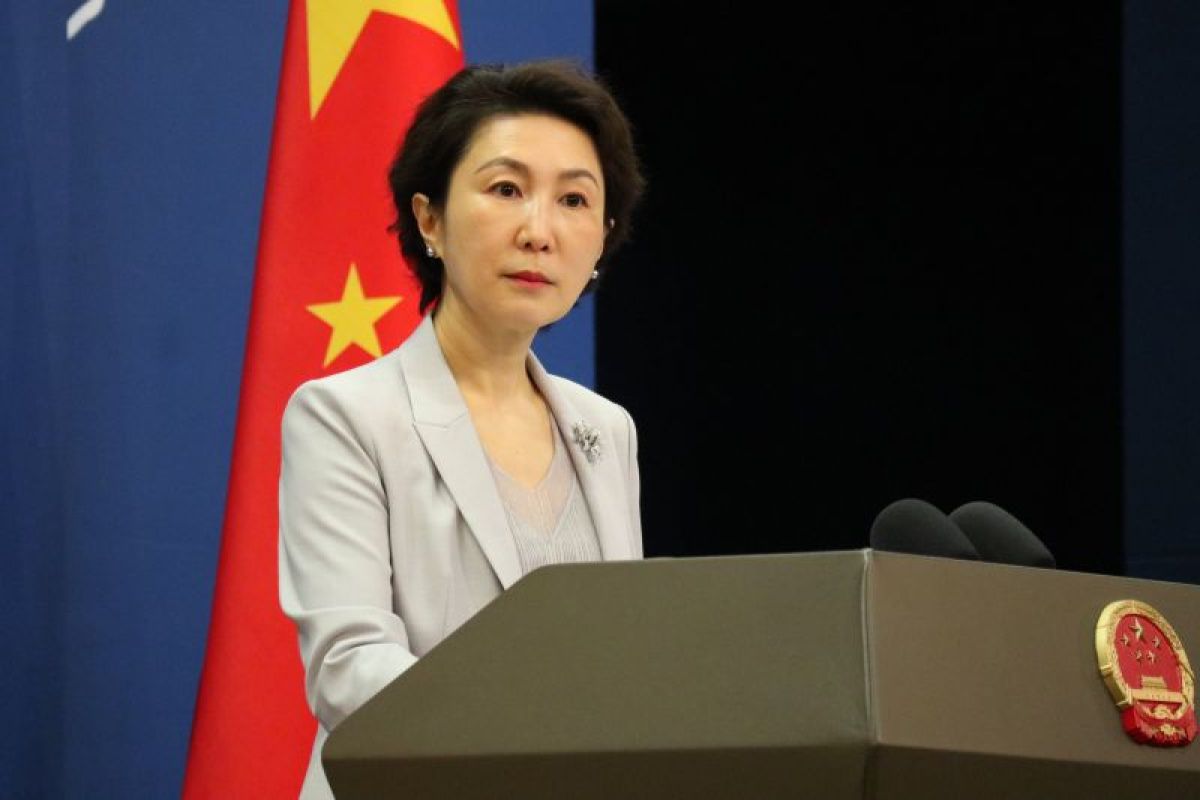
Beijing (ANTARA) - China’s Foreign Ministry has emphasised maintaining a fair and objective position in the Middle East tensions, particularly regarding the United States’ aggression against Iran. “Since the conflict began, China has upheld an objective, fair, and balanced position and has endeavoured to help achieve a ceasefire and end the conflict,” said spokesperson for China’s Foreign Ministry Mao Ning during a press conference in Beijing on Tuesday. Earlier on Tuesday morning US time, US President Donald Trump escalated his threats against Iran, warning that “the entire civilisation will die tonight” unless the country’s leadership reaches an agreement involving the reopening of the Strait of Hormuz. “The entire civilisation will die tonight, and it will never be able to be revived. I don’t want that to happen, but it might happen,” Trump wrote on Tuesday (7/4) on Truth Social. Trump set a deadline until 20:00 EDT on Tuesday (or 07:00 WIB on Wednesday) and warned that infrastructure such as bridges and power plants in Iran would be “destroyed” if no agreement is reached. “Foreign Minister Wang Yi has also made 26 phone calls to various parties including Iran, Israel, Russia, and Gulf countries,” added Mao Ning. In addition, Mao Ning mentioned that China’s Special Envoy for Middle East Issues has travelled to the region in mediation efforts, and last week, China and Pakistan issued a five-point initiative to realise international consensus for a ceasefire and peace. “The root cause of the conflict is the US-Israeli military attacks on Iran that violate international law, so the top priority is to end military operations immediately and return to dialogue and negotiation,” added Mao Ning. Mao Ning emphasised that the use of violence does not bring peace and that resolution through political channels is the right path. “All parties need to show sincerity and end this war that should not have happened in the first place as soon as possible. We hope the relevant parties will seize the opportunity for peace, bridge differences through dialogue, and end the conflict as soon as possible,” stated Mao Ning. Trump on “Trump Social” said, “However, now we have a complete and total regime change, where different, smarter, and less radical minds are in power, perhaps something revolutionary and extraordinary can happen, WHO KNOWS? We will find out tonight, one of the most important moments in the long and complex history of the world,” he wrote. The threat comes after US forces attacked military targets on Kharg Island, Iran’s main oil export terminal, last night. Iran has blocked most oil transit through the Strait of Hormuz since the US and Israel started the war on 28 February 2026. This closure has caused a historic oil supply shock, which has quickly driven global energy prices to surge. Tehran has also carried out retaliatory strikes against Israeli territory and US military bases across the Middle East, including in Bahrain, Qatar, the United Arab Emirates, and Saudi Arabia. Trump has boasted that Iran’s military has been “destroyed” but acknowledged that Iran still controls shipping traffic through the Strait of Hormuz, a key route for oil and LPG supplies from the Gulf region to global markets, which has come to a complete halt. At a White House press conference on Monday (6/4), Trump said that for Iran to avoid the deadline, Iran must agree to “an agreement acceptable to me, and part of the agreement is that we want free oil traffic and everything else.” World oil prices rose ahead of the US deadline. On Tuesday (7/4) at 06:30 GMT, Brent crude oil rose 1.5 percent to around $111.4 (approximately Rp1.95 million) per barrel, while West Texas Intermediate (WTI) increased 2.7 percent to $115.3 per barrel. Iran’s parliament is known to have approved a draft law that will impose transit fees on ships crossing the Strait of Hormuz using Iran’s national currency, the rial, a ban on transit for the US and Israel, and restrictions on countries involved in unilateral sanctions against Iran. Iran has also firmly stated that it rejects the idea of a ceasefire with the US due to concerns that a battle pause could allow its enemies to regroup and resume attacks. Spokesperson for Iran’s Foreign Ministry Esmaeil Baqaei said that Tehran would only consider a ceasefire if there are guarantees to prevent the war from recurring. In addition to guarantees to prevent cycles of ceasefire and new conflict, Iran also demands decisions related to national security “must ensure no further aggressive actions.”