
China criticises Japan's plan to increase defence spending
Beijing — China’s Foreign Ministry has criticised the plan to increase Japan’s defence spending being drafted by Japan’s ruling Liberal Democratic Party (LDP).
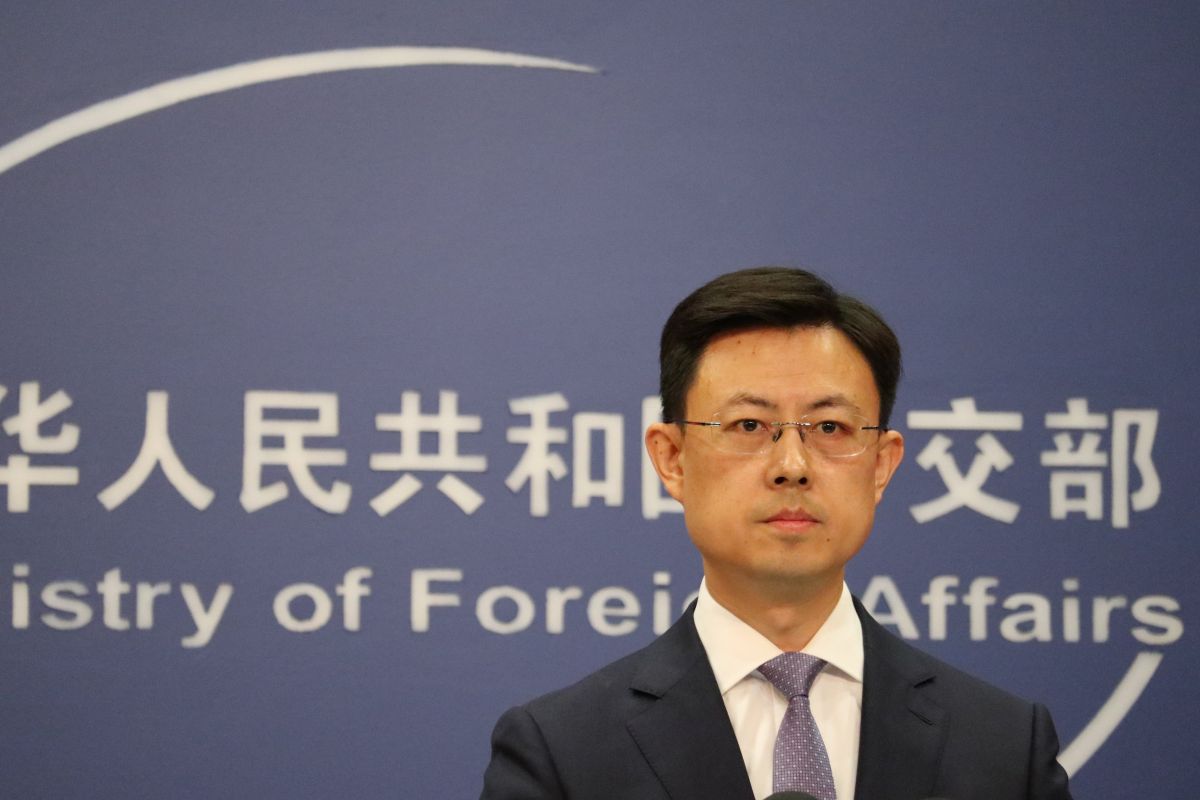
‘Japan’s defence budget has risen for 14 consecutive years, but the far-right forces in the country are once again demanding higher expenditure. This again shows that the mask of a “peaceful nation” for Japan is slipping and the country is sliding toward neo-militarism,’ said Guo Jiakun, spokesperson for the Ministry, at a press conference in Beijing on Friday (22 May).
The LDP, which currently leads the Japanese government, is considering raising the defence budget to 3-5 percent of GDP, in line with targets promoted by the North Atlantic Treaty Organisation (NATO).
The plan is one of the main topics of discussion within the LDP’s Security Research Committee ahead of revisions to three major security documents by the end of this year: the National Security Strategy, the National Defence Strategy, and the Defence Build-Up Program.
‘According to the latest statistics, Japan’s defence expenditure rose by 9.7 percent in 2025, reaching a record high. Its arms imports rose by 76 percent over the last five years,’ Guo Jiakun said.
He reminded that after World War II, Japan’s Constitution imposed strict limits on the country’s military, including the right to wage war, and enshrined the principle of ‘defence of exclusive’ through legislation.
‘Now, Japan’s far-right forces are pursuing an increase in defence spending, loosening restrictions on the export of lethal weapons, supporting the development of the defence industry, and even attempting to make it a pillar of the economy to serve its military development and remilitarisation agenda,’ Guo Jiakun said.
China also urged Asia-Pacific countries to stay vigilant and to reject steps deemed to lead to Japan’s neo-militarisation in order to maintain regional stability.
The LDP draft notes that Japan ‘should continue concrete and realistic discussions based on its own assessment while considering the efforts of NATO and others.’ The Japanese government is also urged to strengthen its economic, fiscal, and financial foundations as the basis of national security.
The proposal to revise the security documents is scheduled to be submitted to the Japanese government in early June 2026.
Defense spending
The government of Prime Minister Sanae Takai–chi had previously increased the share of security spending to 2 percent of GDP by the end of 2025, ahead of the fiscal-year 2027 target.
US President Donald Trump has also urged NATO members to raise core defence spending to 3.5 percent of GDP and a total of 5 percent when combined with other related defence outlays by 2035.
Separately, the US military plans to position intermediate-range Typhon missile launchers and the High Mobility Artillery Rocket System (HIMARS) in southwest Japan in June 2026 for joint exercises with the Japanese Self-Defense Forces (SDF).
These systems are to be stationed at Kanoya Air Base of the Japan Maritime Self-Defense Force in Kagoshima Prefecture for joint exercises Valiant Shield and Orient Shield, running from June to September. After the exercises, Typhon and HIMARS will be moved to US military bases in Japan for storage.
‘China opposes the deployment of US intermediate-range missile systems in Asia, and has stated this several times. The deployment of Typhon, an offensive-strategic weapon, will undermine the legitimate security interests of other countries, threaten regional strategic security, and heighten the risk of military confrontation and an arms race,’ Guo Jiakun said.
According to him, the move will only undermine peace and stability in the region.
‘For years, people from various Asian countries, including Japan, have voiced opposition to its deployment. China urges the US and Japan to listen to regional calls, correct the wrong practices, and play a constructive role with real actions for regional peace and stability,’ Guo Jiakun said.
He added that the exercises involving Typhon and HIMARS are another example of Japan’s accelerating remilitarisation.
‘All signs indicate that Japan’s hard-right forces are attempting a comprehensive restructuring of Japan’s military capabilities and preparing for what is called a “prolonged conflict”. This would essentially erode the Japanese Constitution and international and domestic law, and challenge the postwar international order, which is inconsistent with the image Japan presents as a “peaceful nation,”’ Guo Jiakun said.