
China condemns US-Israeli strikes on Iranian civilians: The red line must not be crossed
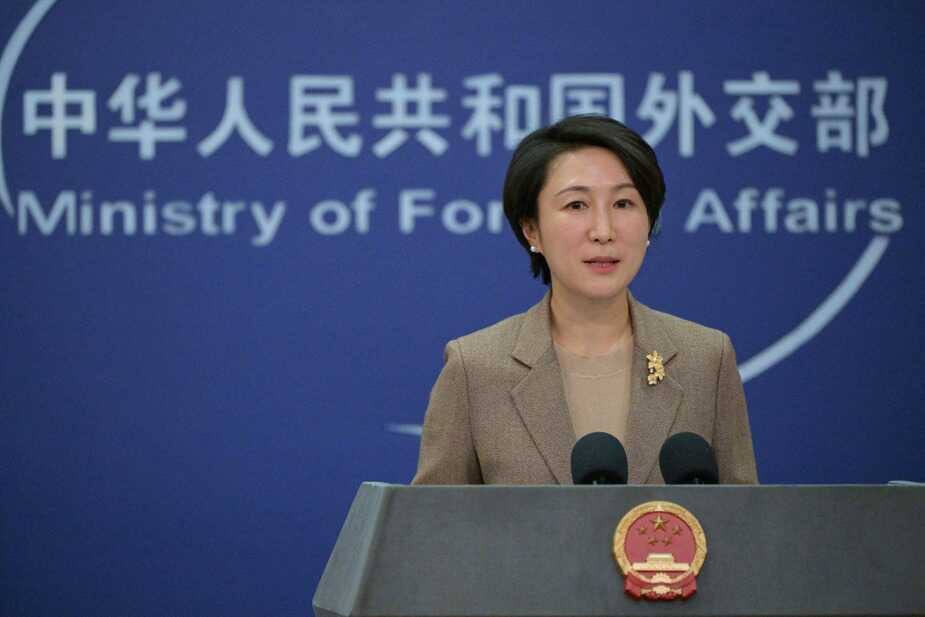
China has strongly condemned the air strikes conducted by the United States and Israel targeting civilian facilities in Iran, which resulted in civilian casualties. ‘China is very saddened by the large number of civilian casualties caused by the US and Israel’s attacks on Iran. We strongly condemn this. The protection of civilians in armed conflict is a red line and must not be crossed,’ said Mao Ning, spokesperson for the Ministry of Foreign Affairs, in Beijing on Tuesday, 3 March.
The attack on Saturday (28 February) hit the Princess Shajareh Tayyebeh Special Primary School in Minab, Hormozgan Province, southern Iran, killing up to 165 people. ‘The indiscriminate use of force is unacceptable. China calls on all parties to fulfil their obligations under international law, to effectively ensure civilian safety, and to avoid attacks on civilian facilities,’ Mao Ning added.
Mao Ning emphasised that the military action by the US and Israel lacked United Nations Security Council authorization and violated international law. ‘China is very concerned about its regional impact. China believes that the sovereignty, security, and territorial integrity of Gulf states must be fully respected. We urge all parties to halt military operations and prevent further spread of the conflict,’ she said.
The attack also reportedly killed Iran’s Supreme Leader, Ayatollah Ali Khamenei. In response, Iran launched missile strikes at Israel and targeted American military facilities in the Middle East.
The United States Department of State warned its citizens on Monday, 2 March, to leave the Middle East region due to serious safety risks. High-risk areas include Bahrain, Egypt, Iran, Iraq, Israel, the West Bank and Gaza, Jordan, Kuwait, Lebanon, Oman, Qatar, Saudi Arabia, Syria, the United Arab Emirates, and Yemen.
‘The blatant military strikes against Iran by the US and Israel have heightened regional tensions and spilled over to other countries in the region. China is deeply concerned about this,’ Mao Ning stated. She emphasised that sovereignty, security, and territorial integrity of Gulf states must be fully respected, and that any attack on civilians and non-military targets should be condemned.
‘China calls on all parties to immediately halt military operations and prevent further spread of the conflict. China is ready to work with regional countries and the international community to promote peace, end the conflict, and actively strive to achieve peace and stability in the region,’ Mao Ning concluded.
US Secretary of State Marco Rubio admitted that the attack was a preventive step before Iran might respond to a possible Israeli strike. ‘We know that if Iran is attacked, and we believe it will be, they will strike back at us, and we will not simply sit by and accept an attack before we respond,’ he said.
However, media reports cited Pentagon officials telling Congress that there was no intelligence indicating Iran planned to strike US forces first. Previously, Israel claimed to have carried out a pre-emptive attack on Iran on 28 February, via an operation they termed Lions Roar, and declared a state of emergency across the country. The attack occurred while negotiations between the US and Iran on Tehran’s nuclear programme were ongoing under Oman’s mediation, with the latest round in Geneva ending on 26 February. (Ant/E-4)
Tensions in the Middle East rose to new highs at the start of 2026. Former US President Donald Trump claimed this attack was to pre-empt what he described as an ‘insane’ Iranian strike. The widow of Iran’s late Supreme Leader Ali Khamenei reportedly died, according to Mehr News Agency, amid the intensifying conflict between Iran, the US, and Israel.
Member of the Indonesian House of Representatives Commission I, Oleh Soleh, urged the Indonesian government to take a bold stance on the international stage by calling for tough sanctions against the US and Israel. Constitutional law expert Radian Syam noted that the Israel-US-Iran conflict tests whether the world still upholds the rule of law or shifts toward power. The Asia-Pacific stock index fell amid the escalation of the US-Israel war with Iran. Closure of Hormuz Strait raised concerns about a global energy crisis.