
China Condemns US-Israel Military Attack on Iran Following Ayatollah Khamenei's Death
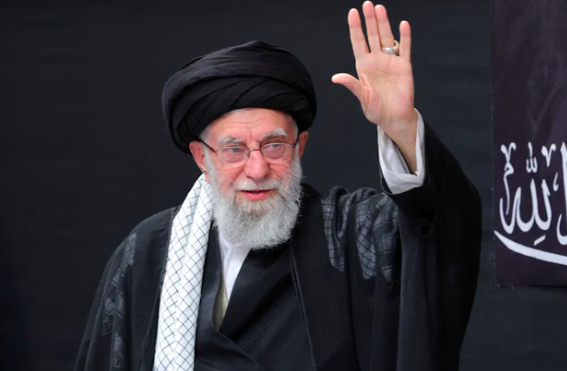
The Chinese Government has strongly condemned the US and Israeli military attack launched on Saturday, 28 February, which resulted in the death of Iran’s Supreme Leader, Ayatollah Ali Khamenei.
“The attack and assassination of Iran’s Supreme Leader constitutes a serious violation of Iran’s sovereignty and security. China firmly opposes and strongly condemns such actions,” said a spokesman for China’s Ministry of Foreign Affairs.
Ayatollah Ali Khamenei was confirmed dead in the assault launched by the US and Israel on Saturday, 28 February, marking the end of the cleric and politician’s 37-year leadership of Iran. Iranian state media confirmed that Khamenei was killed during the US-Israeli attack, stating that “the leader of Iran’s Islamic revolution has achieved martyrdom.”
“Such actions trample on the objectives and principles of the United Nations Charter as well as fundamental norms in international relations,” the statement noted.
China also called for an immediate halt to military operations. “We urge that military operations be immediately halted, there be no further escalation of the tense situation, and efforts be made jointly to maintain peace and stability in the Middle East and the world as a whole,” the statement added.
According to Iranian government officials, Khamenei was in his office in Tehran when the Saturday morning attack occurred, killing him. Iranian sources reported that several family members of Khamenei, including his daughter, son-in-law, grandson, and daughter-in-law, also died in the attack.
Khamenei became Supreme Leader of Iran in 1989 after serving as President from 1981 to 1989. The Iranian Government has announced 40 days of national mourning and a week-long work holiday following Khamenei’s death. The Iranian President, the head of the judiciary, and a member of the Council of Guardians will assume Khamenei’s duties during the vacancy.
The US-Israeli aggression against Iran, including the capital Tehran, resulted in not only infrastructure damage but also at least 201 deaths and 747 injuries. Among military personnel killed were Mohammad Pakpour, Commander of the Islamic Revolutionary Guard Corps (IRGC), Abdulrahim Mousavi, Chief of Staff of the Iranian armed forces, Defence Minister Aziz Nasirzadeh, and Ali Shamkhani, Secretary of the Defence Council.
The attack was subsequently retaliated by Iran with missile strikes against Israeli territory and several US military installations in the Middle East. The IRGC and Iranian Army, in written statements, vowed to avenge Khamenei’s death. The strikes were directed at 27 targets, including Tel Nof air base in central Israel, Israeli army headquarters, and a military industrial complex in Tel Aviv.
Demonstrations erupted on Sunday, 1 March, across various regions of Iran following the announcement of Khamenei’s death. Citizens took to the streets in cities throughout Iran in response to news of Khamenei’s death. Iranian media reported that demonstrators carrying Iranian flags gathered in city centres to voice their grief.
In Tehran, hundreds of people assembled at Revolution Square, raising flags and posters of Khamenei, and chanting slogans condemning the US and Israel. In the holy city of Qom, hundreds gathered at the Shrine of Hazrat Masume to denounce the attack. Meanwhile, in Mashhad, mourners expressed their grief by displaying black flags above the Imam Reza Shrine, one of Iran’s most revered religious sites, with many appearing in tears around the shrine.
US President Donald Trump characterised Ayatollah Ali Khamenei as “one of the most evil people in history,” stating that Khamenei could not evade the US’s advanced intelligence and tracking systems, and that his country’s close cooperation with Israel prevented the Iranian leader and several other officials from escaping.