
China Comments on IMF Predictions Regarding Middle East Conflict Triggering Economic Crisis
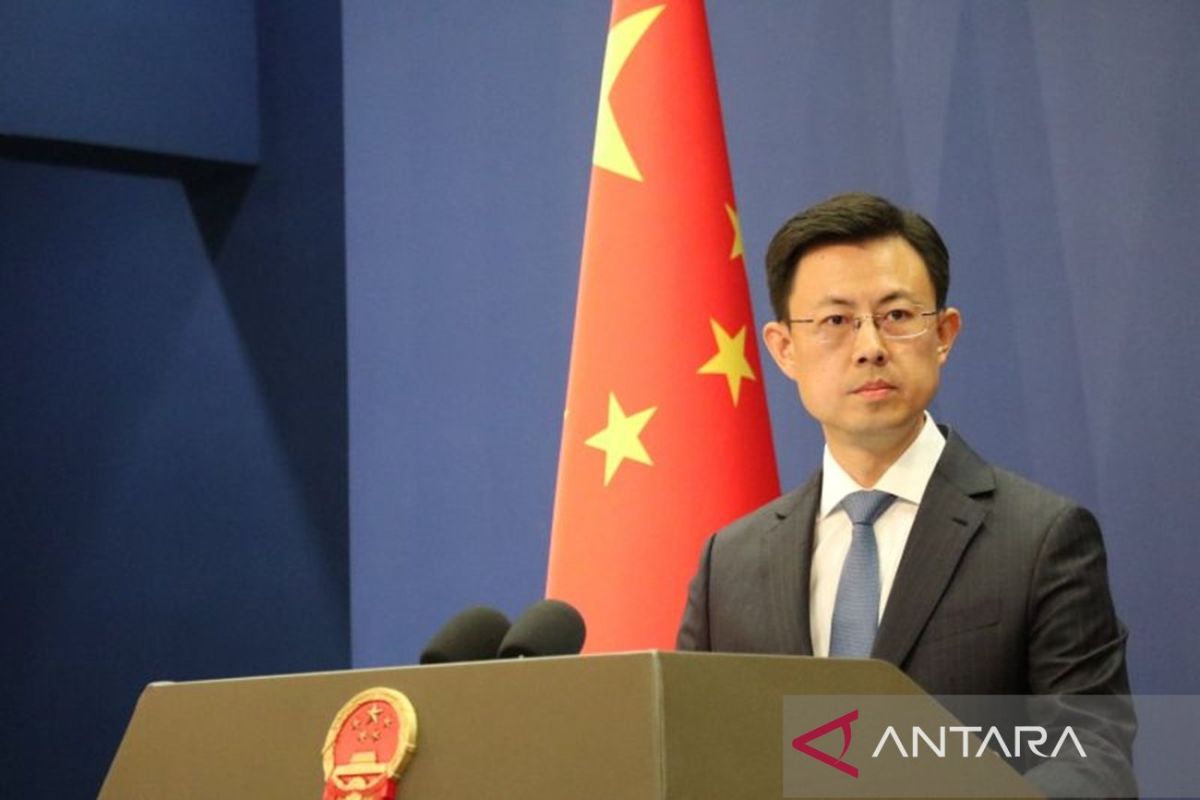
Beijing (ANTARA) - The Chinese government agrees with the International Monetary Fund (IMF) report stating that the conflict in the Middle East is causing a crisis in the global economy and energy security.
“The IMF report once again proves that the war not only causes numerous casualties and losses but also severe adverse impacts, hindering global economic growth and improvements in people’s livelihoods. This is a war that should not have happened,” said Spokesperson for the Chinese Foreign Ministry Guo Jiakun during a press conference in Beijing on Wednesday (15/4).
The IMF Managing Director Kristalina Georgieva previously stated that the Middle East conflict has caused significant difficulties worldwide.
Among the main negative impacts caused by the conflict is a shock to global supplies, resulting in a 13 per cent reduction in oil distribution and 20 per cent in liquefied natural gas (LNG) per day, she said.
“The international community, especially less developed countries, should not have to bear this burden,” Guo Jiakun emphasised.
The top priority at present, according to Guo Jiakun, is to prevent the recurrence of fighting by all means, resume traffic through the Strait of Hormuz, and restore peace and stability in the Gulf as soon as possible.
“This needs to be done to prevent a war that has even greater impacts on the global economy and energy security or even a humanitarian crisis,” Guo Jiakun added.
The IMF states that supply disruptions are expected to cause refinery shutdowns, as well as fuel and food crises.
“As a warning, because this is a negative supply shock, demand adjustments are inevitable,” Georgieva stated.
In addition, according to IMF calculations, a 10 per cent rise in oil prices in the long term could increase global inflation by 40 basis points and reduce global output by 0.1 to 0.2 per cent.
Regarding fuel supplies, Georgieva assessed that April will be a more difficult period than the previous month in terms of global fuel supply disruptions.
“We are very concerned about the impact of oil and gas supply disruptions; what we also realise is that March was a difficult month, but April may be even more difficult. Why? Because tankers that departed before 28 February have reached their destinations and no new shipments will arrive,” Georgieva said.
Georgieva also suggested that countries adopt energy-saving measures, such as making public transport free or encouraging remote work.
The escalation of the US-Iran conflict, which began with attacks at the end of February, has caused a de facto blockade of the Strait of Hormuz, the main shipping route for oil and liquefied natural gas from Persian Gulf countries to global markets.
This has also affected export activities and oil production in the region.
The US Navy, on Monday (13/4), began blockading all maritime traffic entering and exiting Iranian ports on both sides of the waterway.