
China Chamber of Commerce Writes to Prabowo, Protests Strict Regulations, Royalty Burdens, and SDA Export Proceeds
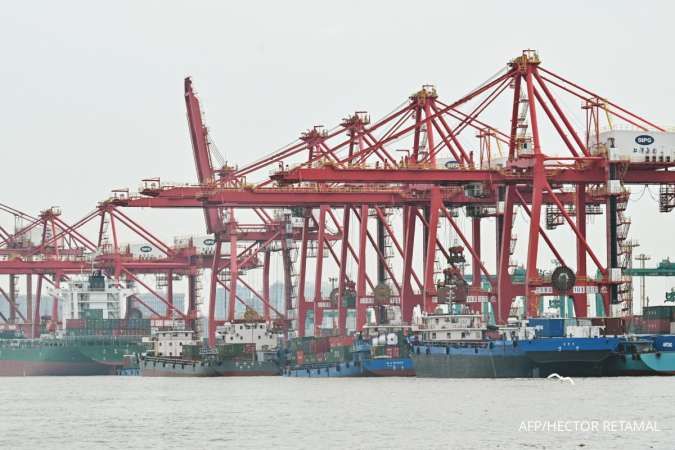
KONTAN.CO.ID - JAKARTA. The China Chamber of Commerce has sent a letter to President Prabowo Subianto to convey various complaints regarding the investment climate in Indonesia.
In the letter circulating on Tuesday (12/5/2026), Chinese business actors highlighted several policies deemed burdensome to the business world, ranging from increases in mineral royalties, regulatory uncertainty, to excessive law enforcement.
One of the main concerns is the planned change in the mineral royalty scheme by the Ministry of Energy and Mineral Resources (ESDM). This policy is seen as potentially increasing production costs for the mining industry and nickel downstreaming in Indonesia.
“Chinese investment companies in Indonesia have consistently supported the Indonesian government and conducted business in accordance with applicable laws,” wrote the China Chamber of Commerce.
They claim that Chinese investment contributes to economic growth, job creation, downstream industry development, and the fulfilment of corporate social responsibility.
However, they assess that in recent times, the business world has faced increasingly significant challenges.
“Companies operating in Indonesia face overly strict regulations, excessive law enforcement, and even corruption and extortion by certain authorities,” the letter continues.
According to the China Chamber of Commerce, this situation is beginning to disrupt normal business operations and reduce investor confidence in long-term investment in Indonesia.
One major highlight is the increase in various taxes and levies, including mineral resource royalties that have been raised repeatedly. In addition, companies complain about the intensity of tax inspections and large fines.
“Taxes and fees, including mineral royalties, have been raised repeatedly, accompanied by tax inspections and fines amounting to tens of millions of US dollars,” they wrote.
The China Chamber of Commerce also protests the Natural Resource Export Proceeds (DHE SDA) policy. According to them, the obligation to place 50% of export proceeds in national banks for at least one year could disrupt company liquidity.
“This will greatly harm company liquidity and long-term operations,” they wrote.
Other complaints relate to the reduction in nickel ore quotas in the Work Plan and Budget (RKAB). They state that the quota cut reaches more than 70%, equivalent to a production decrease of around 30 million tonnes.
According to the China Chamber of Commerce, this situation could disrupt the development of nickel-based downstream industries, including the electric vehicle and stainless steel sectors.
In addition, they highlight forestry law enforcement that is deemed too strict. The letter mentions that a Chinese investment company was fined up to US$180 million due to forest area permit issues.
The China Chamber of Commerce also complains about the halt of several major projects, attributed to interference by Indonesian authorities. One example is a hydroelectric power plant project accused of damaging forest areas and exacerbating flooding.
In the labour sector, Chinese business actors assess that the process of obtaining foreign worker visas in Indonesia is becoming increasingly complicated. They mention rising costs, stricter requirements, and work location restrictions that hinder the mobility of experts and management.
Not only that, they also express concerns about the government’s new policy plans, such as potential additional export duties, reduction in electric vehicle incentives, and evaluation of special economic zone incentives.
The biggest spotlight is directed at the change in the nickel ore benchmark price (HPM) regulations by the Ministry of ESDM. In the letter, the China Chamber of Commerce states that the HPM formula change, which now includes cobalt, iron, and other mineral components, has triggered a significant surge in nickel ore costs.
“The implementation of this policy suddenly has caused a 200% spike in nickel ore costs,” they wrote.
The China Chamber of Commerce assesses that this cost increase could heighten operational losses for companies and disrupt the balance of the national nickel industry chain.
They also warn that the impact could extend to new investments, exports, and jobs for more than 400,000 workers related to the nickel industry in Indonesia.
“This could weaken global investor confidence in Indonesia’s nickel sector,” wrote the China Chamber of Commerce.