
China Chamber of Commerce Protests Indonesia's Investment Policies to President Prabowo
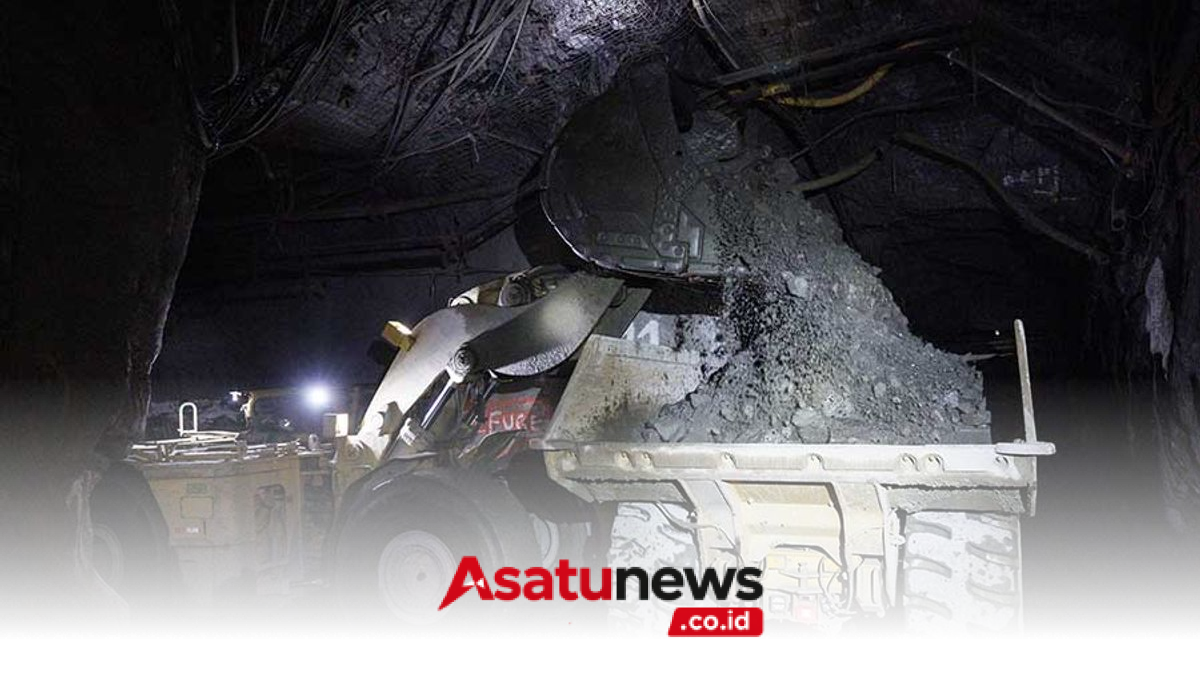
The China Chamber of Commerce has sent a letter of protest to President Prabowo Subianto regarding the investment climate in Indonesia on Tuesday (12/05/2026). According to Bloomberg Technoz, the objections cover the tightening of regulations to plans for changing the mineral royalty scheme by the Ministry of Energy and Mineral Resources.
The letter affirms the long-term commitment of Chinese companies that have operated in the country. The Chinese side claims to have made significant contributions to national economic growth through job creation and enhancement of upstream to downstream industrial sectors.
“So far, a large number of Chinese investment companies in Indonesia have consistently supported the Indonesian government, making investments and conducting business operations in accordance with applicable laws and regulations, and steadfastly supporting all policies and measures taken by the government under the leadership of His Excellency [President Prabowo] to advance national development,” stated the China Chamber of Commerce in its letter.
The organisation also highlighted obstacles that are now beginning to disrupt the operational stability of investors. Excessive law enforcement and alleged corrupt practices by certain authorities were key points raised with the head of state.
“However, in recent periods, companies operating in Indonesia have generally faced prominent issues, including overly tight regulations, excessive law enforcement, and even corruption and extortion by authorised authorities,” revealed the China Chamber of Commerce.
Other issues raised include a surge in tax levies and substantial fines burdening corporations. This is exacerbated by rules on withholding export proceeds foreign exchange, seen as threatening companies’ fresh fund availability.
“Taxes and fees, including mineral resource royalties, have been raised repeatedly, accompanied by increased tax inspections and even large fines reaching tens of millions of US dollars, creating panic among companies,” they stated.
Besides fiscal matters, China protested the Natural Resource Export Proceeds Foreign Exchange (DHE SDA) policy. Exporters feel burdened by the obligation to deposit half of their foreign currency earnings into state-owned banks for an extended period.
“This will greatly harm companies’ liquidity and long-term operations,” they remarked.
The nickel mining sector has also come under spotlight following drastic cuts to mining quotas in the Work Plan and Budget (RKAB). The China Chamber of Commerce noted a production decline of tens of millions of tonnes, impacting the stainless steel ecosystem.
“Indonesia’s Special Task Force for Forest Management [Satgas PKH] has imposed a record fine of US$180 million on a Chinese investment company for allegedly lacking valid forest area borrowing permits,” they disclosed.
Suspensions of several major infrastructure projects and forced interventions by local authorities were also reported in the letter. The Chinese side regrets accusations of forest land damage as the reason for halting power plant construction work.
“They [Indonesian authorities] accuse large hydropower plant projects invested in and built by Chinese-founded companies of damaging forest land and exacerbating flooding, ordering work suspensions and imposing sanctions,” stated the Chamber.
The labour sector is not spared from objections, particularly regarding increasingly complex work visa oversight. Rising costs and restrictions on technicians’ work locations are seen as hindering operational mobility.
“In addition, relevant government departments are considering further measures, including new export duties on certain products, elimination of incentives for electric vehicles, and reduction of tax relief for special economic zones,” revealed the China Chamber of Commerce.
The China Chamber of Commerce concluded its report by criticising the rise in Mineral Reference Price (HPM), covering commodities from nickel to cobalt. This sudden policy is said to have triggered a 200 per cent surge in nickel production costs.
“The implementation of these policies suddenly has caused a comprehensive 200% surge in nickel ore costs. As the largest investor and operator in Indonesia’s nickel industry,” explained the China Chamber of Commerce.
The impact of these regulations is feared to threaten the sustainability of hundreds of thousands of jobs along the industrial supply chain. The China Chamber of Commerce stated that escalating operational losses could damage Indonesia’s investment image globally.
“This will not only severely damage existing projects but also affect future investments, exports, and jobs for more than 400,000 people along the industrial chain, which seriously undermines global investor confidence in Indonesia’s nickel sector,” emphasised the China Chamber of Commerce.