
China calls for energy security assurances after the 'closing' of the Strait of Hormuz
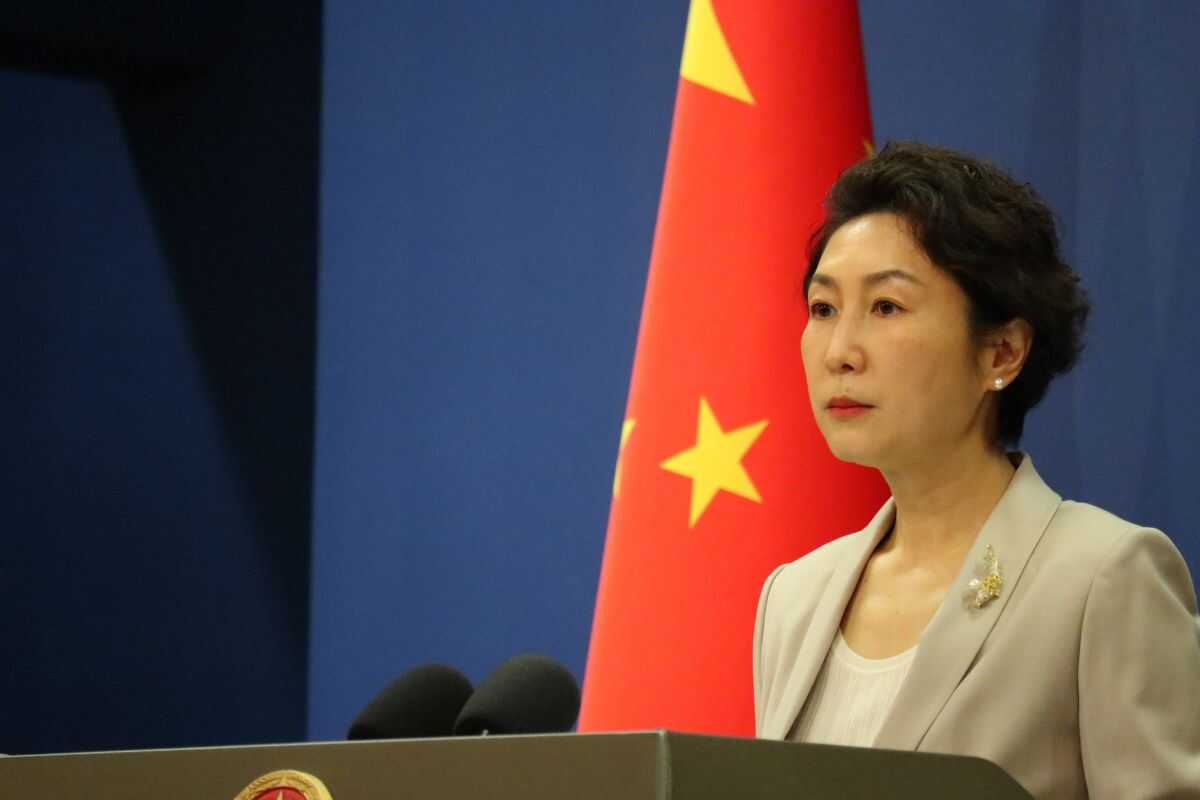
Beijing has called for assurances of energy security, particularly in light of the Strait of Hormuz closure by the Islamic Revolutionary Guard Corps after the United States and Israel’s attacks on Iran. ‘Energy security is crucial for the global economy. All parties have a responsibility to ensure stable and unobstructed energy supplies,’ said Mao Ning, spokesperson for the Chinese Ministry of Foreign Affairs, in Beijing on Tuesday, 3 March.
Following the joint US and Israel attacks on Iran that began on Saturday, 28 February, the Islamic Revolutionary Guard Corps (IRGC) sent a message to ships intending to pass through the Strait of Hormuz stating that no vessels would be allowed to transit.
As of Monday, 2 March, 706 non-Iranian tankers were recorded waiting on either side of the strait. The situation would inevitably affect a number of countries, especially oil-importing nations such as Japan, which imports around 95 per cent of its crude from the Middle East, much of which travels along that narrow waterway.
‘China urges all parties to immediately halt military operations, avoid further escalation, keep the shipping lanes in the Strait of Hormuz secure, and prevent further impacts on the global economy,’ Mao Ning added.
Mao Ning went on to say that China firmly opposes violations of sovereignty and the security of any country through violence in international relations. ‘Energy security is crucial for the global economy. Ensuring stable and unobstructed energy supplies is the responsibility of all parties. China will take what is necessary to safeguard its energy security,’ he said.
He also noted that China supports a peaceful resolution to Iran’s nuclear issue through dialogue and negotiations and respects Iran’s right to use nuclear energy for peaceful purposes. ‘We note that Iran has repeatedly asserted that it does not intend to develop nuclear weapons and has recently engaged in serious negotiations with the US. This matter must ultimately return to a political and diplomatic solution track,’ Mao Ning said.
China also called for an immediate end to military action, a return to dialogue and negotiations as soon as possible, and efforts to uphold the international nuclear non-proliferation regime as well as peace and stability in the Middle East and surrounding regions. ‘Once again, the US has attacked Iran in the midst of ongoing negotiations. The strike violates international law and the basic norms of international relations and has heightened tensions in the Middle East,’ Mao Ning emphasised.
The Strait of Hormuz handles around a fifth of global oil trade and large volumes of LNG exports from Qatar and the United Arab Emirates. Around 20 per cent of global daily oil consumption, or about 20 million barrels, passes through the corridor.
Shipping data show that transit volumes on 1 March fell by 86 per cent versus the 2026 average.
The United Kingdom Maritime Trade Operations (UKMTO) said on Sunday, 1 March, that maritime security in the Strait of Hormuz had been raised to the critical level, the highest risk category, after several attacks on merchant ships in the weekend in the Gulf of Oman near Musandam and in UAE coastal waters.
On Monday, 2 March, CENTCOM stated that 11 Iranian-flagged ships operating in the Gulf of Oman had been rendered inoperative for disrupting and attacking international shipping in the Gulf of Oman for decades. The command pledged to continue to defend freedom of maritime navigation, although Iran did not confirm this.
In retaliation, Tehran launched drones and missiles targeting Israel, US assets, and several countries in the Gulf region. Six US military personnel were killed as a result of the attacks.