
China Attempts to Strengthen Influence in Southeast Asia as US Weakens?
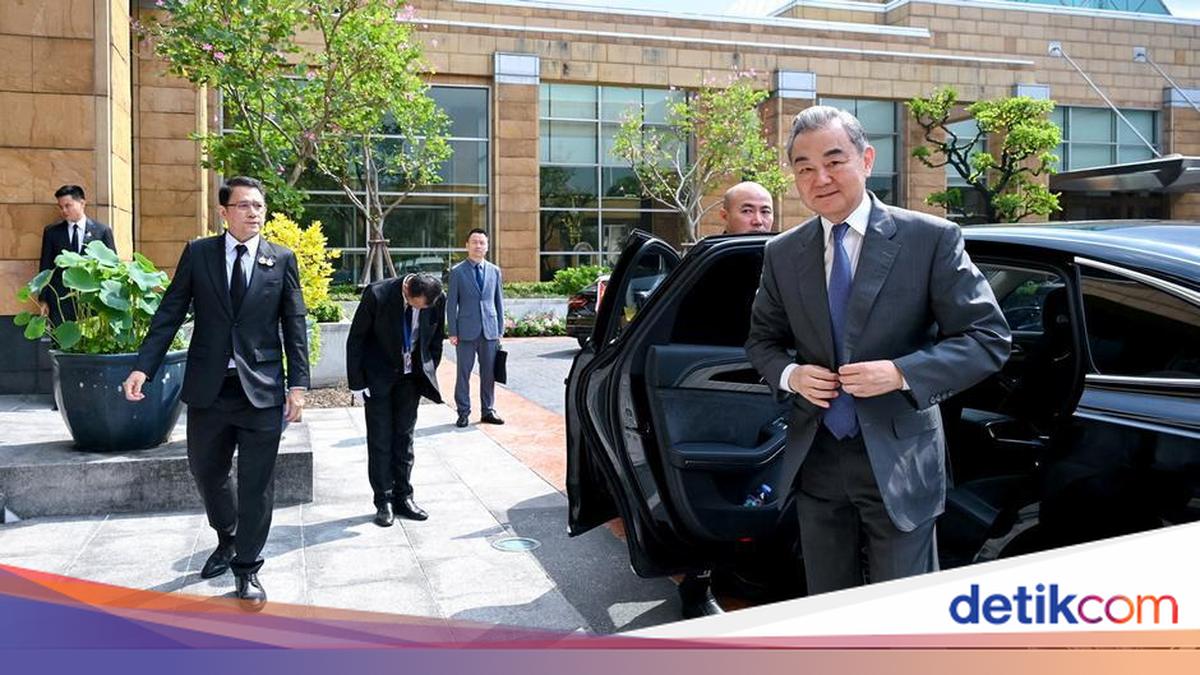
Foreign Minister of China Wang Yi utilised his visit to Cambodia, Thailand, and Myanmar to affirm Beijing’s position as a reliable partner in Southeast Asia, a region shaken by war, trade tensions, and doubts about the credibility of the United States (US).
The five-day visit, which ended on Sunday, took place amid the ongoing impact of the Iran war, which has driven up energy prices and threatens economic growth in Asia’s import-dependent countries.
At the same time, US tariff policies have added pressure on several Southeast Asian countries that have been adjusting their export strategies for months.
China’s Position as a Balancer
Rising fuel prices have driven inflation as the unresolved conflict in the Middle East also threatens to significantly disrupt regional growth and trigger a crisis in meeting living costs.
Washington’s confrontational approach has also made governments in Southeast Asia uneasy, especially since many of them are involved in territorial disputes, including with China.
In contrast, Beijing is striving to present itself as a major power that maintains stability, trade, and regional cooperation.
To DW, Associate Professor at the University of Hong Kong Enze Ha said that Foreign Minister Wang’s visit shows that “China is paying great attention to Southeast Asia, when the region is being neglected by the United States.”
An annual survey from the ISEAS-Yusof Ishak Institute titled State of Southeast Asia also indicates that some respondents in Southeast Asia expressed a preference for China over the United States. This result is the opposite of what happened the previous year, when 52% of respondents chose to side with the United States.
In 2026, the State of Southeast Asia also mentioned that 55.6% of respondents expect their country’s relations with China to improve or greatly improve in the next three years. Trust levels in China have also increased.
Beijing views the results of that study as an opportunity, but Southeast Asian governments consider the ISEAS-Yusof Ishak Institute study as a picture of strategies to deal with global uncertainties.
“Southeast Asian countries are also seeking to strengthen ties with China to anticipate the worst-case scenario of a US retreat and the emergence of a regional order that is increasingly centred on China,” said Hunter Marston, a visiting researcher at the Center for Strategic and International Studies (CSIS), to DW.
Cambodia and China Like True Friends
It can be said that Cambodia was the easiest stop in Wang’s diplomatic journey. For a long time, Phnom Penh has been known as Beijing’s closest partner in Southeast Asia. The governments of both countries have long described their cooperation as a friendship that is “as solid as steel”.
Wang’s visit this time “marks a step towards more formal and deeper levels of cooperative ties,” said Sophal Ear, Associate Professor at Thunderbird School of Global Management, Arizona State University, to DW.
On 22 April 2026, Wang and Chinese Defence Minister Dong Jun were involved in the inaugural “China-Cambodia 2+2” strategic dialogue with their Cambodian counterparts. The dialogue brought together the foreign and defence ministers. This impresses a more formal bond in the security sector between China and Cambodia.
“That step signals an expansion from cooperation that was originally economic to more structured political and security cooperation,” Sophal added.
China Targets Scam Centres and Borders
One important issue raised during Wang’s visit this time was the discussion on the online scam syndicate industry in Cambodia. To date, Cambodia is still under international pressure for being a location for cybercrime networks, where victims from various Asian countries are trafficked and forced to work for criminal syndicates.
“China’s call to eradicate scam centres shows that Beijing not only supports Cambodia but also helps shape part of its domestic policy agenda,” Sophal explained.
This issue was also raised when Wang visited Thailand to meet Prime Minister Anutin Charnvirakul. Thai officials said both sides agreed to deepen cooperation in combating cross-border crime and cyber scams.
“For China, this is a sensitive issue both domestically and internationally. This is because Chinese citizens are also entangled in these scam centres. Chinese criminal syndicates are also responsible for the escalation of this problem,” said Mark Cogan, Associate Professor in Peace and Conflict Studies at Kansai Gaidai University, Japan, to DW.
In addition, Thailand also gave Wang the opportunity to engage in resolving the border conflict. Cambodia and Thailand have been embroiled in a deadly border conflict since July 2025, when fighting broke out in the disputed area along the border. That battle killed more than 100 people and forced hundreds of thousands to flee.
In October 2025, the Association of Southeast Asian Nations (ASEAN) helped create the Kuala Lumpur Declaration to secure a ceasefire at the border. Those negotiations were also witnessed by US President Donald Trump. At that time, the Trump administration threatened to halt tariff talks with both countries if they did not stop the fighting.
However, the ceasefire did not go as planned and fighting broke out again in December 2025. In 2026, the border conflict situation eased. The Anutin administration, formed in early April 2026, promised to seek long-term solutions for the conflict and border disputes.
“China’s potential as a mediator in this conflict is far greater than that of the United States,” Mark said.
“China has much less risk if it attemp