
China-ASEAN Translators' Alliance Established to Strengthen Regional Cooperation
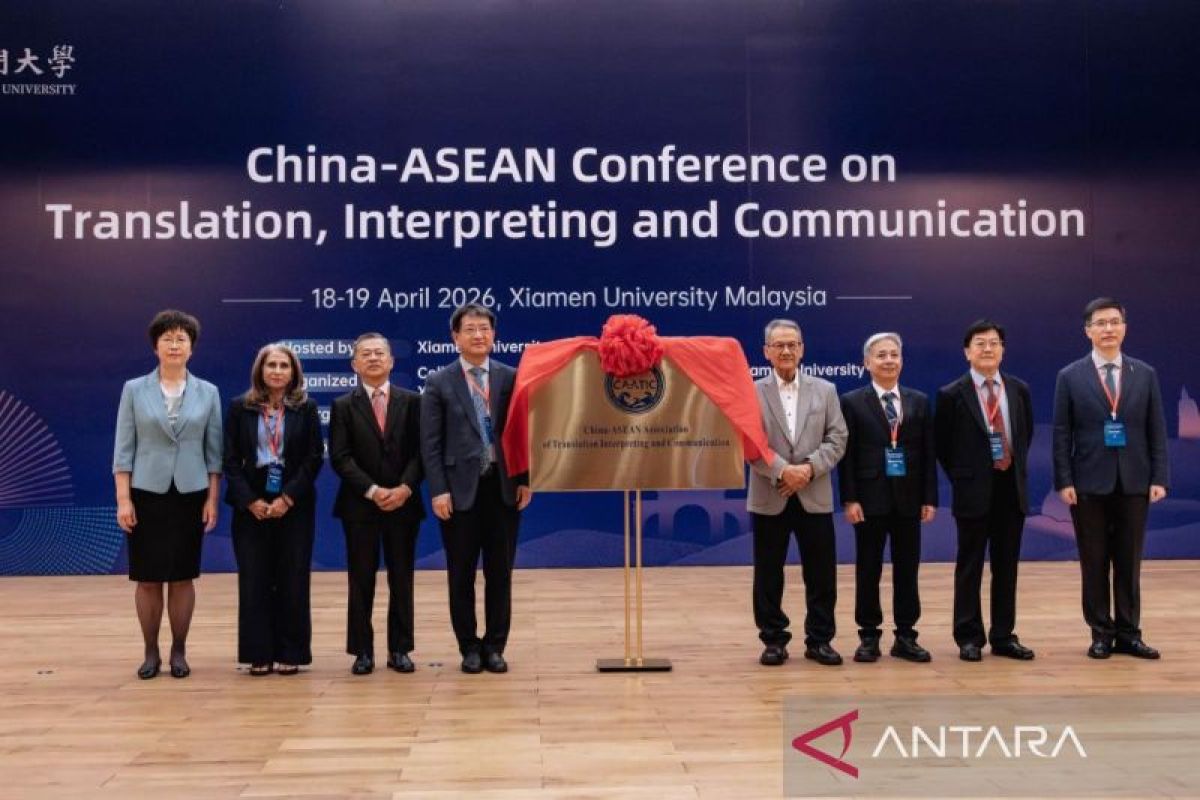
Kuala Lumpur (ANTARA) - The China-ASEAN Association of Translation, Interpreting and Communication was officially launched at Xiamen University Malaysia (XMUM) on Saturday (18/4).
The launch took place as part of the opening of the China-ASEAN Conference on Translation, Interpreting and Communication, organised by Xiamen University from 18–19 April 2026.
The event, attended by more than 30 academics from 20 universities in eight countries, including representatives from Indonesia, discussed several key issues, such as cross-cultural dialogue, innovations in translator education in the era of artificial intelligence (AI), as well as translation practices and markets.
Vice Rector of Xiamen University Wu Chaopeng stated in his remarks that the action plan for the China-ASEAN strategic partnership 2026–2030 has provided clear guidance for deepening cooperation.
The Alliance Chair, who is also the Dean of the Faculty of Foreign Languages at Xiamen University, Chen Jing, explained that the alliance aims to produce professionals with global insights, bilingual competencies, and expertise in regional affairs.
In the future, the alliance will facilitate joint research, exchanges of lecturers and students, and academic publications.
Meanwhile, the representative from the Malaysian Language and Library Agency (DBP), Dato’ Dr. Mohd Anwar Ridhwan, and academic from Hanoi National University, Vietnam, Lam Quang Dong, agreed that strengthening language communication and people-to-people exchanges will bolster the social and cultural foundations of China-ASEAN cooperation.
He also proposed the need for China-ASEAN level translator qualification standards involving Indonesia as one of the framework developers.
According to Sajarwa Sukiyo, as the country with the largest economy in ASEAN and an important partner in the Belt and Road Initiative, Indonesia should leverage this alliance to play a more active role in cooperation in diplomacy, economy, education, and academia.
“Many Indonesians still associate China only with trade and technology. Cross-cultural communication will broaden that understanding,” he said.