
China and the United States Have the Largest Agricultural Land in the World; Indonesia Still Falls Far Behind
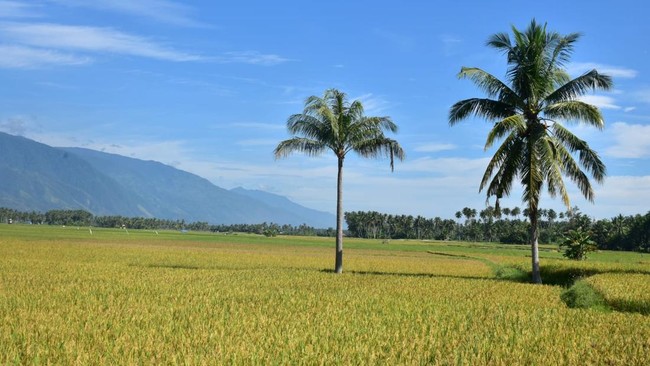
Agricultural land spans more than 18 million square miles worldwide, forming the primary foundation for global food production.
The vast area of agricultural land represents an important factor in determining a country’s capacity to produce food, support commodity exports, and maintain domestic supply stability.
Amid pressures from climate change, population growth, and tensions in the global food supply chain, food security has increasingly taken on geopolitical dimensions. Countries with extensive agricultural land generally hold strategic positions in the world food system, either as principal producers or suppliers of agricultural commodities.
The latest data from the Food and Agriculture Organization (FAO) demonstrates that countries with large geographical areas tend to dominate the list of nations with the world’s largest agricultural holdings. Factors such as climate, topographical conditions, and land-use policies all determine how much area can be utilised for agricultural activities.
China ranks first on the list of countries with the world’s largest agricultural land, with approximately 528 million hectares.
This area encompasses pastureland, crop-growing land, and permanent plantations stretching widely from the Manchurian plains in the north to the Yangtze River valley in the south. This scale makes China the world’s largest agricultural landowner.
However, productivity per hectare still faces challenges, particularly due to soil degradation and ongoing urbanisation eroding fertile land in eastern coastal regions.
The United States ranks second with approximately 407 million hectares of agricultural land. The principal strength of this nation’s agricultural sector is concentrated in the Great Plains region, an area known as the world’s wheat and maize belt. For several decades, this region has served as the backbone of global food production and export.
Australia ranks third with approximately 427 million hectares of agricultural land.
However, the characteristics of its land differ from the two preceding countries. The majority of Australia’s agricultural area consists of pastureland in semi-arid regions, so its farming and pastoral activities are heavily dependent on seasonal rainfall patterns.
Land Composition in Various Countries
Interestingly, the proportion of agricultural land to total territory varies in each country. In countries such as Canada or Brazil, most of the territory remains forested.
Under international statistical definitions, agricultural land encompasses not only crop-growing land but also permanent pastureland and land used for livestock activities. Consequently, countries with extensive pastureland may be recorded as having large agricultural areas even though not all of it is used for cultivating food crops.
Africa also ranks as one of the regions with many countries possessing vast agricultural land. Several African nations, such as Sudan with approximately 435,000 square miles of agricultural land, followed by South Africa with approximately 372,000 square miles, and Nigeria with approximately 268,000 square miles.
However, the agricultural sector in this region faces increasingly significant challenges. Agriculture in Africa is also impacted by climate change, including rising temperatures, changes in rainfall patterns, and the risk of desertification, which can reduce land productivity over the long term.
Indonesia’s Agricultural Land Area
Indonesia also ranks among the world’s countries with the largest agricultural land. Based on FAO data, Indonesia’s agricultural land area reaches approximately 212,828 square miles, placing it 16th globally. This area encompasses various types of land use, ranging from rice paddies for rice production, plantations such as palm oil and rubber, to pastureland and other agricultural land dispersed across various archipelago regions.
The substantial size of this area establishes the agricultural sector as one of the important pillars supporting the national economy.