
China aims to raise digital economy's share to 12.5% of GDP by 2026
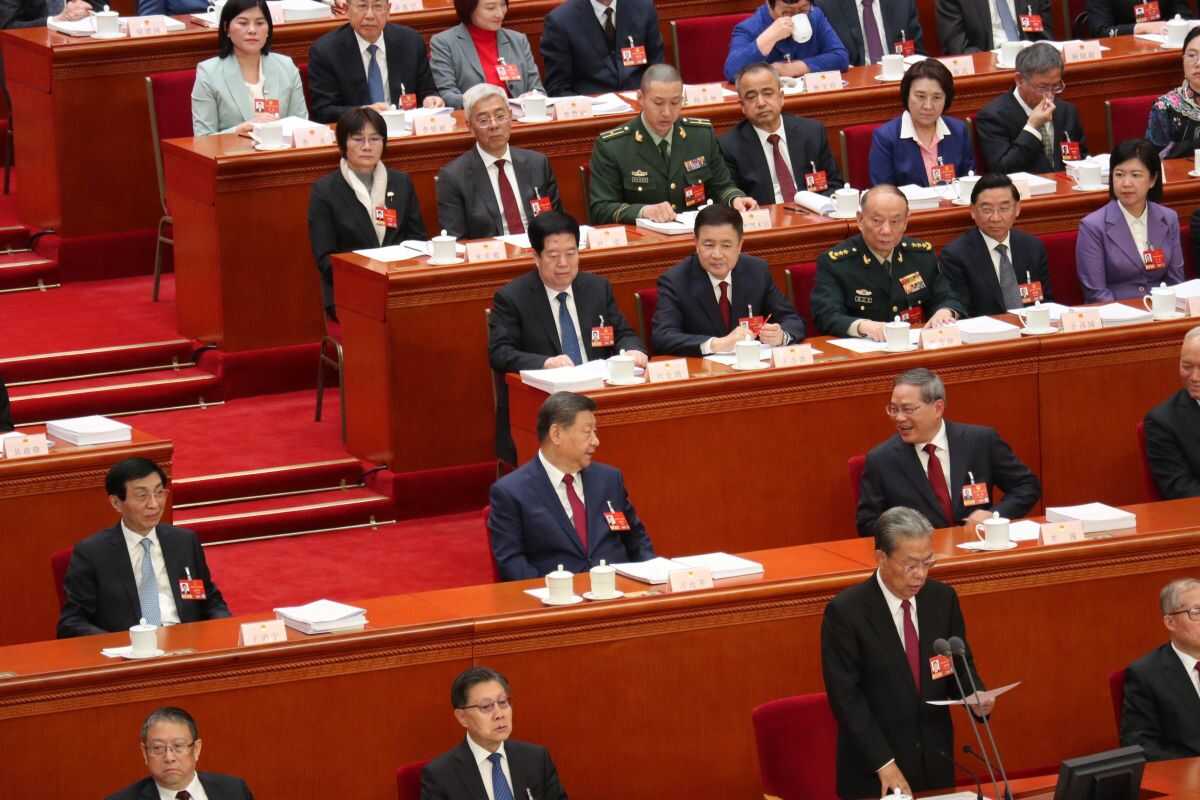
China’s government is committed to increasing the role of the digital economy within its economy so that it accounts for up to 12.5% of GDP by 2026. ‘We will continue to deepen development across various fields of the digital economy and achieve further progress in advancing the China Digital Initiative so that the value added by the digital economy rises to 12.5% of GDP,’ Premier Li Qiang said at the opening of the National People’s Congress (NPC) in the Great Hall of the People, Beijing, on Thursday.
The NPC session is part of the ‘Two Sessions’ gathering that unites the NPC and the Chinese People’s Political Consultative Conference (CPPCC) in Beijing from 4-12 March 2026. One agenda item is to approve China’s revenue and expenditure budget, targeted at 30.01 trillion yuan (about Rp73.5 quadrillion).
In a report on the 2025 implementation of development and the 2026 development plan circulated at the session, the government said it would earmark 200 billion yuan from special national bonds to fund large-scale technology projects. The government said it would promote inclusive services backed by the ‘cloudification’, ‘big data’, and artificial intelligence (AI) initiatives, as well as increase support for small and medium-sized enterprises undergoing digital transformation, including backing for a ‘smart supply chain’ to enhance technology-based manufacturing.
Going forward, the government will foster AI-based new business models, launch smart-cluster infrastructure projects, and push the ‘5G plus’ industrial internet initiative. The aim is to broaden the service sector markets in China, such as financial services, modern logistics, leverage of intellectual property, and other service sectors.
Total budgets for research and development (R&D) in AI, robotics, and quantum technology reached 2.8% of China’s GDP. The report also notes that industrial robot production rose 28% to 773,000 units in 2025, while the number of registered unmanned aerial vehicles (drones) increased by 56.6%, with cumulative drone flight hours reaching 45.3 million last year.
China is also developing space infrastructure and large-scale new energy systems in polar regions, including at the Qinling Station in Antarctica, to study innovative energy projects such as hydrogen energy, energy storage, and next-generation batteries.
Regarding 5G networks, the government claims there are now 238 million users with 4.8 million base stations, bringing 5G coverage to 95% of villages in China.