
China Aggressively Pursuing Brain-Computer Interface Technology, Expected to Explode Soon
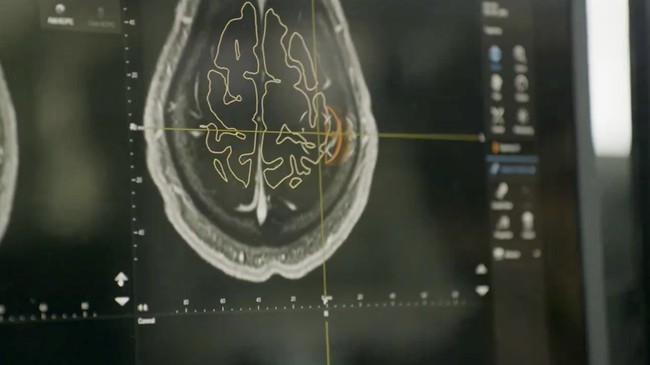
China is increasingly aggressive in developing brain-computer interface (BCI) technology, commonly known as brain-computer interface chips. Scientists predict that this technology will ‘explode’ and be used by the general public within the next three to five years.
This development is viewed as potentially causing the United States to fall behind in the race for future technology, including brain chip development, which is also being pursued by Elon Musk’s company, Neuralink.
China’s government has recently designated BCI technology as one of the main strategic industries in its latest five-year development plan. The technology has been placed on par with other future sectors such as quantum computing, embodied artificial intelligence, 6G networks, and nuclear fusion energy.
Yao Dezhong, director of the Sichuan Institute of Brain Science, stated that BCI technology is currently developing very rapidly and is approaching the stage of practical application. According to him, in the coming years, the public could begin to see BCI devices used in reality for various medical needs.
“New policy will not change the situation overnight. I think in the next three to five years we will begin to see some BCI products move towards practical services that are truly used by the public,” said Dezhong, according to Reuters, Monday (9 March 2026).
China is currently the second country in the world to conduct invasive brain chip trials on humans. More than 10 clinical trials are currently underway, a number that is even equivalent to the United States.
Researchers are also targeting more than 50 patients to be involved in trials of this technology throughout 2026.
Several recent experiments have shown rather remarkable results. Paralysed patients and amputees were reportedly able to regain limited movement, even controlling robotic arms and smart wheelchairs using brain signals.
The Chinese government is also beginning to take the integration of this technology into the national health system seriously. Some BCI therapies have already been included in national health insurance in several pilot provinces.
The market value of BCI technology in China is estimated to reach 5.58 billion yuan, or approximately US$809 million, by 2027.
Yao believes China has several major advantages in developing this technology. In addition to a large population and high patient demand, the country also has an efficient industrial chain and an abundant number of science and technology talents.
Nevertheless, he acknowledged that there are still challenges in transforming laboratory research into widely usable medical technology.
On the other hand, companies such as Neuralink, owned by Elon Musk, are currently focused on technology for chips implanted directly into brain tissue using advanced surgical robots capable of implanting hundreds of electrodes in minutes.
However, Yao emphasised that China is now moving very quickly to catch up with such technology. “The technological direction developed by Musk can fundamentally also be achieved domestically,” he concluded.