
Chicken and Vegetable Vendors Left Dizzy by Surging Plastic Prices
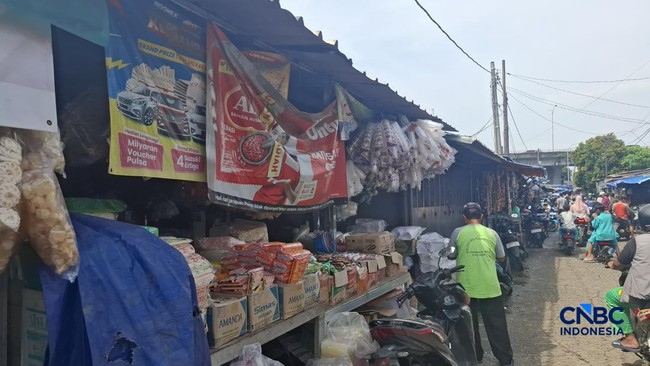
Jakarta, CNBC Indonesia - The recent rise in plastic prices has impacted other traders as well, such as chicken meat vendors and vegetable sellers.
CNBC Indonesia’s observations at Pasar Kemiri Muka in Depok today, Friday (17/4/2026), revealed that chicken and vegetable vendors are complaining about the plastic price increase that has occurred over the past week leading up to Eid al-Fitr 2026. The traders are in a dilemma because the higher plastic prices reduce their income and require additional funds to purchase plastic.
However, they cannot raise the prices of chicken or vegetables, as that would lead to fewer customers.
Budi, a chicken vendor at Pasar Kemiri Muka, admitted to being anxious about the rising plastic prices. He does not want to increase the chicken price because it is already quite expensive.
“Yes, the plastic price is really high now. Usually, I prepare at least Rp10,000, but now that’s not enough; the minimum is Rp15,000-Rp20,000 to buy plastic, and if buying in bulk, it’s quite substantial,” said Budi.
He is confused and admits he cannot raise the chicken price, considering it is still quite high at Rp50,000 per bird.
“It’s a dilemma, really. If we don’t raise the chicken price, buying plastic eats into our profits more, but if we do raise it, customers will flee because it’s already expensive—Rp50,000 per bird, and for cut-up chicken, Rp40,000 per kg,” he continued.
Even when customers ask for extra plastic, he still provides it despite being squeezed by the high prices.
“Well, if a customer asks for extra plastic, how can we refuse? They might get angry. But customers are starting to realise that plastic is expensive, so they’re not asking for extra anymore,” he explained.
Meanwhile, Yanti, a vegetable vendor, also complained about the increasingly expensive plastic. Now, she can only afford thinner quality plastic than before because it is still affordable.
“Wow, the impact of the plastic price rise is bad; we’re getting more stressed. If we want the usual plastic, it’s expensive; the cheaper one is thinner,” said Yanti.
She even seems dizzy because she cannot refuse customers who ask for extra plastic to wrap vegetables.
“It’s stressful, a real dilemma. If we charge extra, customers complain; if we don’t give plastic, they complain too. How can we refuse when they ask? So, we do it as usual, but the difference is we give thinner plastic,” she explained.
When customers buy her vegetables, like lime, she usually gives them two plastic bags: one to wrap the limes and a carrier bag. However, some customers no longer want the extra carrier bag.
“But some of our customers don’t want the extra plastic. Maybe they’re aware that plastic is expensive and feel sorry for the vendors, so they don’t ask for more,” she clarified.