
Chery Tiggo 7 Pro Receives Low Score in Crash Test
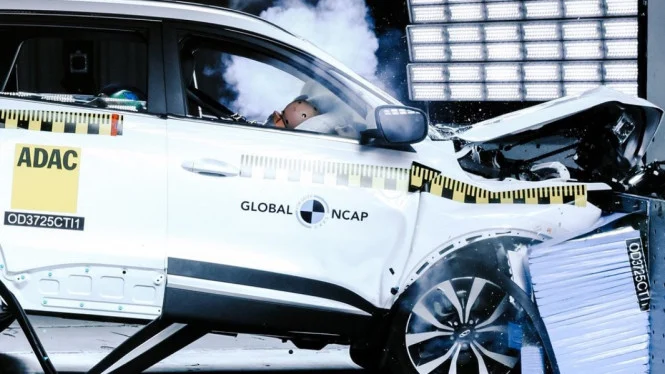
Cape Town, VIVA – The latest crash test results from the Global New Car Assessment Programme (NCAP) have once again highlighted vehicle safety concerns in developing markets. This time, the Chery Tiggo 7 Pro SUV came under scrutiny after achieving only two stars for adult occupant protection in the #SaferCarsForAfrica programme.
The rating immediately drew attention as the Tiggo 7 Pro is a fairly popular model across several global markets. A two-star rating was deemed to fall short of consumer expectations for modern vehicle safety standards in the compact SUV segment.
Beyond adult occupant protection, Global NCAP awarded three stars for child occupant protection. However, the test report noted weaknesses in the Child Restraint System mounting, which failed across all front seat positions in the rear-facing orientation.
Another issue flagged was the absence of an option to deactivate the front passenger airbag when a rear-facing child seat is installed. This condition was considered to potentially increase safety risks for children in certain situations.
According to the Global NCAP crash test report reviewed by VIVA Otomotif on Friday, 20 February 2026, the vehicle’s structure also drew criticism for being deemed suboptimal. The footwell and bodyshell areas were described as unstable and judged incapable of withstanding additional loads in the event of a more severe impact.
Limited side protection was also a significant concern in the evaluation. A side pole impact test was not conducted because the vehicle lacked standard head protection for both front and rear rows.
The absence of such protection exposes occupants to the risk of serious head injuries even in low-speed side impacts with objects such as poles or trees. This observation added to the list of safety aspects considered in need of improvement for the model.
Global NCAP also commented on the active safety features already available in the vehicle. Electronic Stability Control and seatbelt reminders are included as standard features, although their performance was said to not fully meet the testing body’s requirements.
Beyond the test results themselves, Global NCAP criticised the use of test information from other markets in public communications materials. According to the organisation, NCAP ratings are market-specific and therefore cannot be selectively used to represent a model’s safety performance in different regions.